



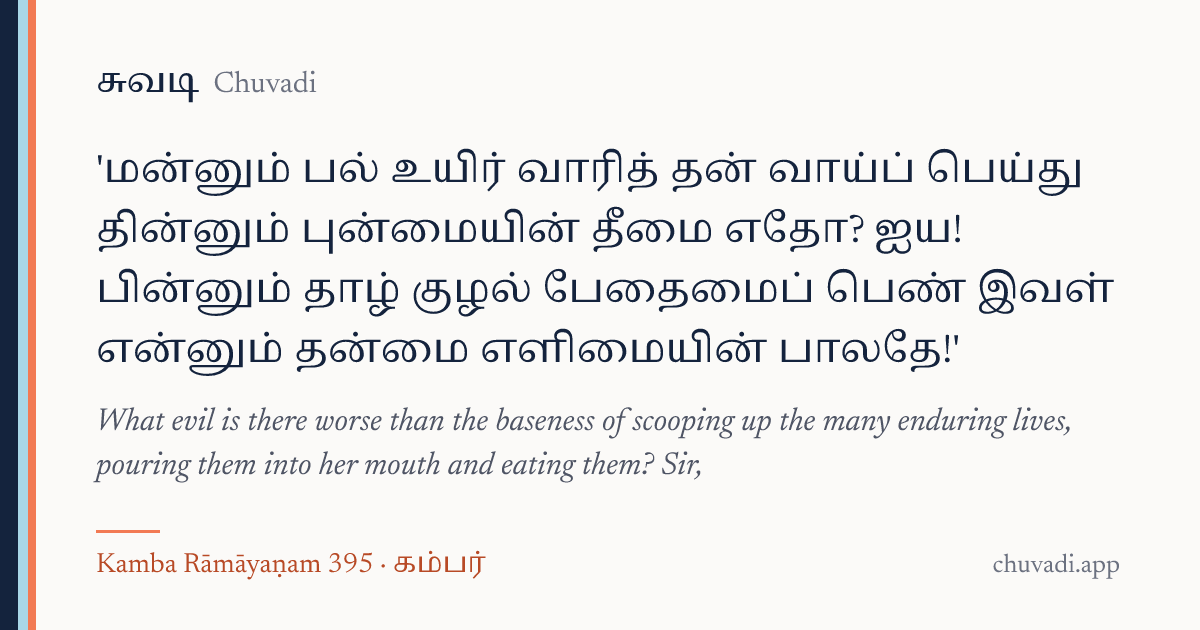
கம்பராமாயணம் 395 · பால 7.65
பாடல் · The poem
Tap a word to see its gloss in the commentary and where else it occurs.
பொருள் · Meaning in Tamil
மன்னும் பல் உயிர்வாரி - உலகில் நிலைபெற்றுள்ள பல உயிர் வகைகளையும் அள்ளி எடுத்து; தன்வாய் பெய்து தின்னும் - தனது வாயில் போட்டுத் தின்னுகின்ற; புன்மையின் தீமை எதோ - புன்மையான தீமை வேறு எது உண்டு; ஐய! பின்னும் தாழ்குழல் பேதைமைப் பெண் இவள் என்னும் தன்மை - தலைவ! அப்படியிருந்தும் தாழ்ந்த கூந்தலை உடைய பேதைத்தன்மை வாய்ந்த பெண் இவள் என்று நினைக்கும் தன்மை; எளிமையின் பாலதே - இகழ்ச்சிக்கு உரியதாம்.
மன்னும்: நிலைத்திருக்கும். வாய்ப்பெய்து: வாயில்கொட்டி. புன்மை: புல்லியதன்மை. தீமை: தீயதொழில். ஐய: தலைவனே. தாழ்குழல்: வினைத் தொகை. பேதைமை: மனமிரங்கும் தன்மை. 'பேதைமை என்பது மாதர்க் கணிகலம்' என்பதை நினைவு கூர்க. எளிமை: இகழ்ச்சி. இவளைப் பெண் என்பது இகழ்ச்சிக்குரியது என்பது கருத்து. பாலது: தன்மையது: உயிர்களைக் கொன்று தின்பதைவிட தீயசெயல் எது உள்ளது? இப்படிப்பட்டவளைப் பெண் என்று சொல்வது இகழ்ச்சிக்குரியதேயாகும் என்பது கருத்து. எளிமை: அறியாமையுமாம்.
ஆங்கிலம் · English translationAI
Translation
- What evil is there worse than the baseness of scooping up
- the many enduring lives, pouring them into her mouth and eating them? Sir,
- to think of her, even so, as a gentle woman with long braided hair
- belongs to foolishness.
What the poem says
Vicuvāmittiraṉ asks what crime could be lower than scooping up living creatures by the handful and eating them.
To picture such a being as a soft-hearted woman with long braided hair, the conventional image of feminine gentleness, is simple naivety. Tenderness of heart, an old saying goes, is a woman's ornament, and Tāṭakai has none of it.