



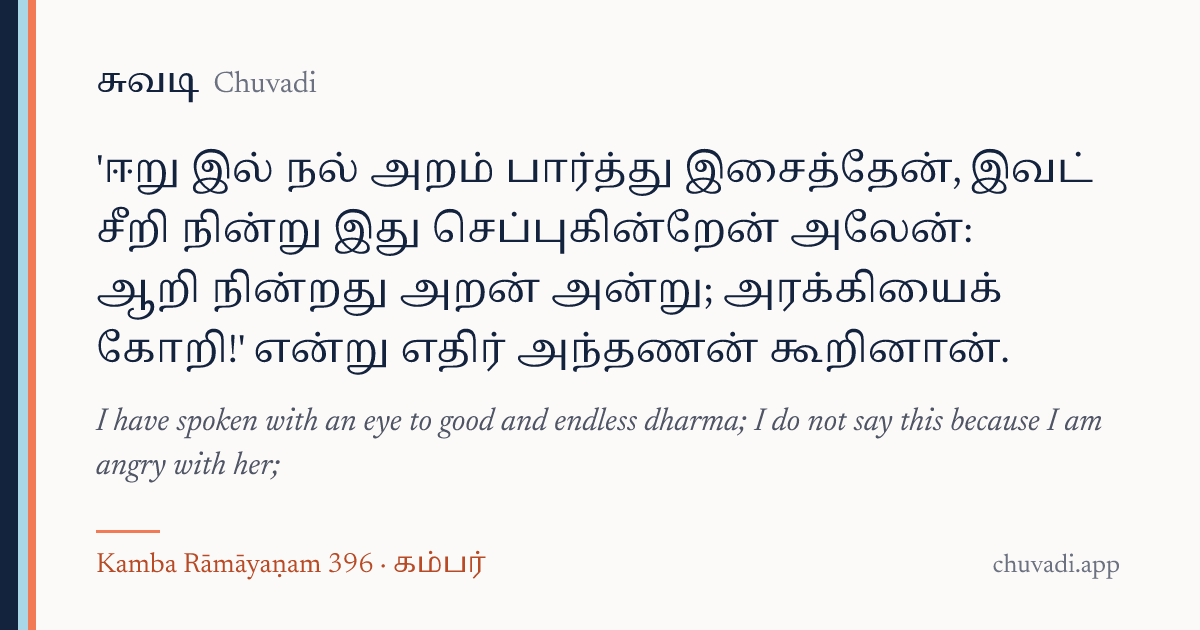
கம்பராமாயணம் 396 · பால 7.66
பாடல் · The poem
Tap a word to see its gloss in the commentary and where else it occurs.
பொருள் · Meaning in Tamil
ஈறில் நல் அறம் பார்த்து இசைத்தேன் - அழிவில்லாத நல்லறத்தை நோக்கியே கூறினேன்; இவள் சீறி நின்று இது செப்புகின்றேன் அலேன் - இவளைக் கோபித்து நின்று இதனை நான் சொல்கிறேன்; ஆறி நின்றது அறன் அன்று - எனவே அரச குலத்தவனாகிய நீ இவளது தீச்செயலை அறிந்தும் இவ்வாறு தணிந்து நிற்பது தருமம் அல்ல; அரக்கியைக் கோறி என்று எதிர் அந்தணன் கூறினான் - இந்த அரக்கியைக் கொல்வாயாக என்று எதிர் நின்று விசுவாமித்திரன் கூறினான்.
ஈறு: முடிவு (அழிவுமாம்). நல்லறம்: உயிர்களுக்கு நன்மை தரும்பொருட்டுச் செய்யும் அறம். இசைத்தல்: சொல்லுதல். சீறி: சினம்கொண்டு. செப்புதல்: சொல்லுதல். ஆறி: தணிந்து. கோறி: கொல்லுதி. கொலையிற் கொடியாரை வேந்தொறுத்தல் பைங்கூழ் களைகட்டதனோடு நேர் என்பது குறளறம். உயிர்களுக்குத் தீங்கு செய்யும் இவளைக் கொல்வதுதான் அறம். ஆறி நின்றது அறம் அன்று என்பது கருத்து.
ஆங்கிலம் · English translationAI
Translation
- I have spoken with an eye to good and endless dharma;
- I do not say this because I am angry with her;
- to stand back calmly is not dharma; kill the Rākṣasī!
- so the brahmin, facing him, declared.
What the poem says
The sage concludes. He is not speaking out of personal anger at Tāṭakai but from regard for dharma, the lasting good of all creatures. For a prince who knows her crimes, holding back is itself a failure of duty.
The commentary cites the Tirukkuṟaḷ: a king punishing cruel killers is like a farmer weeding his growing crop. "Kill the demoness," the sage commands.