



கம்பராமாயணம் 397 · பால 7.67
பாடல் · The poem
Tap a word to see its gloss in the commentary and where else it occurs.
பொருள் · Meaning in Tamil
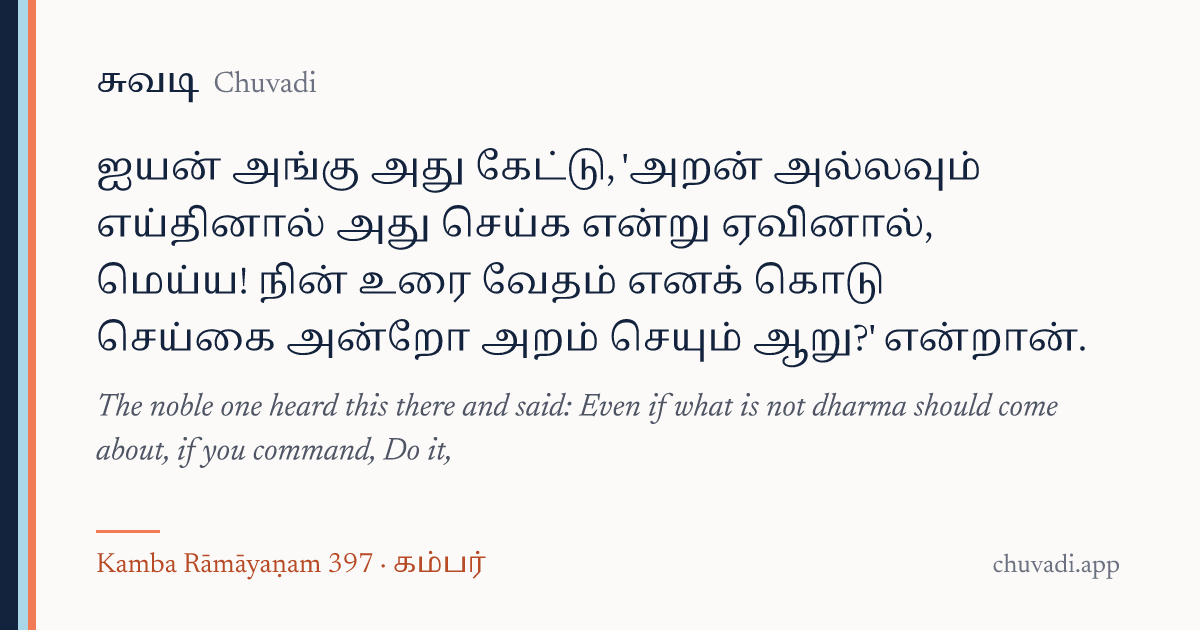
ஐயன் அங்கு அது கேட்டு - மேலோனாகிய ராமன் அங்கு அந்த முனிவன் கூறியதைக் கேட்டு; அறம் அல்லவும் எய்தினால் - அறம் அல்லாதனவும் ஒருக்கால் வந்து நேருமாயின்; அதுசெய்க என்று ஏவினால் - அதைச் செய்க என்று எனக்குக் கட்டளை இடுவீரேல்; மெய்ய! நின் உரைவேதம் எனக்கொடு - மெய்ம்மை நெறி நின்ற மேலோனே! உமது வாக்கை வேத வாக்காகக் கொண்டு; செய்கை அன்றோ - செய்வதே; அறம் செய்யும் ஆறு என்றான் - எனக்குரிய அறம் என இராமபிரான் கூறினான்.
ஐயன்: மேலோன். அறன்: அறம். அறனல்லவும் என்பதால் மறன் அன்று என்பது குறிப்பு. அல்லவும் என்பதன் 'உம்மை' அறன் அல்லாதது நேராது என்பது உணர்த்தும். மெய்ய: அண்மைவிளி. “மெய் நெறிநின்று ஒழுகுபவனே” என்பது பொருள் கொடு: கொண்டு என்பதன் இடைக்குறை. ஆறு: விதம். அறம் செய்யும் விதம் என்பது கருத்து. முனிவன் ஏவலுக்கு இராமன் இசைந்தான் என்பது கருத்து.
ஆங்கிலம் · English translationAI
Translation
- The noble one heard this there and said: Even if what is not dharma
- should come about, if you command, Do it,
- O truthful one, is it not the way of doing dharma
- to take your word as the Veda and act on it?
What the poem says
Irāmaṉ yields to his teacher. Even supposing the act were not righteous, once the sage commands it, the right course for a disciple is to treat his word as scripture and obey. So obedience to the guru is itself the dharma here.
The commentary notes that "even if" implies Irāmaṉ does not actually think the killing wrong; he is saying that no wrong can come of following a true teacher.