



கம்பராமாயணம் 3948 · கிட்கிந்தா 3.76
பாடல் · The poem
Tap a word to see its gloss in the commentary and where else it occurs.
பாட வேறுபாடு · Project Madurai reads
பொருள் · Meaning in Tamil
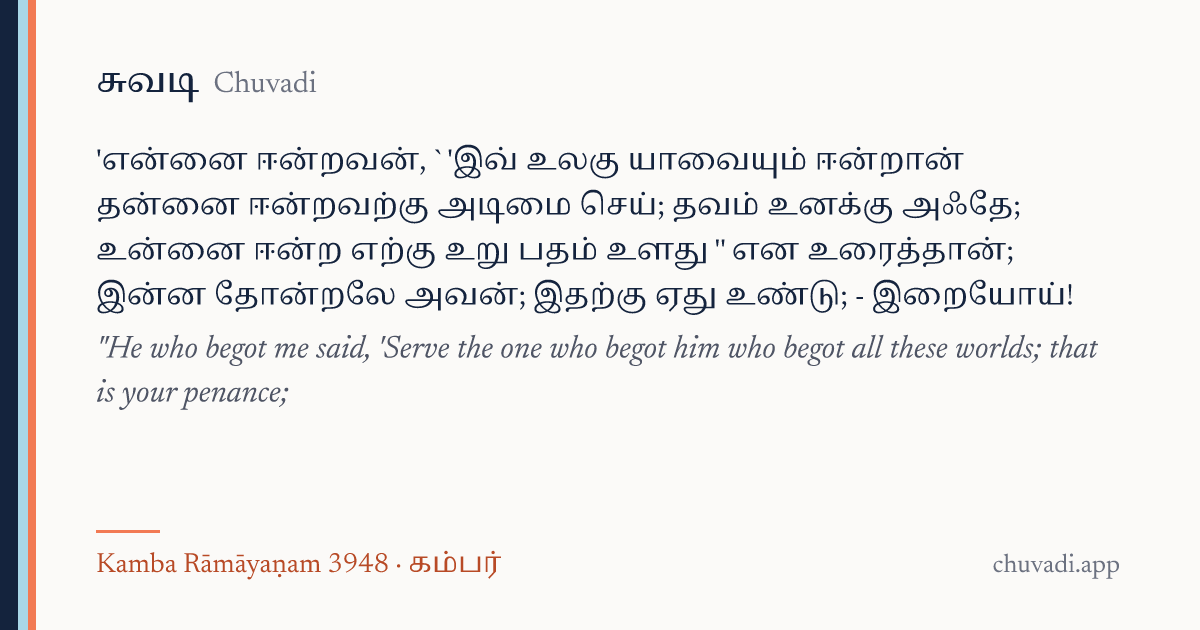
இறையோய் - தலைவனே! என்னை ஈன்றவன் - என்னைப் பெற்ற தந்தையாகிய வாயுதேவன்; இவ்வுலகு யாவையும் - (என்னை நோக்கி) "இவ்வுலகங்களையெல்லாம்; ஈன்றான் தன்னை - படைத்த பிரமனை; ஈன்றவற்கு - (தன் உந்திக்கமலத்தில்) ஈன்றவனாகிய திருமாலுக்கு; அடிமை செய் - தொண்டு செய்வாய். தவம் உனக்கு அஃதே - அதுவே உனக்குத் தவமாகும்; உன்னை ஈன்ற எற்கு - உன்னைப் பெற்ற எனக்கும்; உறுபதம் உளது - சிறந்த பதவி கிடைப்பதாகும்'; என உரைத்தான் - என்று சொன்னான்; இன்ன தோன்றலே - இந்த இராமனே; அவன் - அந்தத் திருமாலாகும். இதற்கு ஏது உண்டு - இவ்வாறு யான் கூறுவதற்கு வேறொரு காரணமும் உண்டு.
என்னை ஈன்றவன் என்றது வாயு தேவனை; யாவையும் ஈன்றான் - நான்முகன்; ஈன்றான் தன்னை ஈன்றவன் - திருமால். இங்கு இராமனைக் குறித்தது. 'மூன்றுலகும் ஈன்றானை முன்னீன்றானை' (2366) என முன் கூறியுள்ளதும் காண்க. மக்கள் செய்யும் நல்ல செயல் தந்தைக்கும் உரியதாய்ப் பெருமை சேர்க்கும் என்பதை 'உன்னை ஈன்ற எற்கு உறுபதம் உளது' என்ற தொடர் உணர்த்தும். வாயு தன் மைந்தனாகிய அனுமனை நோக்கித் 'திருமாலுக்கு அடிமை செய்' எனக் கூறிய செய்தி இப்பாடலில் குறிப்பிடப்படுகிறது.
ஆங்கிலம் · English translationAI
Translation
- "He who begot me said, 'Serve the one who begot
- him who begot all these worlds; that is your penance;
- to me who begot you a high station will come.'
- This prince is that one; and there is a reason for this, my lord.
What the poem says
Aṉumaṉ recalls his father Vāyu, the Wind, telling him to serve Viṣṇu, who brought forth from his navel-lotus Brahmā, maker of the worlds. That service would be Aṉumaṉ's penance, and its merit would raise his father too, as a child's good deeds bring honour to the parent. Aṉumaṉ declares that Irāmaṉ is that god, and promises a further proof.