



கம்பராமாயணம் 3961 · கிட்கிந்தா 4.10
பாடல் · The poem
Tap a word to see its gloss in the commentary and where else it occurs.
பொருள் · Meaning in Tamil
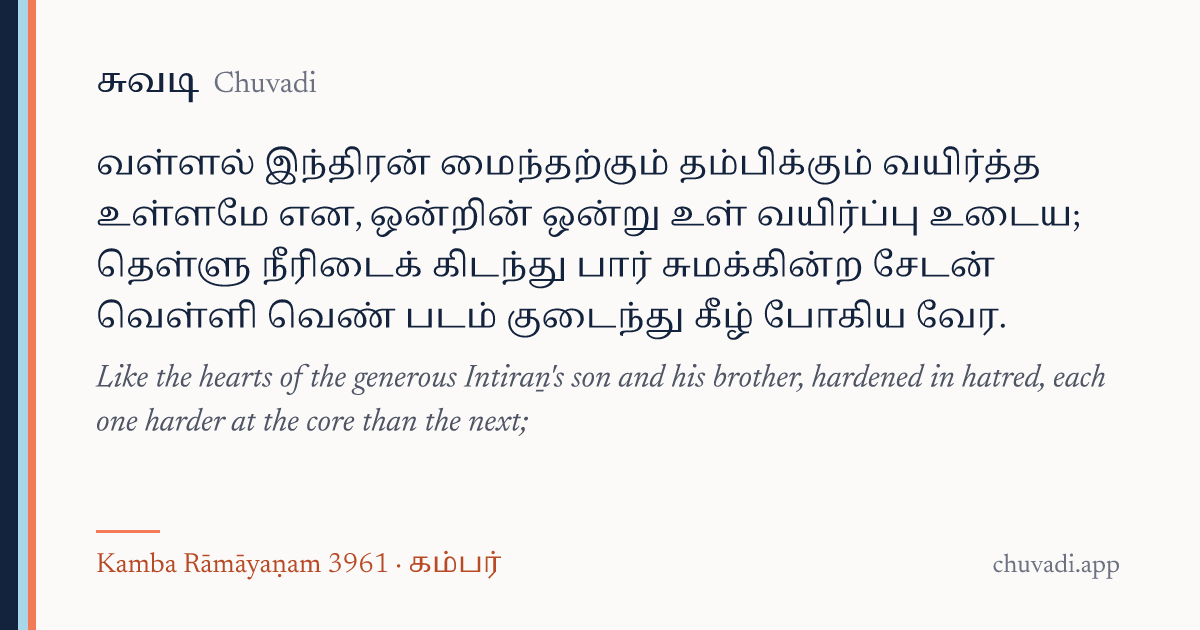
வள்ளல் இந்திரன் மைந்தற்கும்- வள்ளலாகிய இந்திரன் மைந்தனான வாலிக்கும்; தம்பிக்கும் - அவன் தம்பி சுக்கிரீவனுக்கும், வயிர்த்த உள்ளமே என - பகைமை முற்றிய மனம் போல; ஒன்றின் ஒன்று - அம்மரங்கள் ஒன்றைவிட மற்றொன்று; உள் வயிர்ப்பு உடைய - உள்ளே வயிரம் பாய்ந்தவை; தெள்ளு நீரிடைக் கிடந்த - தெளிவான நீரையுடைய கடலினிடையே தங்கிய; பார் சுமக்கின்ற - பூமியைச் சுமக்கின்ற; சேடன் - ஆதி சேடன் என்னும் பாம்பின்; வெள்ளி வெண் படம் - வெள்ளி போன்ற வெண்மையான படத்தை; குடைந்து - துளைத்துக் கொண்டு; கீழ் போகிய - கீழே ஊன்றிச் சென்ற; வேர - வேர்களை உடையன.
பாற்கடலைக் கடைந்து அமுதைத் தான் கொள்ளாமல் தேவர்களுக்கு அளித்தவன் ஆதலின் 'வள்ளல்' என, சிறப்பிக்கப்பட்டான். இருபொருள்பட 'வயிர்ப்பு' என்னும் சொல்லைக் கையாண்டு, 'வாலி சுக்கிரீவர் மனத்தில் வயிரம் வளர்த்துக் கொண்டது போல மரங்கள் உள்ளே வயிரத்தன்மை பெற்றன எனக் கூறியதால் இது செம்மொழிச் சிலேடையுடன் கூடிய உவமை அணியாகும். சேடன்- யாவும் அழிந்த போதும் தான் அழியாது எஞ்சி நிற்பவன், காரணப்பெயர், மரங்களை வருணித்த கவிஞர், தாம்
ஆங்கிலம் · English translationAI
Translation
- Like the hearts of the generous Intiraṉ's son and his brother,
- hardened in hatred, each one harder at the core than the next;
- their roots went down, piercing the silver-white hood of Cēṭaṉ,
- who lies in the clear waters and bears the earth.
What the poem says
A pun runs through the first two lines: vayirppu means both the hard heartwood of a tree and hardened hatred. The trees' cores are as hard as the enmity between Vālī, son of Intiraṉ (Indra), and Cukkirīvaṉ. Indra is "generous" because he did not keep the nectar of immortality for himself but gave it to the gods. The roots reach down through the hood of Cēṭaṉ (Ādiśeṣa), the serpent who holds up the earth.