



கம்பராமாயணம் 4046 · கிட்கிந்தா 7.24
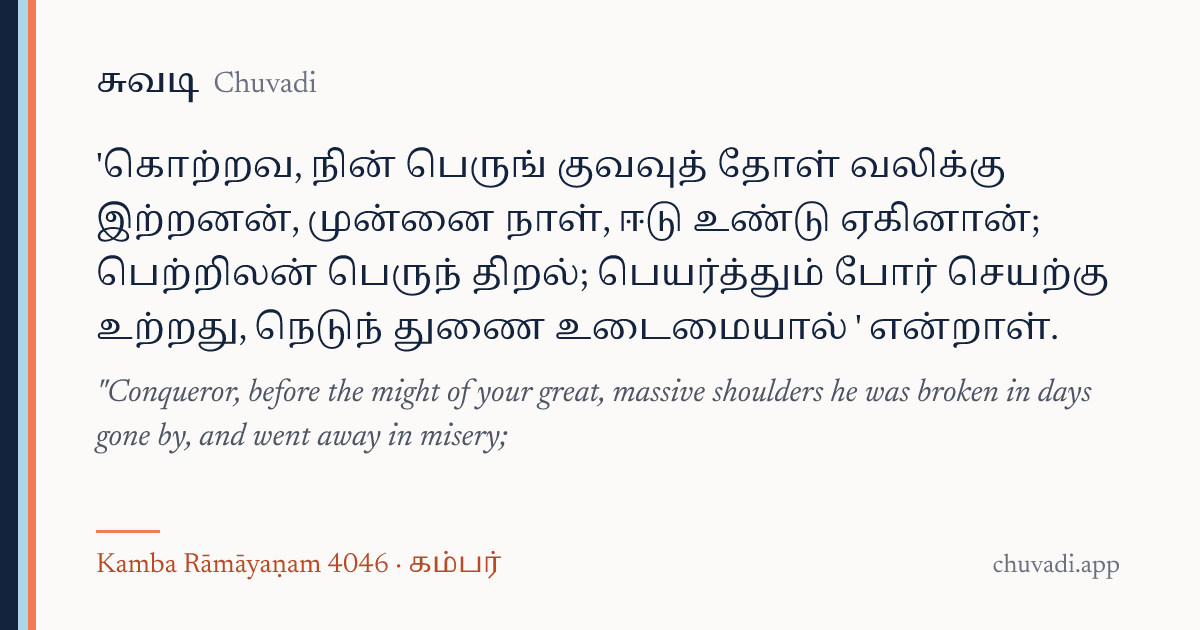
பாடல் · The poem
Tap a word to see its gloss in the commentary and where else it occurs.
பொருள் · Meaning in Tamil
கொற்றவ - (தாரை வாலியை நோக்கி) வெற்றியை உடைய அரசனே! நின்பெருங் குவவுத் தோள் - உன்னுடைய பெருமை மிக்க திரண்ட தோள்களின்; வலிக்கு - வலிமைக்கு; முன்னைநாள் - முன்; இற்றனன் - வலிமை அழிந்து; ஈடு உண்டு ஏகினான் - வருத்தமுற்றுச் சென்றவனான சுக்கிரீவன்; பெருந்திறல் பெற்றிலன் - (நின்னை எதிர்த்துப் போர் செய்ய) பேராற்றலைப் புதிதாகப் பெற்றானில்லை; பெயர்த்தும் போர்செயற்கு - (அவ்வாறாக) மீண்டும் உன்னோடு போர்செய்வதற்கு; உற்றது - வந்துற்றமை; நெடுந்துணை உடைமையால் - பெரிய ஒரு துணையினைப் பெற்றமையாலாகும்; என்றாள் - என்று சொன்னாள்.
நாட்டையும் ஆளும் தகுதியும் திறலும் உடையவனாதலின் தாரை வாலியைக் 'கொற்றவ' என விளித்தாள். குவவு - திரட்சி; ஈடு உண்டு - வருத்தமுற்று. ஈடு - வருத்தம். 'ஈடினால் இருந்தெண்ணி' என்பது சிந்தாமணி (1762). நெடுந்துணை - துன்பம் மிக்க காலத்திலும் நீங்காது நெடிது நின்று உதவும் துணை; ஈண்டு இராமனைக் குறிக்கும். பெயர்த்தும் போர்செயற்கு உற்ற காரணத்தை ஊகித்தறியும் தாரையின் அறிவுத்திறன் ஈண்டு நோக்கத்தக்கது.
ஆங்கிலம் · English translationAI
Translation
- "Conqueror, before the might of your great, massive shoulders
- he was broken in days gone by, and went away in misery;
- he has not gained any great new strength; that he has come
- to fight again is because he has a mighty ally," she said.
What the poem says
Tārai reasons calmly. Cukkirīvaṉ has been beaten by Vālī before and fled in distress. He has not suddenly become stronger, so if he dares to fight again, someone powerful must be backing him.
The "long ally" she speaks of is one who stands by a friend through the worst of times; here it points to Irāmaṉ. Her guess shows her shrewdness: she works out the hidden reason for the challenge.