



கம்பராமாயணம் 405 · பால 7.75
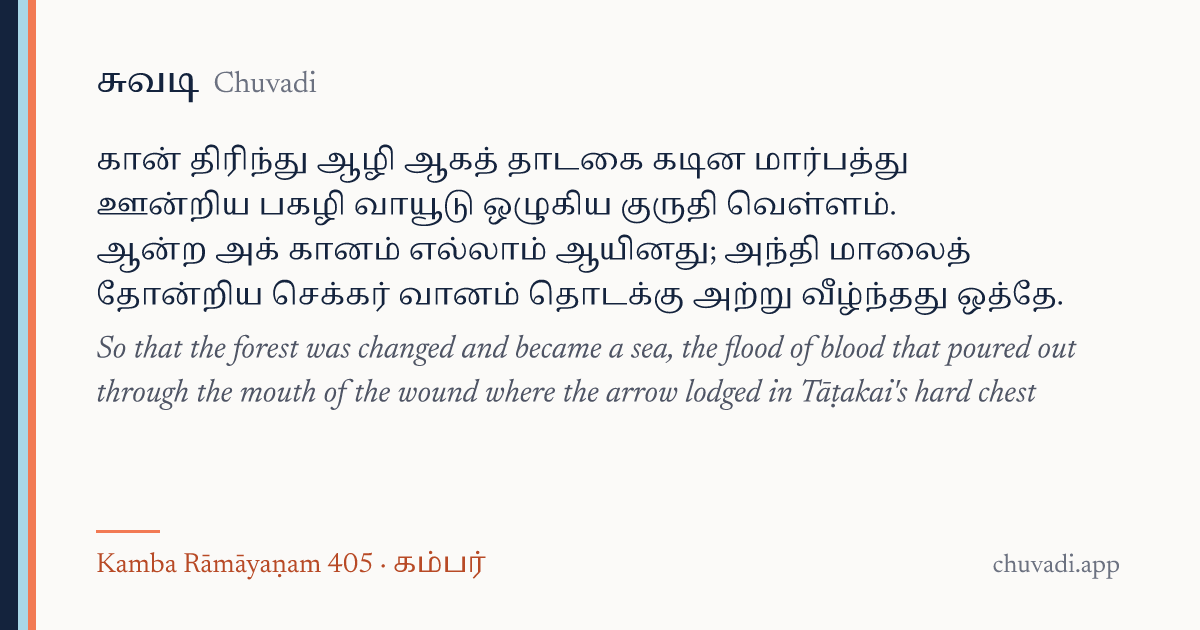
பாடல் · The poem
Tap a word to see its gloss in the commentary and where else it occurs.
பொருள் · Meaning in Tamil
தாடகை கடின மார்பத்து ஊன்றிய பகழி - அந்த அரக்கியின் உறுதி வாய்ந்த மார்பில் சென்று ஊன்றிய அம்பாலுண்டான; வாயூடு ஒழுகிய குருதிவெள்ளம் - புண்ணிலிருந்து ஒழுகிய ரத்தப் பெருக்கு; கான் திரிந்து ஆழி ஆக - அந்தக் காடே மாறி, கடலாகும்படி; ஆன்று அக்கானம் எல்லாம் - நிறைந்த அந்தக் காடெல்லாம்; அந்திமாலை தோன்றிய செக்கர்வானம் - அந்திமாலையில் தோன்றிய சிவந்த வானம்; தொடக்கு அற்று வீழ்ந்தது ஒத்த ஆயினது - வானத்தின் சம்பந்தம் நீங்கிக் கீழே வீழ்ந்து கிடந்ததைப்போல் ஆய்விட்டது.
கான்: காடு. ஆழி: கடல். பகழிவாய்: அம்புபட்டுப்பிளந்த புண்வாய். வெள்ளம்: பெருக்கு. ஆன்று: நிறைந்த. செக்கர்வானம்: செவ்வானம். இராமபிரானது அம்புபட்ட புண்வாயிலிருந்து பெருகிய ரத்தம் வெள்ளமாய்ப் பெருகி - அந்தக் காட்டைக் கடலாக்கிவிட்டது. அந்திமாலையின் சிவந்த வானம் - வானத்தின் தொடர்பு நீங்கிக் கீழேவிழுந்து கிடப்பதைப் போல அந்தக்காடு காணப்பட்டது என்பது கருத்து.
ஆங்கிலம் · English translationAI
Translation
- So that the forest was changed and became a sea, the flood of blood
- that poured out through the mouth of the wound where the arrow lodged in Tāṭakai's hard chest
- filled all that vast forest; it was as though the red sky
- that appears at dusk had broken loose and fallen down.
What the poem says
Tāṭakai's blood pours from the arrow-wound in her chest in such quantity that the whole desert forest becomes a red sea.
The scene looks as if the crimson evening sky had come unfastened from the heavens and dropped onto the earth.