



கம்பராமாயணம் 4198 · கிட்கிந்தா 7.176
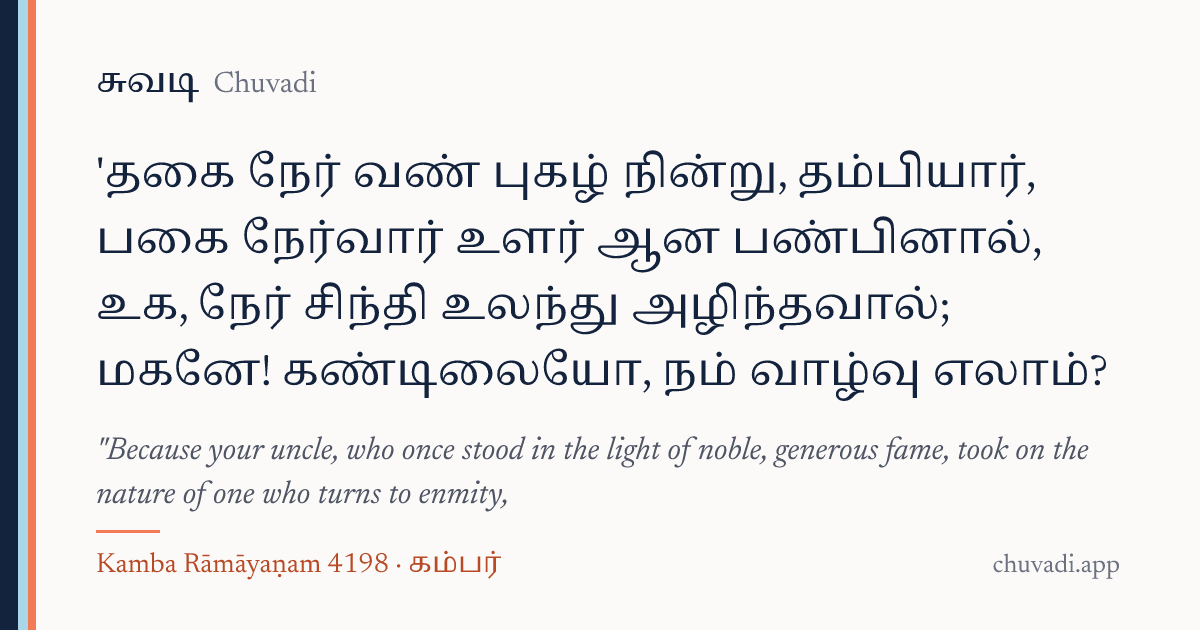
பாடல் · The poem
Tap a word to see its gloss in the commentary and where else it occurs.
பொருள் · Meaning in Tamil
மகனே - (தாரை, அங்கதனை முன்னிலைப்படுத்தி) மைந்தனே! தம்பியார் - (உன் தந்தைக்குத்) தம்பியரான சுக்கிரீவர்; தகைநேர் - பெருமை பொருந்திய; வண் புகழ் நின்று - (உன் தந்தையின்) சிறந்த புகழுக்கேற்பப் பணிந்து நின்று; பகை நேர்வார் உளர் ஆன பண்பினால் - (பின்பு உறவு நிலைமாறி) அவரோடு பகைமை கொள்பவர் தன்மையினால்; உக - உன் தந்தை இறந்துபட, நம் வாழ்வு எலாம் - நமது சிறப்பான வாழ்க்கையெல்லாம்; நேர் சிந்தி உலந்து அழிந்த - தகுதி கெட்டு அழிந்துவிட்டன. கண்டிலையோ - இதனை நீ காணவில்லையோ?
இஃது அங்கதன் அவ்விடத்து இல்லாவிடினும் அவனை முன்னிலையாக்கித் தாரை புலம்பியது. தம்பியார்- பன்மை விகுதியில் கூறியது வெறுப்பினால் என்க. வஞ்சப் புகழ்ச்சி. வண்புகழ் நின்று என்பதற்கு (தமையனின்) புகழின் ஒளியிலே நிலைத்து வளர்ந்து எனப் பொருள் கொள்ளுதலும் பொருந்தும். அழிந்த - பன்மை வினை முற்று. ஆல் - அசை. அழிந்தவால் என்பது பாடமாற்றம்.
ஆங்கிலம் · English translationAI
Translation
- "Because your uncle, who once stood in the light of noble, generous fame,
- took on the nature of one who turns to enmity,
- your father has fallen, and all our life is scattered, wasted and destroyed.
- My son, do you not see it?"
What the poem says
Tārai addresses Aṅkataṉ, although he is not present. She blames Cukkirīvaṉ, using a mock-respectful plural for him in bitterness: he once lived humbly in the glory of his elder brother, but turned against him. Because of that, Vāli has died and the family's whole happy life has been ruined.
The commentary also allows another sense of the first line: Cukkirīvaṉ grew up in the shadow of his brother's fame.