



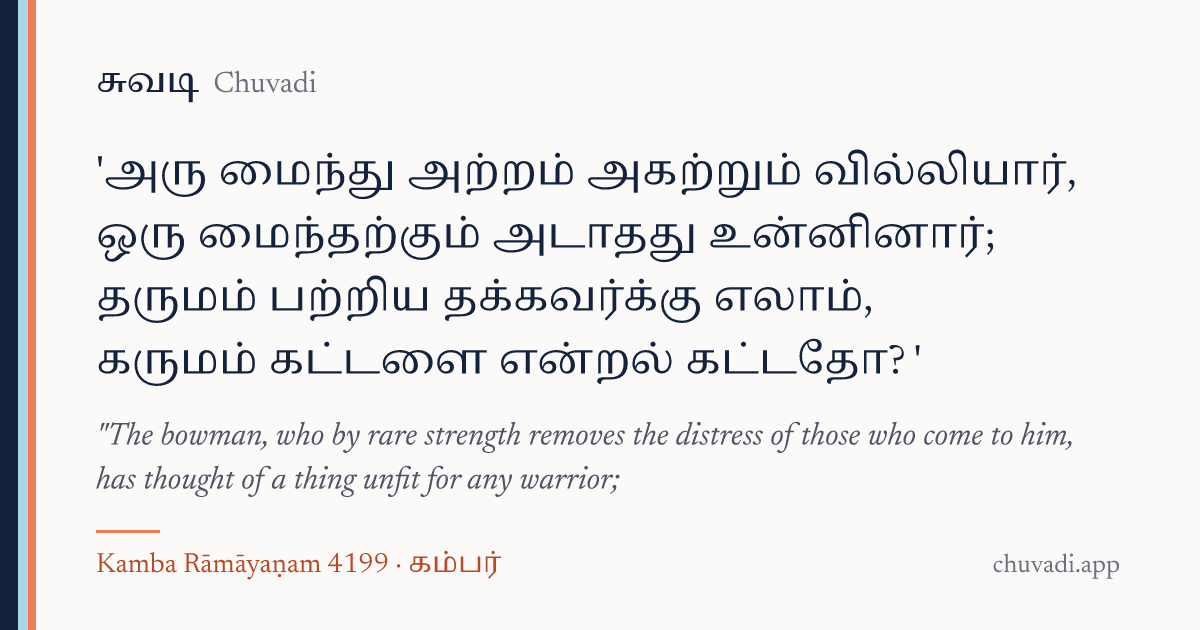
கம்பராமாயணம் 4199 · கிட்கிந்தா 7.177
பாடல் · The poem
Tap a word to see its gloss in the commentary and where else it occurs.
பொருள் · Meaning in Tamil
அருமைந்து - பெறுதற்கரிய வன்மையால்; அற்றம் அகற்றும் - (தன்னையடைந்தவர்களின்) பெருந்துன்பத்தைப் போக்கும்; வில்லியார் - வில்லினையுடைய இராமர்; ஒரு மைந்தற்கும் - எந்த வீரனுக்கும்; அடாதது உன்னினார் - பொருந்தாத முறையற்ற செயலை, நினைத்துச் செய்துவிட்டார். தருமம் பற்றிய - அறநெறியைக் கடைப்பிடித்தொழுகும்; தக்கவர்க்கு எலாம் - தகுதியுடைய பெரியவர்களுக்கெல்லாம்; கருமம் கட்டளை என்றல் - அவரவர் செய்யும் செயல்களே அவரவர் தகுதியை அளக்கும் உரைகல்லாகும் என்று கூறும் ஆன்றோர் உரை; கட்டு அதோ- (உண்மையோடு பொருந்தாது) புனைந்துரைதானா?
வாலியின் உயிரைப் போக்கியது வில்லிலிருந்து தொடுக்கப்பட்ட அம்பு ஆதலின் 'வில்லியார்' எனச்சுட்டினாள். இராமன் பெயர் கூறாது வில்லினை உடையவர் என்று இழிவு தோன்றக் கூறினாள் என்க. அற்றம் அகற்றும் வில் உண்மையில் அற்றம் போக்காது துன்பத்தையே விளைத்தது என்பது குறிப்பு. கருமம் கட்டளையாவதைப் "பெருமைக்கும் ஏனைச் சிறுமைக்கும் தத்தம், கருமமே கட்டளைக் கல்" எனக்குறள் (505) உணர்த்துதல் காண்க. கட்டளை- உரைகல்; பொன்னை உரைத்துப் பார்க்கும் கல். கட்டதோ- ஓகாரம் வினா.
ஆங்கிலம் · English translationAI
Translation
- "The bowman, who by rare strength removes the distress of those who come to him,
- has thought of a thing unfit for any warrior;
- for all the worthy who hold to dharma, the saying
- that one's deeds are the touchstone, is that just an invention?"
What the poem says
Tārai does not even name Irāmaṉ, calling him only "the bowman," with contempt. The bow that was meant to end suffering has caused it, and he has done something no true warrior would do.
She recalls the maxim of the Tirukkuṟaḷ (505) that a person's own deeds are the touchstone of greatness or smallness, and asks whether it is merely a pretty fiction, since by that test Irāmaṉ's deed condemns him.