



கம்பராமாயணம் 422 · பால 8.15
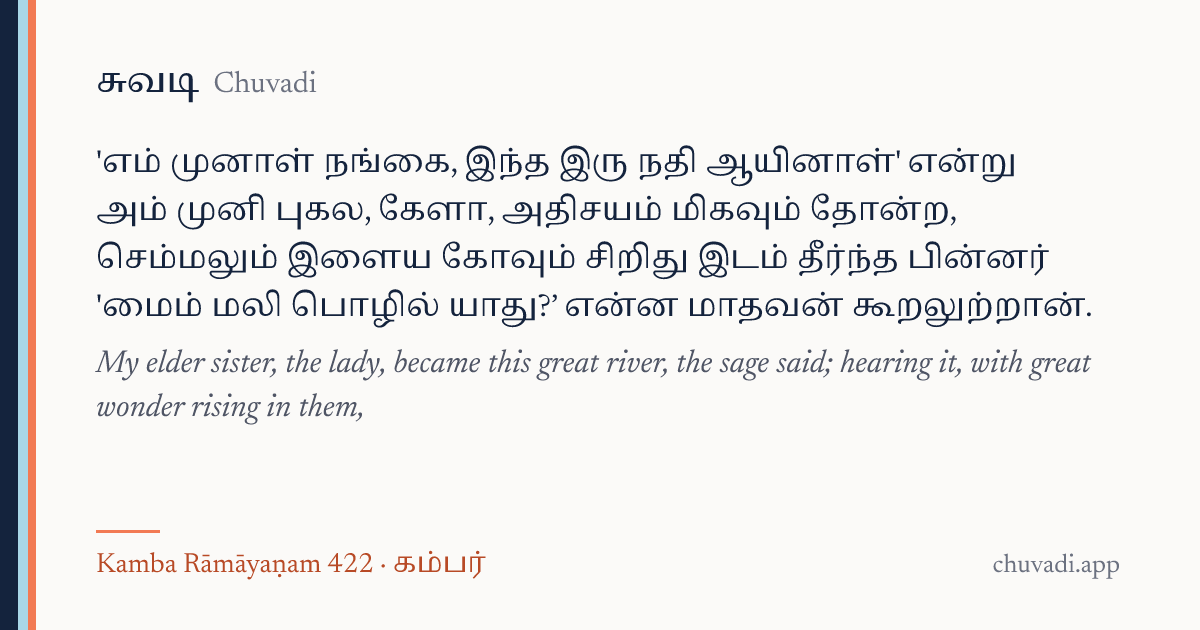
பாடல் · The poem
Tap a word to see its gloss in the commentary and where else it occurs.
பொருள் · Meaning in Tamil
எம்முனாள் நங்கை - எனது தமக்கையாகிய கவுசிகை என்பாள்; இந்த இரு நதி ஆயினாள் - இந்தப் பெரிய நதிவடிவம் ஆனாள்; என்று அம்முனி புகலக்கேளா - என்று அந்த விசுவாமித்திர முனிவன் சொல்லக் கேட்டு; செம்மலும் இளைய கோவும் - தலைமகனாகிய இராமனும், இளையவனாகிய இலக்குவனும்; அதிசயம் மிகவும் தோன்ற - ஆச்சரியம் மிக உண்டாக; சிறிது இடம் தீர்ந்த பின்னர் - சிறிதுதூரம் நடந்துசென்ற பிறகு (அங்கு காட்சியளித்த சோலை ஒன்றைக் கண்டு); மைம்மலி பொழில்யாது என்ன - மேகம் கவிந்துள்ள இந்தச் சோலை யாவது என்று கேட்க; மாதவன் கூறல் உற்றான் - சிறந்த தவமுனியாகிய விசுவாமித்திரன் கூறத் தொடங்கினான்.
“முன்னாள்” என்பது இடைகுறைந்து 'முனாள்' என நின்றது. முன்பு பிறந்தவள் (தமக்கை) என்பது பொருள். கேளா: கேட்டு (செயா என்ற வாய் பாட்டு உடன்பாட்டு வினையெச்சம். செம்மல்: தலைமகன், அழகன். இளையகோ: இளங்கோ (இளவரசன்). மை: மேகம். மலி: நிறைந்த அல்லது கருமை நிறைந்த எனினுமாம். மை: கருமை. இருநதி: உரிச்சொல்தொடர்.
எனது தமக்கையான 'கவுசிகை' இந்த நதியானாள் என்று முனிவன் கூறக் கேட்ட இராம இலக்குவர் அதிசயித்தனர். பின்னர் சிறிது தூரம் செல்ல, எதிரே காணப்பட்ட சோலை ஒன்றைக் கண்டு, இது யாதென முனிவன் கூறலானான் என்க.
ஆங்கிலம் · English translationAI
Translation
- My elder sister, the lady, became this great river,
- the sage said; hearing it, with great wonder rising in them,
- the noble prince and the younger prince went on a little way, and then
- asked, What is this grove dense with dark cloud? and the great ascetic began to tell.
What the poem says
Vicuvāmittiraṉ reveals that the holy river before them is his own elder sister, Kaucikai. Irāmaṉ and Ilakkuvaṉ are amazed.
A little farther on they see a grove so thick it seems wrapped in dark cloud, and they ask about it. The sage begins another story, which leads to Viṣṇu's Vāmana incarnation.