



கம்பராமாயணம் 4223 · கிட்கிந்தா 8.20
பாடல் · The poem
Tap a word to see its gloss in the commentary and where else it occurs.
பொருள் · Meaning in Tamil
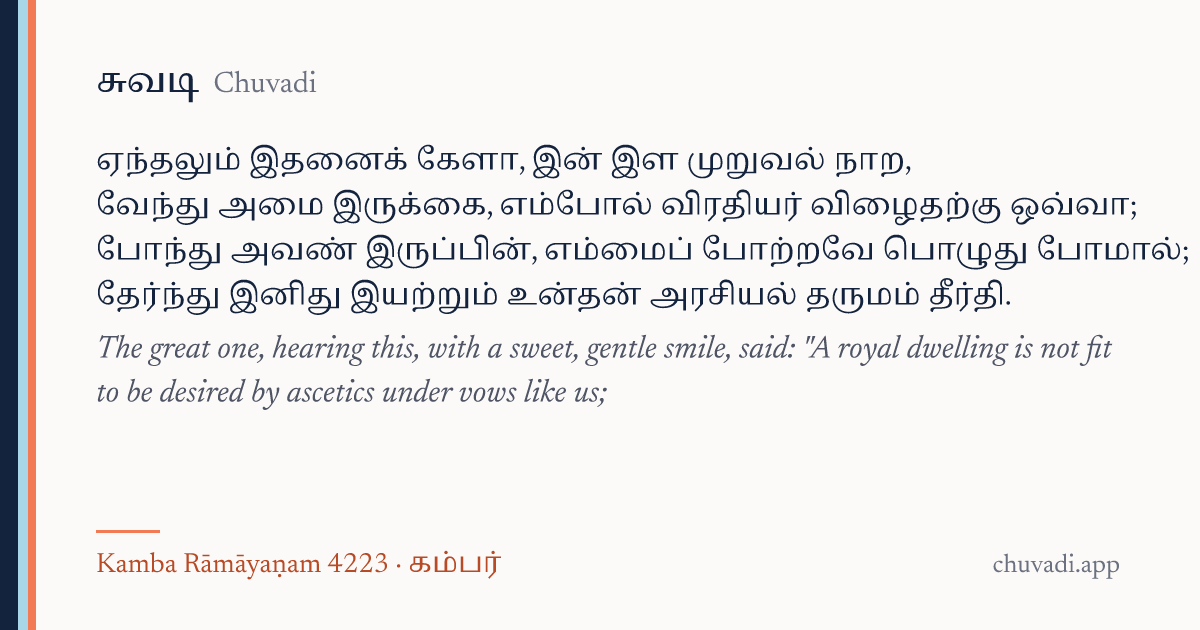
ஏந்தலும் - பெருமையில் சிறந்த இராமனும்; இதனைக் கேளா - (சுக்கிரீவன் கூறிய) இவ்வுரையைக் கேட்டு; இன்இள முறுவல் நாற - இனிய புன்னகை தோன்ற, வேந்து அமை இருக்கை - அரசர்க்குரிய அரண்மனையில் தங்கியிருக்கும்; எம்போல் விரதியர் - எம்மைப் போல் விரதம் பூண்டோர்; விழைதற்கு ஒவ்வா - விரும்பியிருத்தற்குத் தகாததாகும்; அவண் போந்து இருப்பின் - (மேலும்) அவ்விடத்தில் (கிட்கிந்தா நகரத்தினுள்) வந்து வசித்தால்; எம்மைப் போற்றவே பொழுது போம் - எம்மை உபசரிப்பதிலேயே (உனக்குப்) பொழுது கழிந்திடும்; தேர்ந்து இனிது இயற்றும் - ஆராய்ந்து இனிது நடத்தும்; உன்தன் அரசியல் தருமம் - உன் அரசாட்சியின் முறைமையினின்றும்; தீர்தி - தவறியவனாவாய்.
விரதியர் - தவ வாழ்வினர். 'தாழிரும் சடைகள் தாங்கித் தாங்க அரும் தவம் மேற்கொண்டு' கானகத்தில் வாழவேண்டும் என்பது கைகேயி சொன்ன (1601); அது பழுதாகாமல் தவ வாழ்வினராக இருந்தனர் இராமனும் இளவலும்.
முறுவல் - அன்பு பற்றி எழுந்தது. கேளா - செய்யா என்னும் வாய்பாட்டு வினையெச்சம் உடன்பாட்டுப் பொருளில் வந்தது. நாற - தோன்ற.
ஆங்கிலம் · English translationAI
Translation
- The great one, hearing this, with a sweet, gentle smile, said:
- "A royal dwelling is not fit to be desired by ascetics under vows like us;
- if we came and stayed there, your time would pass only in serving us,
- and you would fall short in the duty of kingship you carry out with care."
What the poem says
Irāmaṉ smiles at Cukkirīvaṉ's affection but declines. He is under a vow of austerity, so a palace is no place for him. Besides, if he stayed in the city, Cukkirīvaṉ would spend all his time looking after his guests and neglect his duties as king.
The commentary recalls Kaikēyi's command that Irāmaṉ live in the forest as an ascetic with matted hair. He and Ilakkuvaṉ have kept to that life without fail.