



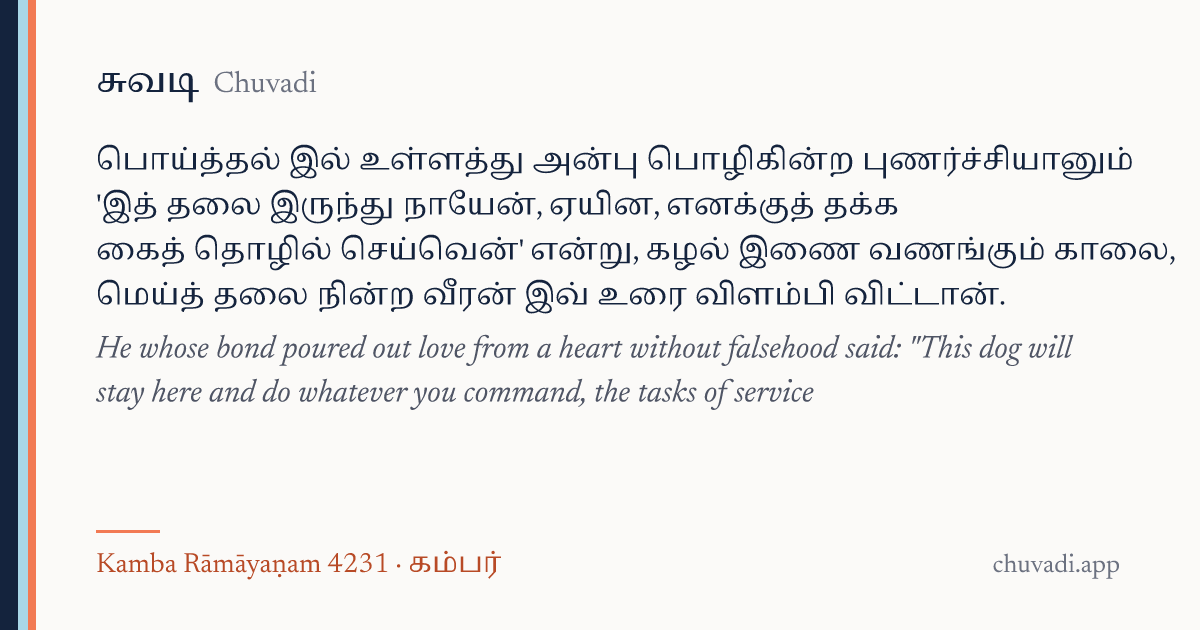
கம்பராமாயணம் 4231 · கிட்கிந்தா 8.28
பாடல் · The poem
Tap a word to see its gloss in the commentary and where else it occurs.
பொருள் · Meaning in Tamil
பொய்த்தல் இல் உள்ளத்து - பொய்ம்மை இல்லாத மனத்தில்; அன்பு பொழிகின்ற புணர்ச்சியானும் - அன்பைப் பொழிகின்ற நட்பை உடையவனான அனுமனும்; நாயேன் - (இராமனை நோக்கி) நாய் போன்றவனான அடியேன்; இத்தலை இருந்து - இவ்விடத்திலேயே தங்கி, ஏயின - (உன்னால்) ஏவப்பட்டனவும், எனக்குத் தக்க - எனது ஆற்றலுக்கு ஏற்றனவுமான; கைத்தொழில் செய்வேன் என்று - குற்றேவல்களைச் செய்வேன் என்று கூறி; கழல் இணை வணங்கும் காலை - இராமனது கழலணிந்த இரண்டு திருவடிகளையும் வணங்கிய பொழுது; மெய்த்தலை நின்ற வீரன் - உண்மையின் கண் நிலைத்து நின்ற வீரனான இராமன்; இவ்வுரை விளம்பிவிட்டான் - (பின்வரும்) இந்த வார்த்தைகளைக் கூறலானான்.
பொய் கருதாமை, அன்புடைமை ஆகிய அனுமனின் சிறப்பியல்புகள் இங்குக் கூறப்பட்டன. "நீதியில் நின்றீர்; வாய்மை அமைந்தீர்" (4725); 'அண்ணல் அம்மைந்தர்க்கு அன்பு சிறந்தீர்' (4726) என்ற சாம்பன் கூற்றும் 'சொல்லுதி மெய்ம்மை தொடர்ந்தோய்' (5422) என்ற சீதையின் கூற்றும் காண்க. 'நாயேன்' என்றதனால் அனுமனின் அடிமைத்திறமும், 'ஏயின செய்வேன்' என்றதால் கட்டளை மறுக்காமையும், 'எனக்குத்தக்க கைத்தொழில்' என்றதால் பணியும் கூறப்பட்டன. 'ஆண்டான் அடிமைத் தொழில் ஆற்றலின் ஆற்றல் உண்டே?' (4801), "யான் அவர்தம் பண்ணைக்கு ஒருவன் எனப் போந்தேன்; ஏவல் கூவல் பணி செய்வேன்" (5341) என்பன அனுமன் கூற்றுக்களாம். கைத்தொழில் - குற்றேவல், கை - சிறுமை. கைங்கறியம் என்ற வடசொல்லின் அமைதி பொருந்துதல் காண்க.
ஆங்கிலம் · English translationAI
Translation
- He whose bond poured out love from a heart without falsehood said:
- "This dog will stay here and do whatever you command, the tasks of service
- that suit me," and as he bowed at his anklet-bound feet,
- the hero who stands firm in truth spoke these words.
What the poem says
Aṉumaṉ, truthful and full of love, asks to stay with Irāmaṉ instead. Calling himself a lowly dog, he offers to do whatever service he is fit for, and bows at Irāmaṉ's feet.
The commentary links each phrase to Aṉumaṉ's qualities: humility, unquestioning obedience and willing service. It recalls other places where Aṉumaṉ calls himself a servant, and suggests the word for "service" here echoes the Sanskrit kaiṅkarya. Irāmaṉ's reply follows.