



கம்பராமாயணம் 428 · பால 8.21
பாடல் · The poem
Tap a word to see its gloss in the commentary and where else it occurs.
பாட வேறுபாடு · Project Madurai reads
பொருள் · Meaning in Tamil
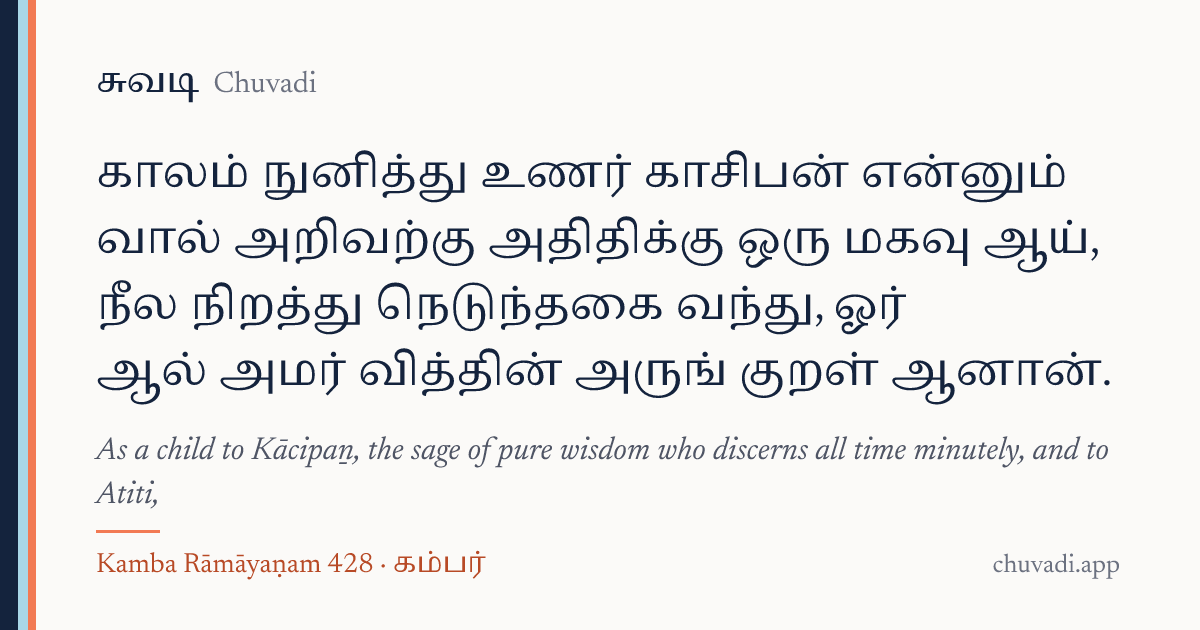
காலம் நுனித்து உணர் - முக்காலங்களையும் சூக்குமமாகக் கணித்து எதனையும் உணரவல்ல; காசிபன் என்னும் வால் அறிவற்கு - காசிபன் என்ற பெயருடைய மெய்யறிவுடைய முனிவனுக்கும்; அதிதிக்கும் ஒருமகவாய் - அவனது மனைவியான அதிதி என்பவளுக்கும் ஒப்பற்ற குழந்தையாக; நீல்நெடுந்தகை வந்து - நீல நிறத்தை உடைய திருமால் வந்து பிறந்து; ஓர் ஆல்அமர் வித்தின் - ஆலமரம் நுண்ணுருவில் தங்கியிருக்கத் தகுந்த அந்த ஆலம் விதையை ஒத்து; அரும் குறள் ஆனான் - அரிய குறள் உருவத்தில் வளர்ந்து வந்தான்.
காலம்: முக்காலங்களையும் உணர்த்தி நின்றது. நுனித்துணர்: நுண்மையாய் அறிதல். காசிபன்: பிரமனுக்கு மரீசி என்பவனது மகன். வாலறிவன்: மெய்யறிவு படைத்தவன். நீல நிறத்து நெடுந்தகை: திருமால். ஒரு பெரிய ஆல மரத்தினது முழு வளர்ச்சிக்குரிய நுண்ணிய உறுப்புக்கள் அதன் வித்தினுள் அடங்கியிருப்பது போலப் பின்னர் எடுக்கத் தக்க “ஓங்கி உலகளந்த” திருமாலின் பேருருவத்தை உள்ளடக்கியிருப்பதை உணர்த்தும். “ஆல் அமர் வித்தின் அருங்குறள்” என்ற உவமையின் நயமுணர்க. குறள்: இரண்டடி. எனவே 'குறளன்' குறுகிய வடிவமுடைய வாமன மூர்த்தி என்க.
ஆங்கிலம் · English translationAI
Translation
- As a child to Kācipaṉ, the sage of pure wisdom who discerns all time minutely,
- and to Atiti,
- the great one of dark-blue colour came, and became
- a rare dwarf, like the seed in which the banyan dwells.
What the poem says
Viṣṇu, the dark-blue Lord, is born as the son of the all-knowing sage Kācipaṉ (Kaśyapa) and his wife Atiti (Aditi), in the form of a dwarf, Vāmaṉaṉ.
The simile is admired: just as the whole of a vast banyan tree lies folded inside its tiny seed, this small figure holds within it the immense form that will soon stride across the universe.