



கம்பராமாயணம் 431 · பால 8.24
பாடல் · The poem
Tap a word to see its gloss in the commentary and where else it occurs.
பாட வேறுபாடு · Project Madurai reads
பொருள் · Meaning in Tamil
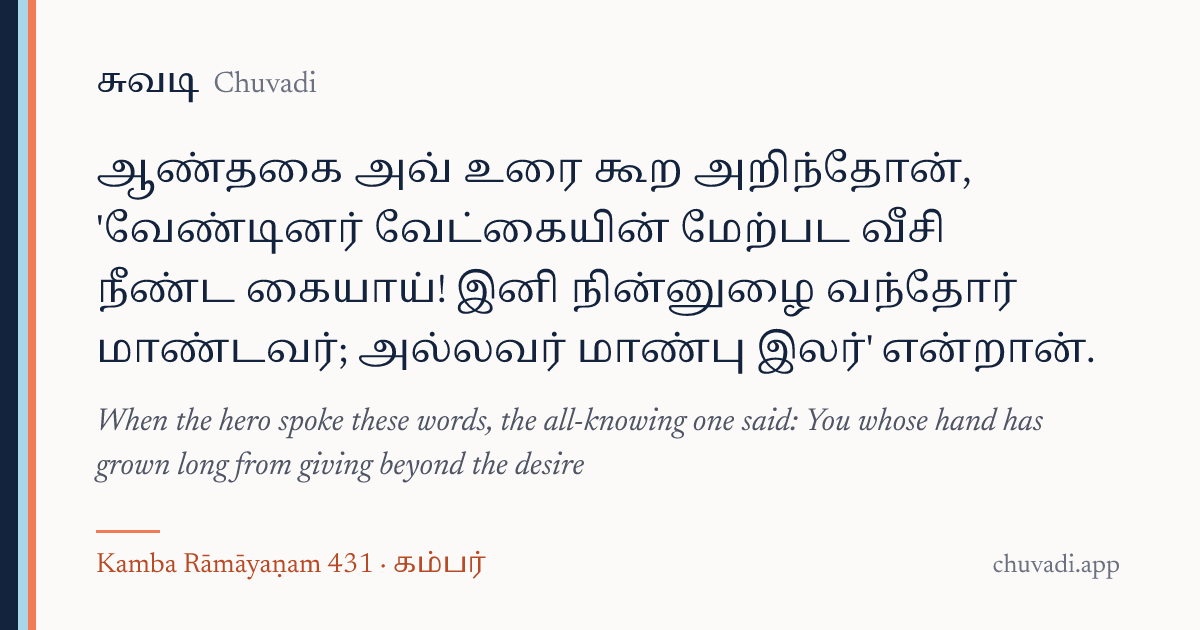
ஆண்தகை அவ்வுரை கூற - வீரம் மிக்க மாவலி அவ்விதமாகச் சொல்லவே, அறிந்தோன் - அனைத்தும் அறிந்தவனாகிய அவ்வாமனமூர்த்தி; வேண்டினர் வேட்கையின் மேற்பட வீசி நீண்ட கையாய் - வேண்டி வந்தவர்களது விருப்பத்துக்கு மேற்படும்படி வாரி வழங்கி அதனால் நீண்டிருக்கும் கைகளை உடையோய்!; இனி நின் உழை வந்தோர் மாண்டவர் - உன்னிடம் வந்தவர்கள் மாண்புடையவராவர்; அல்லவர் மாண்பிலர் என்றான் - அல்லாதவர் மாட்சியில்லாதவரே என்றான்.
ஆண்தகை: வீரம் பொருந்தியவன் (இங்கு மாவலி). தனக்குத் தீங்கு வருவது கண்டும் மேற்கொண்ட செயலில் ஊக்கமுடையவன் என்பதைக் குறிக்கும். வேண்டினர்: வேண்டி வந்த இரவலர். வேட்கை: விருப்பம். நீண்ட கை: கொடையில் நீண்ட கை; (தருகை நீண்ட கை. 'நின்னுழை' இதில் 'உழை' ஏழனுருபு. வீசுதல்: வழங்குதல்.
மாவலி அவ்வாறு கூற, வாமனன், வேண்டிவந்து கேட்பவர்களின் விருப்பத்துக்கும் மிகுதியாக வழங்கும் நீண்ட கையுடையவனே! உன்னிடம் வந்தடைந்தவர்கள் மாண்புடையர், அல்லாதவர்கள் மாண்பில்லார் என்று பாராட்டினான் என்பது கருத்து.
ஆங்கிலம் · English translationAI
Translation
- When the hero spoke these words, the all-knowing one said:
- You whose hand has grown long from giving beyond the desire
- of those who ask! From now on, those who come to you
- are the worthy; those who do not are without worth.
What the poem says
The disguised Viṣṇu, who knows everything, answers the king's welcome with praise. Māvali's hand has grown "long" from giving more than any petitioner even hopes for.
So those who come to him are blessed, and those who do not have missed their chance. The commentary notes that Māvali is called a hero because he will hold to his generosity even when harm to himself is foretold.