



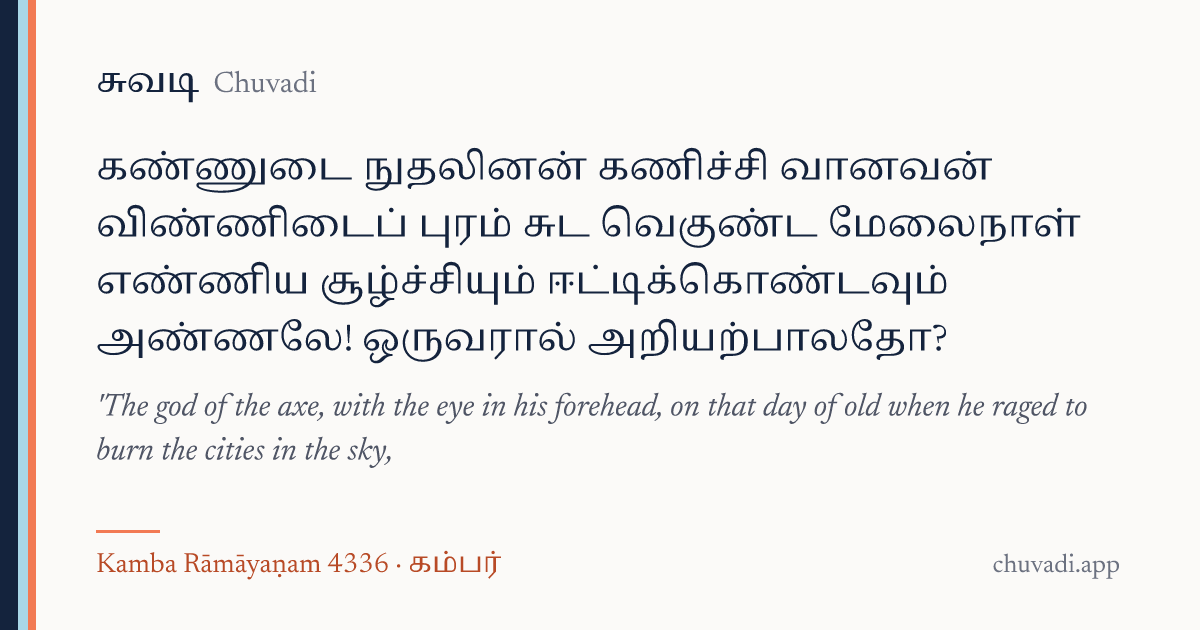
கம்பராமாயணம் 4336 · கிட்கிந்தா 9.99
பாடல் · The poem
Tap a word to see its gloss in the commentary and where else it occurs.
பாட வேறுபாடு · Project Madurai reads
பொருள் · Meaning in Tamil
அண்ணலே - பெருமையில் சிறந்தவனே! கண்ணுடை நுதலினன் - (நெருப்புக்) கண் பொருந்திய நெற்றியை உடையவனாகிய; கணிச்சி வானவன் - மழுவேந்திய சிவபிரான்; விண்ணிடைப் புரம் சுட - ஆகாயத்தில் திரியும் திரிபுரங்களை எரித்தற் பொருட்டு; வெகுண்ட மேலை நாள் - சினங்கொண்ட முற்காலத்திலே; எண்ணிய சூழ்ச்சியும் - (அதற்காக) எண்ணிய ஆலோசனைகளும், ஈட்டிக் கொண்டவும் - சேகரித்துக் கொண்ட தேர் முதலிய கருவிகளும்; ஒருவரால் அறியற்பாலதோ - (ஏன் வேண்டுமென்று) ஒருவரால் அறியத்தகுவனவோ?
அனைவர்க்கும் பேரிடர் புரிந்து வந்த திரிபுரங்களை அழிக்க நெற்றிக் கண்ணும், தீத்திறல் கொண்ட மழுவாயுதமுமே அமையும்; எனினும், சிவபிரான் அவற்றைப் பயன்படுத்தாது, பல தேவர்களின் உதவி கொண்டே அவற்றை அழிக்க முதலில் நினைந்தான் என்பது இங்குக் குறிக்கப்பட்டது.
பூமியைத் தேராகவும், சூரிய சந்திரர்களைச் சக்கரங்களாகவும், தேவர்களைத் தேர்க்கால்களாகவும், நான்கு வேதங்களைக் குதிரைகளாகவும், பிரமனைத் தேர்ப்பாகனாகவும், மேருமலையை வில்லாகவும், ஆதிசேடனை நாணாகவும், திருமாலை அம்பாகவும் கொண்டு திரிபுரங்களை அழிக்கச் சிவபிரான் சென்றான் என்பது புராண வரலாறு. "ஓங்கு மலைப் பெருவில் பாம்பு நாண்கொளீஇ ஒரு கணை கொண்டு மூவெயில் உடற்றிப் பெருவிறல் அமரர்க்கு வென்றிதந்த கறைமிடற் றண்ணல்" (புறம் - 55); என்றது காண்க. நெற்றிக்கண்ணும் மழுப்படையும் சிவபிரானுக்குரிய சிறப்பு அடையாளங்களாதலின் "வானவன்" என்ற சொல் - தேவரைக் குறித்த பொதுச் சொல், சிவபிரானைக் குறித்தது. பகைவரை அழிப்பதற்குத் தக்க ஆலோசனையும் கருவிகளும் இன்றியமையாதன என்பது இப்பாடலில் விளக்கப்பட்டது. 'கருவியும், காலமும் செய்கையும் செய்யும் அருவினையும் மாண்ட தமைச்சு' (குறள் - 631) என்றது காண்க.
ஆங்கிலம் · English translationAI
Translation
- 'The god of the axe, with the eye in his forehead,
- on that day of old when he raged to burn the cities in the sky,
- the plans he devised and the means he gathered,
- noble one, can anyone fully know them?'
What the poem says
A third example: Civaṉ (Shiva), with the fiery eye in his forehead and his battle-axe, could have burned the three flying cities of the demons with either one. Yet he planned the campaign and gathered a whole war-chariot made of the cosmos: the earth as the car, sun and moon as wheels, the Vedas as horses, Mount Mēru as his bow, the serpent Ātiśēṣaṉ as the string, and Tirumāl as the arrow.
Ilakkuvaṉ's point is that even the gods use counsel and proper means to destroy an enemy, so Irāmaṉ should wait for the right moment and the army.