



கம்பராமாயணம் 4347 · கிட்கிந்தா 9.110
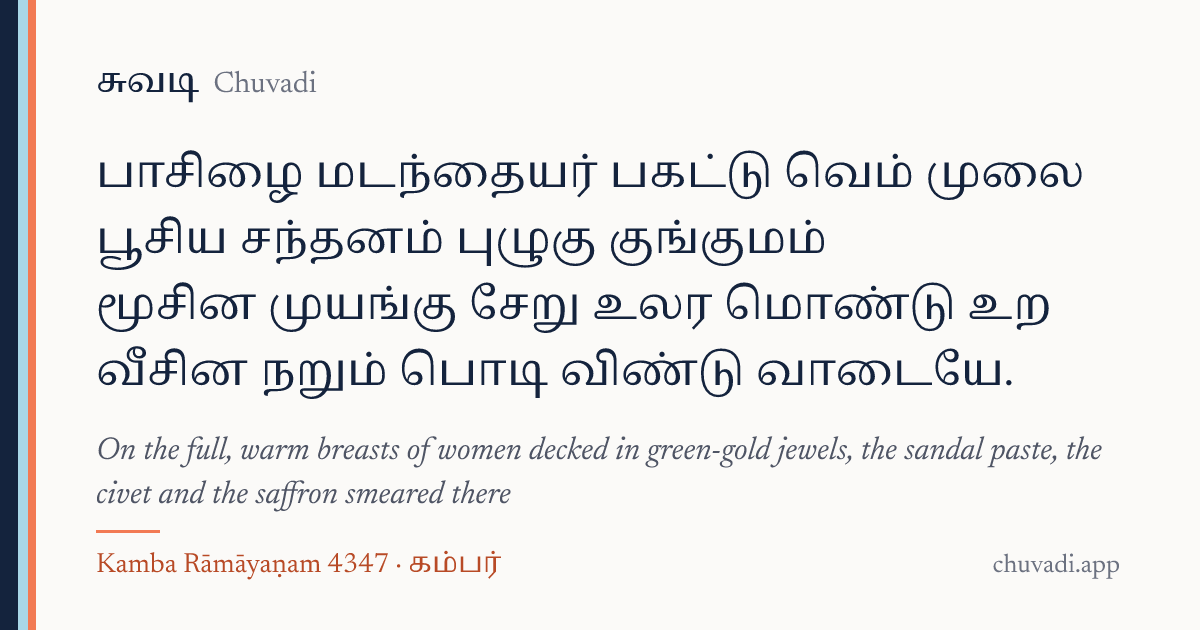
பாடல் · The poem
Tap a word to see its gloss in the commentary and where else it occurs.
பாட வேறுபாடு · Project Madurai reads
பொருள் · Meaning in Tamil
பாசிழை மடந்தையர் - பசும் பொன்னாலாகிய அணிகலன்களை அணிந்த மகளிரின்; பகட்டு வெம் முலை - பெரிய விரும்பத்தக்க மார்பகங்களில்; பூசிய சந்தனம் - பூசப்பட்ட சந்தனம்; புழுகு, குங்குமம் - புழுகு, குங்குமப்பூ; மூசின முயங்கு சேறு - (ஆகிய இவை) கலந்ததனாலாகிய கலவை மிகுதி; உலர - உலருமாறு; வாடை - வாடைக்காற்று; நறும்பொடி விண்டு - நறுமணமுள்ள மகரந்தப்பொடிகளைச் (மலர்களினின்று) சேகரித்து; மொண்டு உற வீசின - நிறைய முகந்து கொண்டு வந்து மிகுதியாக வீசிற்று.
மகளிர் மார்பில் பூசிய சந்தனம் போன்ற கலவைச் சேறு உலரும்படி வாடைக்காற்று மலர்களின் மகரந்தப் பொடிகளை முகந்து வீசிற்று என்பதாம். முயங்கு சேறு என்றது கலவைச் சாந்தினை. அது குழம்பாக இருத்தலின் அப்பெயர் பெற்றது. வாடை - வடக்கிலிருந்து வீசும் காற்று. 'வாடைக்காற்று' எனப்பட்டது. காற்று மாறி மாறி வெவ்வேறு இடங்களில் வீசுவதால் 'வீசி' எனப்பன்மையில் கூறினார்.
ஆங்கிலம் · English translationAI
Translation
- On the full, warm breasts of women decked in green-gold jewels,
- the sandal paste, the civet and the saffron smeared there
- mingled into a thick paste; so that it might dry, scooping up handfuls,
- the north wind broke open fragrant pollen and scattered it.
What the poem says
As the cold season sets in, the north wind blows. The poet imagines it gathering pollen from the flowers and scattering it over women's breasts, as if to dry the fragrant mixture of sandal, civet and saffron smeared there.
The scene shows the change of season through the pleasures of lovers, a stock subject in Tamil seasonal description, and it stands in contrast to Irāmaṉ, who is alone.