



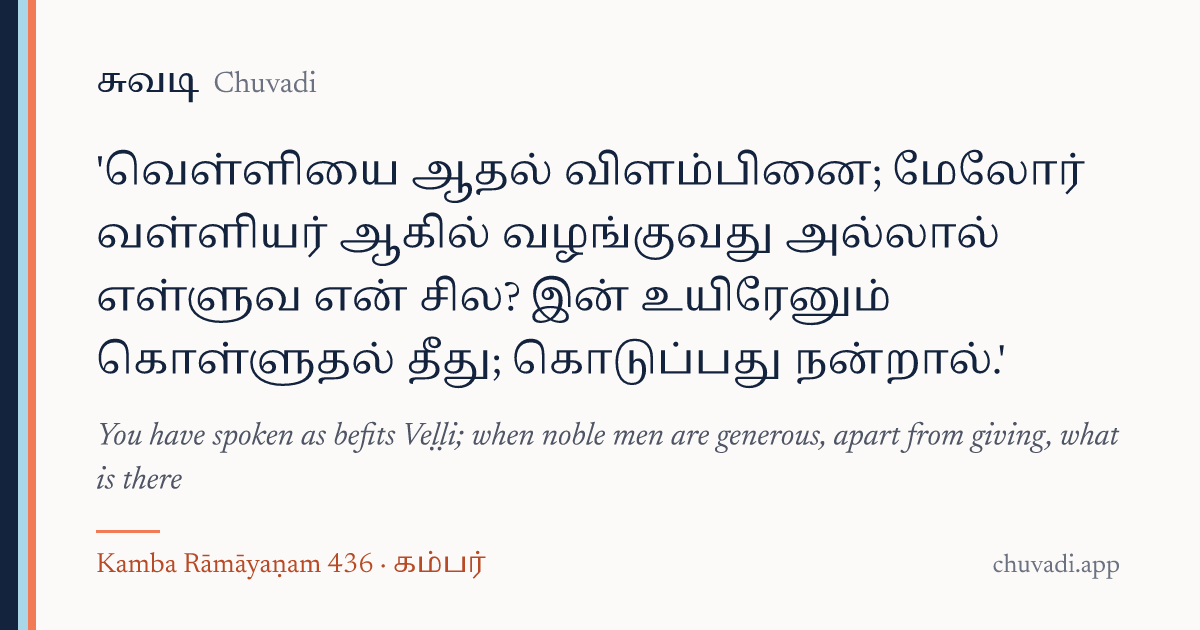
கம்பராமாயணம் 436 · பால 8.29
பாடல் · The poem
Tap a word to see its gloss in the commentary and where else it occurs.
பாட வேறுபாடு · Project Madurai reads
பொருள் · Meaning in Tamil
வெள்ளியை ஆதல் விளம்பினை - நீ வெள்ளறிவுடையனாதலின், உன் இயற்கைக்கேற்ப சொல்லினை; மேலோர் - மேன்மைக் குணம் உடைய பெரியோர்கள்; வள்ளியர் ஆக - தாம் வள்ளமை உடையோராயின்; இன் உயிரேனும் - தமது இனிய உயிரையே என்றாலும்; வழங்குவர் அல்லால் - கொள்வோர்க்குக் கொடுப்பாரே அல்லாமல்; எள்ளுவ என்சில - சில கூறி பரிகசிப்பரோ?; கொள்ளுதல் தீது கொடுப்பது நன்று - பிறர்பால் ஏற்றல் தீமை ஈதலே நன்மையாகும்.
வெள்ளியை: பெயருக்கேற்ப. வெள்ளறிவுடையவன் என்று நயம்படக் கூறினார். வள்ளியர்: வள்ளன்மை உடையோர் கொள்ளுதல் தீது கொடுப்பது நன்று “நல்லாறெனினும் கொளல் தீது மேலுலகம் இல்லெனினும் ஈதலே நன்று” என்ற திருக்குறள் கருத்து அமைந்த பாட்டிது. “எள்ளுவ என்” இதில் “என்” வினாப் பொருட்டு. விளம்பினை: முன்னிலை வினைமுற்று. ஆல்: அசை
ஆங்கிலம் · English translationAI
Translation
- You have spoken as befits Veḷḷi; when noble men
- are generous, apart from giving, what is there
- to scoff at? Even if it is one's own sweet life,
- to take is evil, and to give is good.
What the poem says
Māvali rebukes his preceptor with a pun: Veḷḷi, the Tamil name for Śukra, also suggests veḷ-aṟivu, "shallow understanding," so he has spoken just as his name implies.
The truly generous give, even if it costs them their own life, and do not mock those who ask. The last line echoes a well-known couplet of the Tirukkuṟaḷ: taking is wrong even if it leads to heaven, and giving is right even if there is no heaven.