



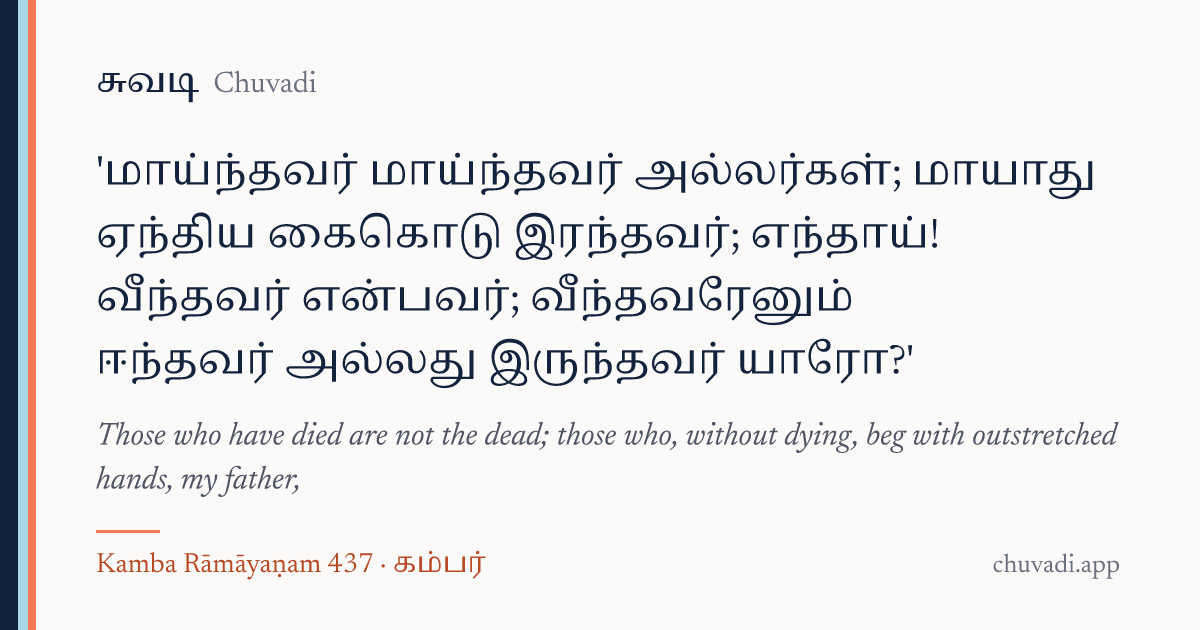
கம்பராமாயணம் 437 · பால 8.30
பாடல் · The poem
Tap a word to see its gloss in the commentary and where else it occurs.
பாட வேறுபாடு · Project Madurai reads
பொருள் · Meaning in Tamil
மாய்ந்தவர் மாய்ந்தவர் அல்லர்கள் - இறந்தவர்கள் இறந்தவர்களாக எண்ணப்படுபவர்கள் அல்லர்; மாயாது ஏந்திய கை கொடு இரந்தவர் - இழிவு வந்த போதும் இறந்து படாமல் ஏந்திய கைகளைக் கொண்டு, வசதி உள்ளவர் முன் சென்று யாசிப்பவர்களே; வீந்தவர் - இறந்தவர்களாகக் கருதப்படுவோராவர்; எந்தாய் வீந்தவ ரேனும் எனது தந்தைக் கொப்பானவனே! பருவுடல் மறைந்து இறந்தவரே எனினும்; இருந்தவர் - உயர்ந்தவர்தம் மனத்தில் மறையாது புகழுடம்புடன் இருந்தவர்கள்; ஈந்தவரே அல்லது யாரே - நாடிவந்தோர்க்கு ஈந்தவரே அல்லாது வேறு யார்?
தனது ஆசிரியனான வெள்ளியை எந்தையே என்றது மரபு நோக்கி என்க. இறந்தவர் இறந்தவரன்று. இழிவு நேர்ந்த போதும் இறந்து படாமல் பிறரிடம் யாசித்து நிற்பவரே இறந்தோர் கொடையில் சிறந்தோர் தம் பருவுடல் மறைந்தாலும் புகழுடம்புடன் என்றும் இருப்பவர் ஆவர் என்பது கருத்து. மாய்ந்தவர், வீந்தவர் இரண்டும் இறந்தோர் என்ற பொருள் உடையன. “கை கொடு” இதில் “கொடு” என்பது கொண்டு என்பதன் இடைக்குறை. 'யாரே' இதில் ஏகாரம் எதிர்மறைப் பொருள் தந்து நின்றது. “மாயாது ஏந்திய கை கொடு இரந்தவர்” என்றது இரத்தலின் இழிவை உணர்த்திற்று. “மன்னா உலகத்து” என்ற புறப்பாடல் ஒப்பு நோக்கத்தக்கது.
ஆங்கிலம் · English translationAI
Translation
- Those who have died are not the dead; those who, without dying,
- beg with outstretched hands, my father,
- are the ones to be called dead; and though they have perished,
- who but those who gave have lived on?
What the poem says
Māvali continues, addressing his guru respectfully as "my father." The dead are not those whose bodies have perished. The truly dead are those who, rather than die, live on by holding out their hands to beg.
And those who still live after death, in the body of their fame, are only the givers. The commentary compares a Puṟanāṉūṟu poem on fame as the only thing that endures in a passing world.