



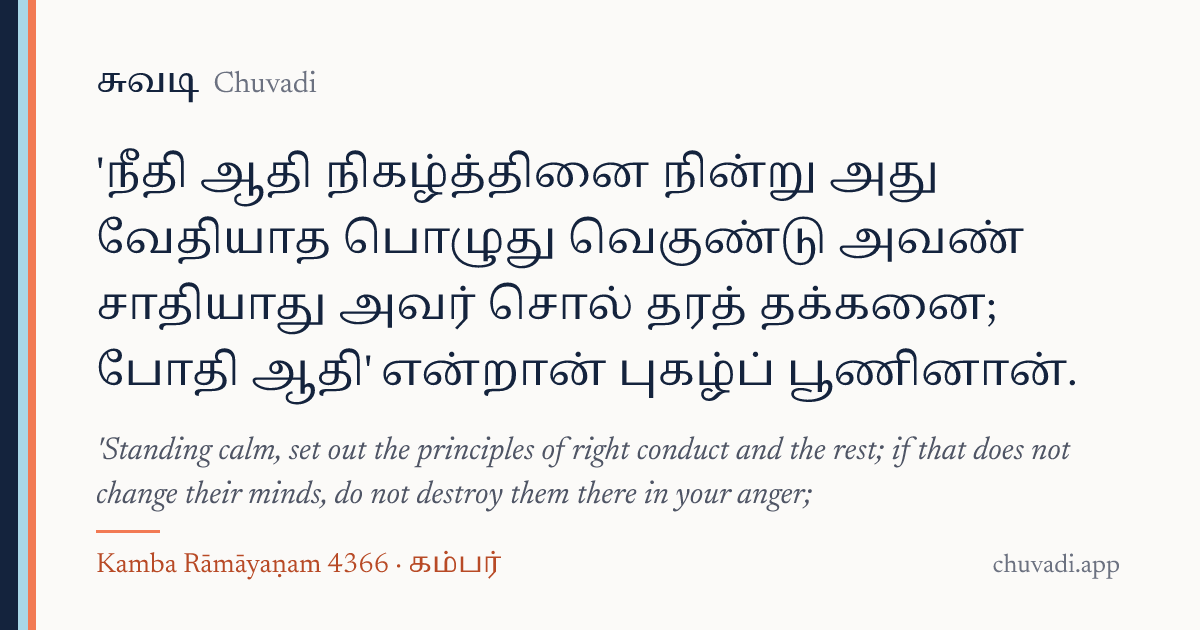
கம்பராமாயணம் 4366 · கிட்கிந்தா 10.8
பாடல் · The poem
Tap a word to see its gloss in the commentary and where else it occurs.
பொருள் · Meaning in Tamil
நின்று நீதி ஆதி - (கோபக்குறி காட்டாமல்) சாந்தமாக இருந்து நீ சொல்வது அரச நீதி முதலான அறங்கள் என்று தோன்றுமாறு; நிகழ்த்தினை - எடுத்துச்சொல்லி; அது வேதியாதபொழுது - அந்நீதியுரையானது (அவர்களின் மன மாறுபாட்டை) மாற்றாத பொழுது; வெகுண்டு அவண் சாதியாது - நீ கோபித்து அந்த இடத்தில் அப்போதே அவர்களை) அழிக்காமல்; அவர்சொல் - அவர்கள் கூறும் சொற்களை; தரத் தக்கனை - (என்னிடம்) வந்து சொல்லக் கடமைப்பட்டுள்ளாய்; போதி ஆதி என்றான் - (நீ) செல்க என்று சொல்லி விடை தந்தான்; புகழ்ப் பூணினான் - புகழையே தனக்கு அணிகலனாகக் கொண்ட இராமன்.
புகழ்ப் பூணினான் - புகழைப் பூண்' என்று கூறியமையின் இராமனைப் பொறுத்தமட்டில் இவ்வுலகோர் கூறும் புகழ்ச்சிகள் இன்றியும் தனக்குத்தானே உவமையாக விளங்குபவன் என்பதாம். பிறருக்குப் புகழாகிய பூண் அவர்கள் சிறப்பை மிகுதிப்படுத்தும். இராமனைப் பொறுத்தமட்டில் அவனை அடைந்ததால் அப்பூண் (புகழ்) தான் சிறப்பெய்தியது.
இயல்பாகவே, சினம்பொங்கும் தன்மையுள்ள இலக்குவன் மாறுபட்ட செயல் செய்யாதவாறு இராமன் இவ்வாறு கட்டளையிட்டான் என்பது.
ஆங்கிலம் · English translationAI
Translation
- 'Standing calm, set out the principles of right conduct and the rest; if that
- does not change their minds, do not destroy them there in your anger;
- you must bring their words back to me.
- Go now,' said he whose ornament is fame.
What the poem says
Irāmaṉ knows his brother's quick temper, so he gives careful instructions. Ilakkuvaṉ is to speak calmly and lay out what royal duty requires. If that fails, he must not kill anyone on the spot in anger but bring their answer back to Irāmaṉ.
Irāmaṉ is called 'he who wears fame as an ornament'. The commentary adds that fame usually adorns a person, but in Irāmaṉ's case fame itself is honoured by belonging to him.