



கம்பராமாயணம் 4375 · கிட்கிந்தா 10.17
பாடல் · The poem
Tap a word to see its gloss in the commentary and where else it occurs.
பாட வேறுபாடு · Project Madurai reads
பொருள் · Meaning in Tamil
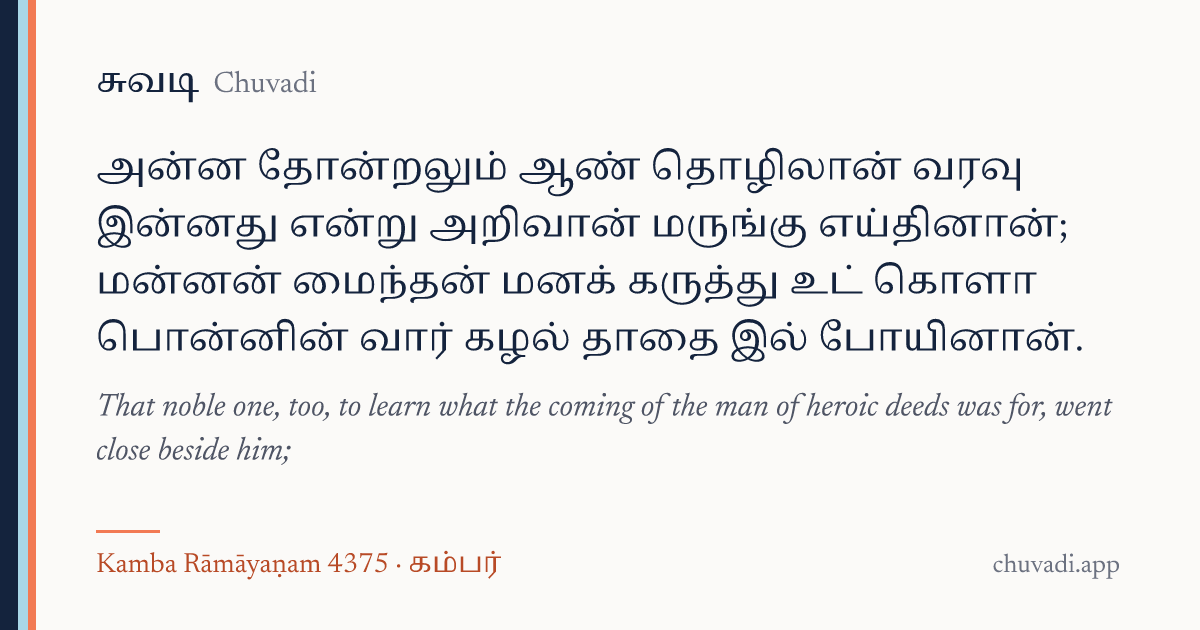
அன்ன தோன்றலும் - அந்த அங்கதனும்; ஆண்தொழிலான் - வீரமிக்க செயல் செய்யக்கூடிய இலக்குவன்; வரவு இன்னதென்று அறிவான் - வந்த நோக்கம் இன்னதென்று அறியும் பொருட்டு; மருங்கு எய்தினான் - அவ் இலக்குவன் அறியாமல் ஒரு புறமாகப் பக்கத்தில் சென்று; மன்னன் மைந்தன் - தசரத மன்னனின் மகனான இலக்குவனது; மனக்கருத்து உட்கொளா - மனத்தின் கருத்தை (அவனது முகக்குறிப்பால்) அறிந்து; பொன்னின் வார்கழல் தாதை - (பொன்னாலான நெடிய வீரக்கழலையுடைய தன் சிறிய தந்தையாகிய சுக்கிரீவனது; இல் போயினான் - அரண்மனைக்குச் சென்றான்.
தாதையில் - ஒரு சொல்லாகக் கொண்டு சிறிய தந்தையிடம் என்றும் பொருள் உரைக்கலாம். இலக்குவனது கோபத்தை அவனது முகக் குறிப்புக் கொண்டே அங்கதன் அறிந்தான் என்பது. மருங்கு சென்று என்ற தொடர் இலக்குவன் அங்கதனிடம் பேசினான் என்ற வான்மீகத்தை அடியொற்றிப் பிறந்ததாகும். ஆனால், கம்பன் இவர்களிடையே பேச்சு நடைபெற்றதாகக் கூறவில்லை. அதனால் அங்கதன் மறைவாக இலக்குவன் முகக்குறிப்பைக் காணும் அளவிற்கு அவன் பக்கத்தே சென்றான் என்று பொருள் கூறப்பட்டது.
'நெஞ்சம் கடுத்தது காட்டும் முகம்' என்பது சட ரதன் 706) அறிவான் - வானீற்று வினையெச்சம்.
ஆங்கிலம் · English translationAI
Translation
- That noble one, too, to learn what the coming of the man of heroic deeds
- was for, went close beside him;
- grasping what was in the mind of the king's son,
- he went to the house of his father of the long golden anklets.
What the poem says
Aṅkataṉ goes quietly near Ilakkuvaṉ to find out why he has come. Reading the anger in his face, he hurries to the palace of Cukkirīvaṉ, his uncle, whom he calls father.
In Vālmīki, Lakṣmaṇa actually speaks to Aṅgada at this point. Kampaṉ has no conversation, so the commentary takes it that Aṅkataṉ judged his mood from his face alone, as the Tirukkuṟaḷ says the face shows what the heart feels.