



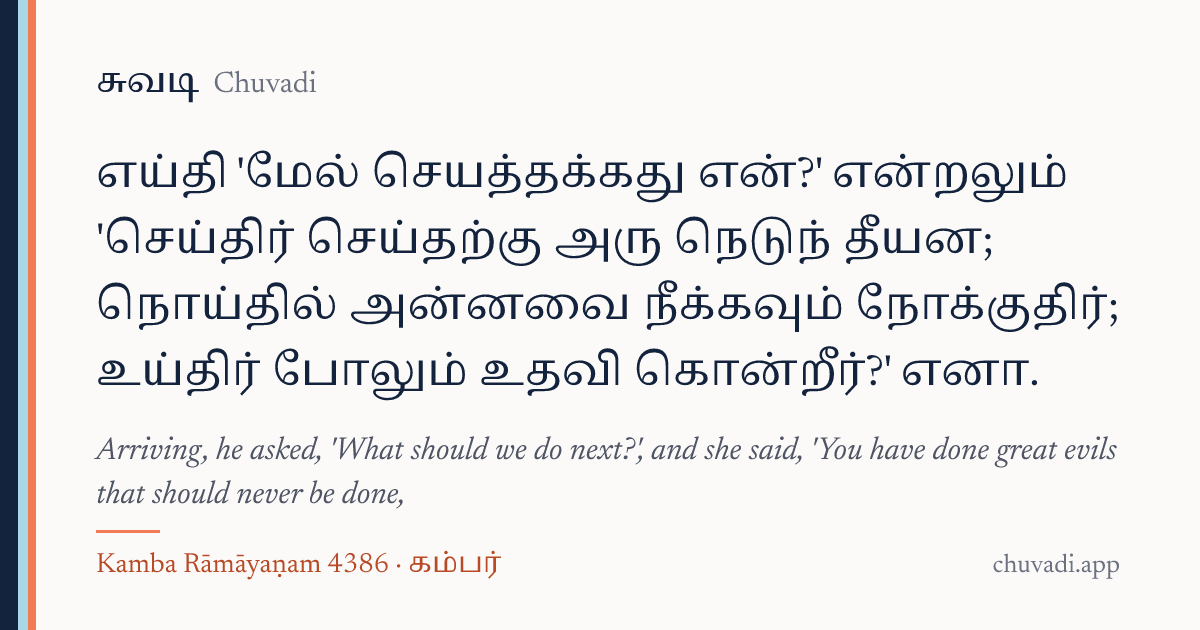
கம்பராமாயணம் 4386 · கிட்கிந்தா 10.28
பாடல் · The poem
Tap a word to see its gloss in the commentary and where else it occurs.
பொருள் · Meaning in Tamil
எய்தி - (அங்கதன் தாரையை அடைந்து); மேல் செயத் தக்கது என் - இனி நாம் செய்யத்தக்க செயல் என்ன; என்றலும் - என்று அவளை வினாவிய அளவில், செய்தற்கு அரு - (அவள் அவ்வானரர்களை நோக்க) செய்யத் தகாத; நெடுந்தீயன - பெரிய தீச் செயல்களை; நொய்தில் செய்திர் - எளிதிலே செய்துவிட்டீர்கள்; அன்னவை நீக்கவும் - அச் செயல்களால் வரும் கேடுகளை எளிதில் நீக்கிக் கொள்ளவும்; நோக்குதிர் - வழி தேடுகிறீர்கள்; உதவி கொன்றீர் - செய்ந்நன்றி மறந்தவர்களான நீங்கள்; உய்திர் போலும் - தப்பி வாழ்வீர்கள் போலும்! எனா - என்று சொல்லி...
விளம்புகின்றாள் என அடுத்த கவியோடு முடியும். 'உய்வில்லை செய்ந்நன்றி கொன்ற மகற்கு' (குறள் 110), உய்ய மாட்டீர் என்பது வலியுறுத்தப்பட்டது. நெடுந்தீயன - மிக்க கொடியன. நோக்குதல் - வழிதேடுதல், ஆலோசித்தல், 'செய்தி கொன்றோர்க் குய்தி யில்லென்றறம் பாடிற்றே' என்ற பழம் பாடல் கருத்தினை நினைவு கூர்க. (புறம் 34)
ஆங்கிலம் · English translationAI
Translation
- Arriving, he asked, 'What should we do next?', and she said,
- 'You have done great evils that should never be done,
- and lightly you look to be rid of them too;
- do you think you will survive, you who have killed a kindness?' and then...
What the poem says
Aṅkataṉ asks his mother Tārai what they should do now. Her answer is sharp. The monkeys have committed a great wrong and now expect to escape its consequences just as easily.
Her final question echoes the Tirukkuṟaḷ and a Puṟanāṉūṟu poem: there is no escape for one who 'kills' a kindness received, that is, for an ingrate. Her speech goes on in the next verse.