



கம்பராமாயணம் 439 · பால 8.32
பாடல் · The poem
Tap a word to see its gloss in the commentary and where else it occurs.
பொருள் · Meaning in Tamil
தமகைத்து உள போழ்தே - தமது செல்வம் இருக்கும் காலத்திலே; இட்டு இசை கொண்டு - இரப்போர்க்கு ஈந்து புகழ் பெற்று; அறன் எய்த முயன்றோர் - அறத்தை அடைய முயல்பவர்களான அறவாளர்; உள்தெறு வெம்பகை யாவது உலோபம் - மனத்தை அழிக்கும் கொடிய பகையாய் இருப்பது உலோப குணமாகும்; விட்டிடல் என்று - அதனை) விட்டுவிட வேண்டும் என்று; தாம் கட்டுரையின் விலக்கினர் - (மேலோர் நீதி நூல்களில் விளக்கிக் கூறியுள்ளனர்.
கட்டுரை: நீதி நூல் (வரையறுத்த உரைகள் என்பது பொருள்.) கைத்து: பொருள் (செல்வம். இட்டு: இரப்போர்க்குக் கொடுத்து. இசை: புகழ். முயன்றோர்: வினையாலணையும் பெயர் உள்தெறு: உள்ளத்தை அழித்து. உலோபம்: ஈகையின்மை (உளப்பரும் பிணிப்பு அறா உலோபம் ஒன்றுமே அளப்பருங்குணங்களை அழிக்குமாறு போல் - எனத் தாடகை வதைப்படலத்தும் கூறுவது நினைவு கூரத்தக்கது. விட்டிடல்: விட்டு விடுக. அல்லீற்று வியங்கோள் வினைமுற்று.
செல்வம் இருக்கும் போதே ஏற்பவர்களுக்கு ஈந்து புகழ் பெற வாழ வேண்டும். உள்ளத்தை அழிக்கும் கொடிய பகை உலோபம். அதனை விட்டொழிக்க வேண்டும் என்பதே நீதி நூல்களின் துணிவு என்பது கருத்து.
ஆங்கிலம் · English translationAI
Translation
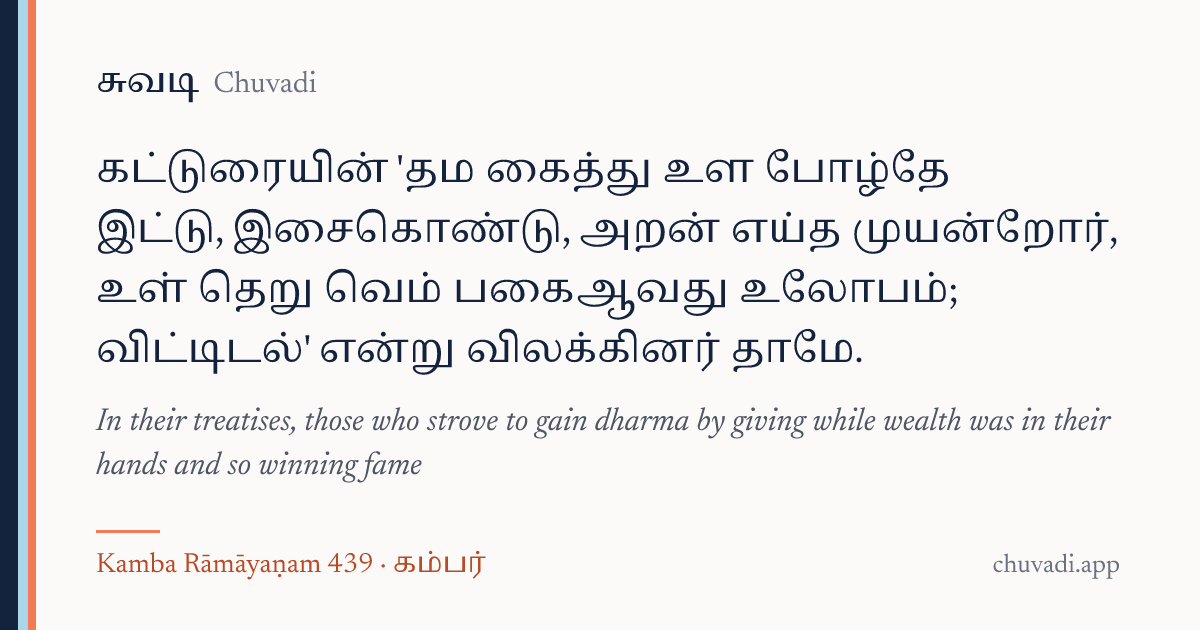
- In their treatises, those who strove to gain dharma
- by giving while wealth was in their hands and so winning fame
- declared: Miserliness is the fierce enemy that burns within;
- cast it off; so they themselves have ruled.
What the poem says
Māvali appeals to the moral treatises. The wise, who sought virtue by giving while they still had wealth and so earned lasting fame, have laid down that miserliness is a cruel enemy that eats away the heart from inside and must be abandoned.
The commentary recalls the earlier verse in the Tāṭakai canto, where miserliness alone was said to destroy countless virtues.