



கம்பராமாயணம் 4393 · கிட்கிந்தா 10.35
பாடல் · The poem
Tap a word to see its gloss in the commentary and where else it occurs.
பொருள் · Meaning in Tamil
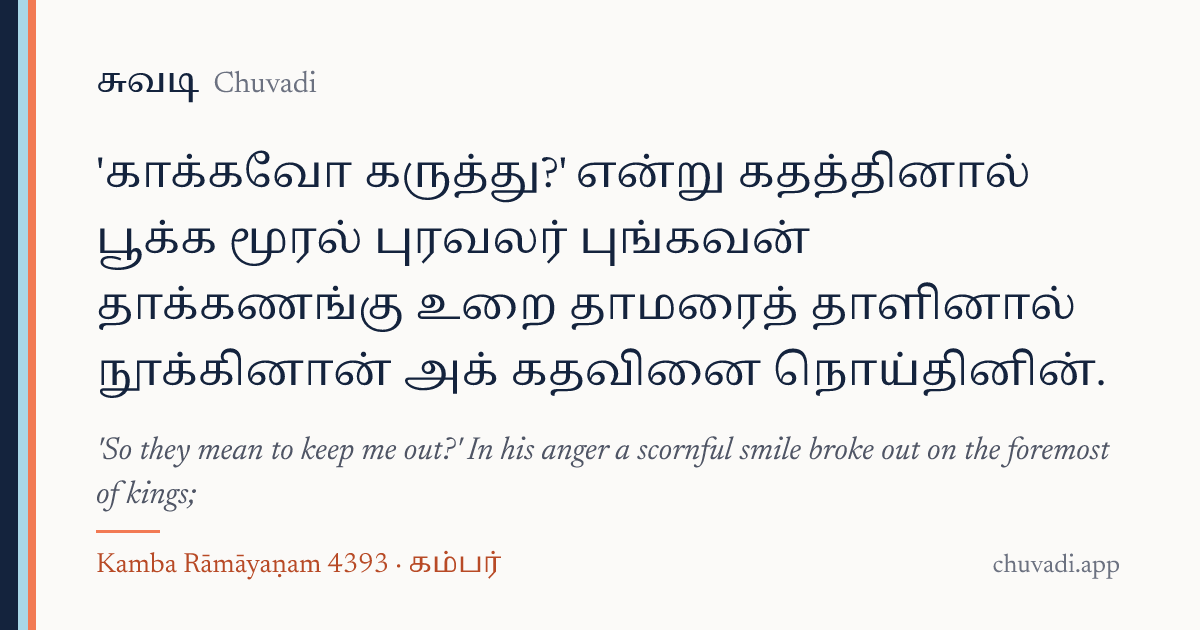
(வானரங்கள் நகர வாயிலை அடைத்ததைப் பார்த்து) புரவலர் புங்கவன் - அரசரில் மேம்பட்டவனான இலக்குவன்; காக்கவோ கருத்து என்று - (என்னிடமிருந்து தம்மைப்) பாதுகாத்துக் கொள்ளவோ (இவர்கள்) கருதியது என்று எண்ணி; கதத்தினால் மூரல் பூக்க - கடுங்கோபத்தால் எள்ளற் சிரிப்புத் தோன்ற; தாக்கணங்கு உறை - திருமகள் வசிக்கின்ற, தாமரைத் தாளினால் - செந்தாமரை போன்ற தன் திருவடியால்; அக் கதவினை - அவ் வாயிற் கதவை; நொய்தினின் நூக்கினான் - மிக எளிமையாகத் தள்ளினான்.
இலக்குவனின் திருவடிக்கு இலக்குமி உறையும் தாமரை உவமையாகியது. அணங்கு - மகளிரில் சிறந்தவர், பெண் தெய்வம். 'அறம் செய்வோர்பால் அருளினால் பற்றியிருக்கும் திருமகள்' என்று தாக்கு அணங்கு என்பதற்குக் கம்பன் கழகப் பதிப்பு விளக்கம் தருகிறது. தாக்குதல் - பற்றியிருத்தல்.
ஆங்கிலம் · English translationAI
Translation
- 'So they mean to keep me out?' In his anger
- a scornful smile broke out on the foremost of kings;
- with his lotus foot, where the goddess dwells,
- he pushed that gate, with no effort at all.
What the poem says
Ilakkuvaṉ sees the barred gate and is amused as well as angry: do the monkeys really think they can keep him out? Smiling with contempt, he gives the gate a light push with his foot.
His foot is compared to the red lotus in which Tirumakaḷ (Lakṣmī), goddess of fortune, lives. The phrase tākkaṇaṅku is explained as the goddess who graciously stays with those who do right.