



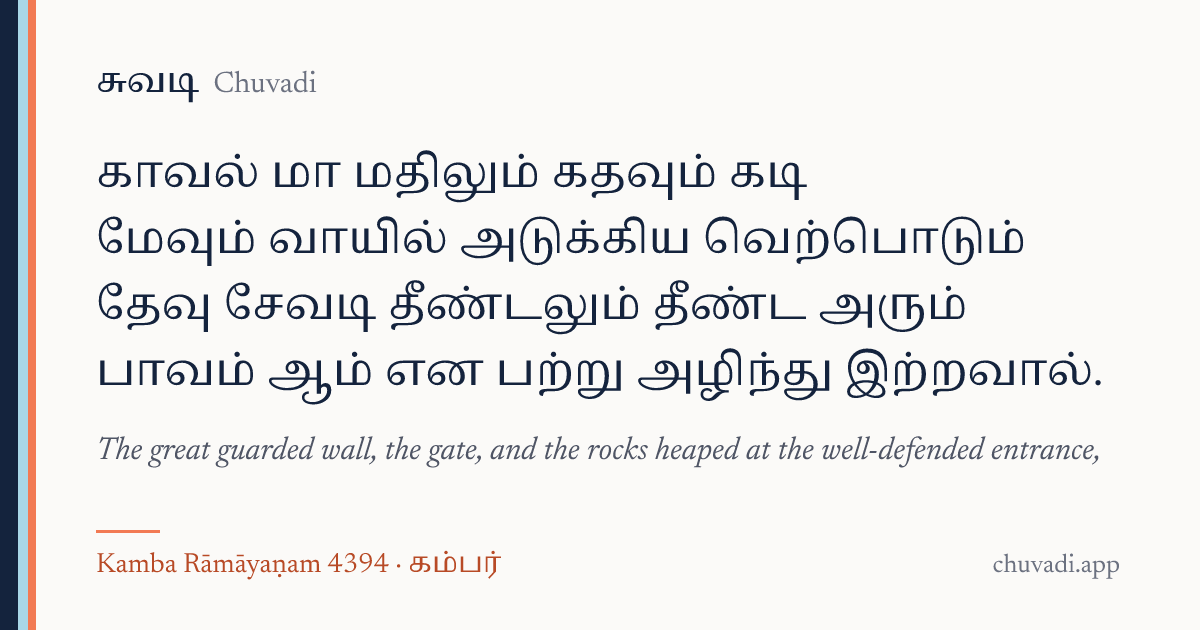
கம்பராமாயணம் 4394 · கிட்கிந்தா 10.36
பாடல் · The poem
Tap a word to see its gloss in the commentary and where else it occurs.
பொருள் · Meaning in Tamil
கதவும் - அந்த வாயிற் கதவும்; கடி மேவும் - காவல் அமைந்த, வாயில் அடுக்கிய - வாயிலில் (வானரங்கள் அடுக்கி வைத்திருந்த; வெற்பொடும் - பெரிய பாறைகளோடு; காவல் மா மதிலும் - (வாயிலைச் சார்ந்து) கட்டுக் காவல் சூழ்ந்துள்ள பெரிய மதிலும்; தேவு சேவடி தீண்டலும் - தெய்வத்தின் சிவந்த திருவடி பட்ட அளவில்; தீண்ட அரும் - தீர்த்தற்கு அரிய; பாவம் ஆம் என - இழிவான தீவினைகளைப் போல; பற்று அழிந்து இற்ற - பற்றுக் கோடு இல்லாமல் முழுவதும் அழிந்துவிட்டன.
இலக்குவனின் திருவடி பட்ட அளவிலே வாயில் கதவு முதலியன அழிந்து போனதற்குத் தெய்வத் திருவடியின் தொடர்பால் அடியார்க்குக் கொடிய வினைக் கட்டுக்கள் பற்றற அழிவதை உவமையாக்கினார். உவமையணி. 'சிந்திப்பரியன்' எனத் தொடங்கும் திருவையாற்றுப் பதிகத்தில், 'பந்தித்து நின்ற பழவினை தீர்ப்பன அந்திப் பிறையணிந்து ஆடும் ஐயாறன் அடித்தலமே' என அப்பர் திருவாக்கில் இக்கருத்து அமைந்துள்ளமை காண்க. தீண்டலும், தீண்டரும் - முரண் தொடை. தீண்ட அரும் - தீண்டரும் (அகரம் தொக்கது).
ஆங்கிலம் · English translationAI
Translation
- The great guarded wall, the gate,
- and the rocks heaped at the well-defended entrance,
- at the mere touch of that divine red foot, like sins that are hard to remove,
- lost their hold and broke apart.
What the poem says
As soon as Ilakkuvaṉ's foot touches it, the gate, the heaped boulders and the great wall all collapse.
The poet compares this to the way a devotee's deep-rooted sins, otherwise so hard to shake off, lose their hold and dissolve at the touch of God's feet. The commentary cites a hymn of the Śaiva saint Appar saying that the feet of the Lord of Tiruvaiyāṟu destroy old karma that binds a person. Here Ilakkuvaṉ's foot is treated as divine.