



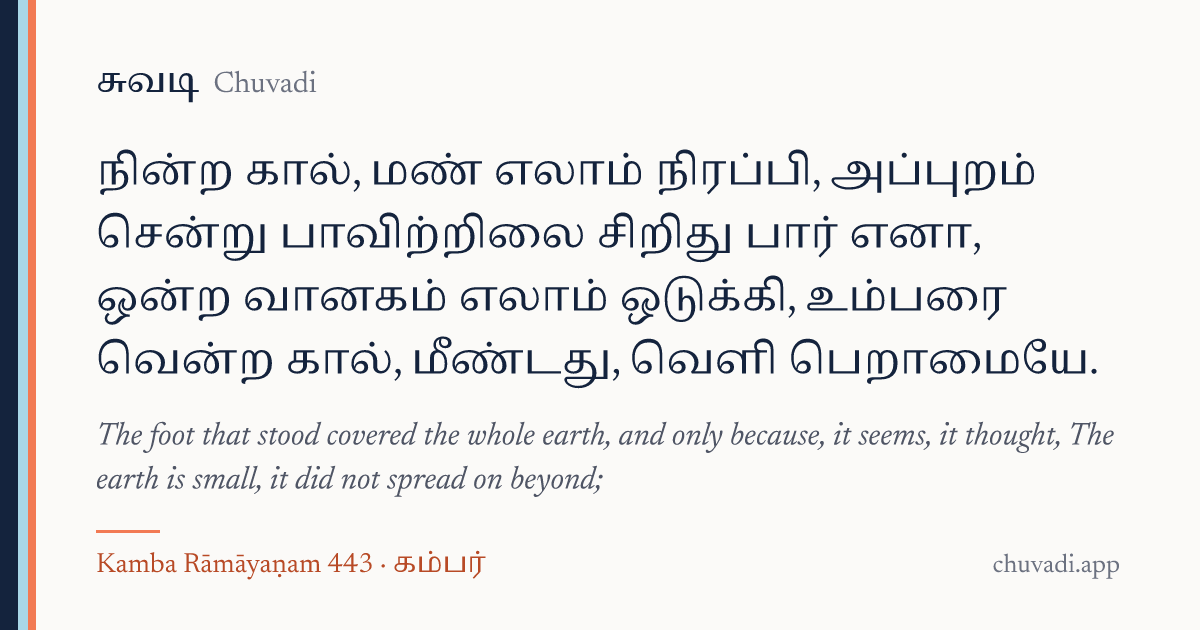
கம்பராமாயணம் 443 · பால 8.36
பாடல் · The poem
Tap a word to see its gloss in the commentary and where else it occurs.
பாட வேறுபாடு · Project Madurai reads
பொருள் · Meaning in Tamil
நின்ற கால் - நிலத்தில் ஊன்றி நின்ற கால்; மண் எலாம் நிரப்பி - நிலத்தின் பரப்பை யெல்லாம் மூடி; பார் சிறிது எனா - இப்பூமி சிறிய அளவுடைய தென்று; அப்புறம் சென்று பாவிற்றிலை - அப்புறம் போய்ப் பாவவில்லை; உம்பரை வென்ற கால் - வானம் சிறிதாகுமாறு மேலே நீண்டு உயர்ந்து வென்ற காலானது; வானகம் எலாம் ஒன்ற ஒடுக்கி - வானத்தை எல்லாம் ஒருமிக்கச் சிறிதாகும் படி தனக்குள் ஒடுக்கி; வெளி பெறாமையால் மீண்டது - மேலும் இடம் கிடைக்காமையால் மீண்டது.
நின்ற: ஊன்றிய. நிரப்புதல்: மூடுதல். பாவிற்றிலை: பாவவில்லை “பார் சிறிதெனா அப்புறம் சென்று பாவிற்றிலை” என்றது, பூமி விரிந்தால், அதுவும் விரியும் என்னும் கருத்தை உள்ளடக்கி நின்றது. உம்பர்: வானம். ஒடுக்கி: உள்ளடக்கி. வெளி: இடம். ஒன்ற: ஒரு சேர. எனா: (செயா என்ற வாய்பாட்டு வினையெச்சம்).
ஆங்கிலம் · English translationAI
Translation
- The foot that stood covered the whole earth, and only because, it seems, it thought,
- The earth is small, it did not spread on beyond;
- the foot that conquered the heavens drew all the sky together into itself,
- and came back, finding no more room.
What the poem says
The first two strides. The foot planted on the ground covers the entire earth and stops only because there is no more earth; had the earth been bigger, the foot would have grown with it.
The second foot rises, overpowers the heavens, gathers the whole sky within its span, and comes back only because there is no space left to step into.