



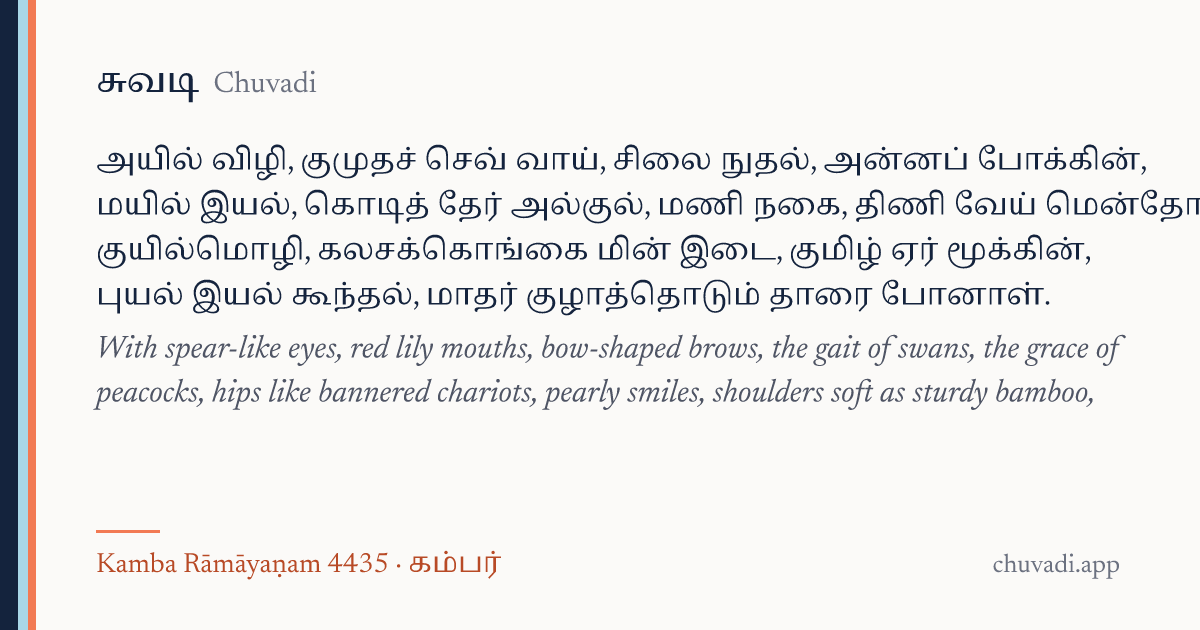
கம்பராமாயணம் 4435 · கிட்கிந்தா 10.77
பாடல் · The poem
Tap a word to see its gloss in the commentary and where else it occurs.
பொருள் · Meaning in Tamil
தாரை - தாரையானவள்; அயில்விழி - வேல்போன்ற கண்களையும்; குமுதச் செவ்வாய் - செவ்வாம்பல் மலரையொத்த சிவந்த வாயையும்; சிலை நுதல் - வில்லைப் போன்ற புருவத்தையும்; அன்னப் போக்கின் - அன்ன நடையை ஒத்த நடையையும்; மயில் இயல் - மயிலைப் போன்ற சாயலையும்; கொடித் தேர் அல்குல் - கொடிகளையுடைய தேர்த்தட்டுப் போன்ற அல்குலையும், மணிநகை - முத்துப் போன்ற பற்களையும்; திணிவேய் மென்தோள் - வலிய மூங்கில் போன்ற மெல்லிய தோள்களையும்; குயில் மொழி - குயிலின் குரலையொத்த சொல்லையும்; கலசக் கொங்கை - பொற்கலசத்தைப் போன்ற முலைகளையும்; மின் இடை - மின்னல் போன்ற இடையையும்; குமிழ் ஏர்மூக்கின் - குமிழ மலர்போன்ற எடுப்பான மூக்கையும்; புயல் இயல் கூந்தல் - கருமேகத்தையொத்த கரிய கூந்தலையும் உடைய; மாதர் குழாத்தோடும் - மகளிர் கூட்டத்துடனே; போனாள் - திரும்பிச் சென்றாள்.
உவமையணி. தாரையுடன் சென்ற மகளிர்க்கே இவ்வனப்புகள் அனைத்தையும் கூறித் தாரைக்கு ஒன்றும் அடைமொழி கூறாமல் அன்னவளின் கைம்மைக் கோலமும், கற்புநிலையும் வவ தம் ப முத்து, நவமணிகளுள் ஒன்றாதலால் மணி எனப்பட்டது.
ஆங்கிலம் · English translationAI
Translation
- With spear-like eyes, red lily mouths, bow-shaped brows, the gait of swans,
- the grace of peacocks, hips like bannered chariots, pearly smiles, shoulders soft as sturdy bamboo,
- cuckoo voices, breasts like golden pots, waists like lightning, noses lovely as kumiḻ flowers,
- and hair like rain-clouds: with that company of women Tārai went away.
What the poem says
Her task done, Tārai withdraws with her attendants. The poet lists the conventional beauties of a woman: eyes like spears, lips like red water-lilies, brows like bows, the walk of swans, the grace of peacocks, and so on.
All these epithets go to the women around her and none to Tārai herself, which the commentary takes as a quiet mark of her widowhood and her chastity.