



கம்பராமாயணம் 4437 · கிட்கிந்தா 10.79
பாடல் · The poem
Tap a word to see its gloss in the commentary and where else it occurs.
பாட வேறுபாடு · Project Madurai reads
பொருள் · Meaning in Tamil
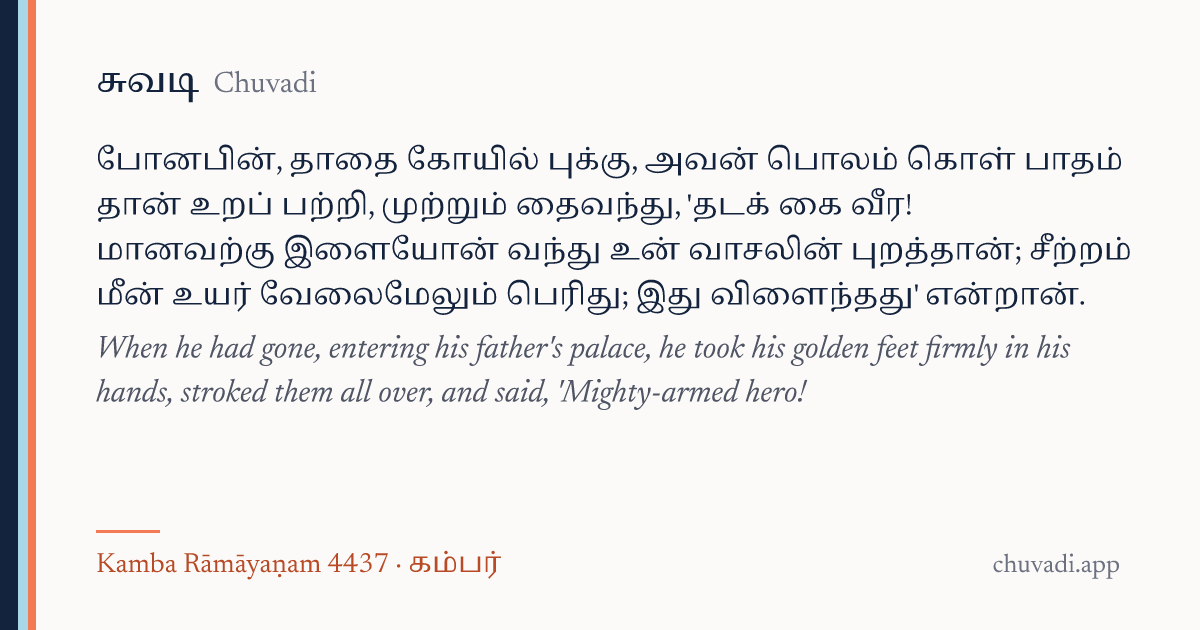
போனபின் - இலக்குவனைவிட்டு (அங்கதன் நீங்கிச்சென்ற பிறகு; தாதை கோயில் புக்கு - சிற்றப்பனாகிய சுக்கிரீவனது அரண்மனைக்குள் புகுந்து; அவன் பொலம்கொள் பாதம் - அச் சுக்கிரீவனுடைய பொன்போன்ற (அழகான) பாதங்களை; தான் உறப் பற்றி - தான் நன்றாகப் பிடித்துக் கொண்டு; முற்றும் தைவந்து - முழுவதும் தடவி (துயிலெழுப்பி); தடக்கை வீர - நீண்ட கைகளையுடைய வீரனே; மானவற்கு இளையோன் வந்து - இராமனுக்குத் தம்பியாகிய இலக்குவன் வந்து; உன் வாசலின் புறத்தான் - உனது அரண்மனை வாயில் வெளியிலே நிற்கின்றான்; சீற்றம் - அவன் இப்பொழுது கொண்டுள்ள) சினமானது; மீன் உயர் வேலை மேலும் பெரிது - மீன்கள் நிறைந்துள்ள கடலைக் காட்டிலும் பெரியது; இது விளைந்தது - இது நடந்த செய்தி; என்றான் - என்று கூறினான்.
பொலம் - பொன், அழகு. தைவருதல் - தடவுதல். மானவன் - பெருமையுள்ளவன்.
ஆங்கிலம் · English translationAI
Translation
- When he had gone, entering his father's palace, he took his golden feet
- firmly in his hands, stroked them all over, and said, 'Mighty-armed hero!
- The younger brother of the man of Manu's line has come and stands outside your door; his anger
- is greater even than the sea teeming with fish; this is what has happened.'
What the poem says
Aṅkataṉ goes into the palace and wakes his uncle, firmly grasping and stroking his feet. He tells Cukkirīvaṉ that Irāmaṉ's younger brother is at the gate and that his anger has been vaster than the fish-filled ocean.
This time Cukkirīvaṉ must listen. The chapter goes on to his alarm and his meeting with Ilakkuvaṉ.