



கம்பராமாயணம் 4443 · கிட்கிந்தா 10.85
பாடல் · The poem
Tap a word to see its gloss in the commentary and where else it occurs.
பொருள் · Meaning in Tamil
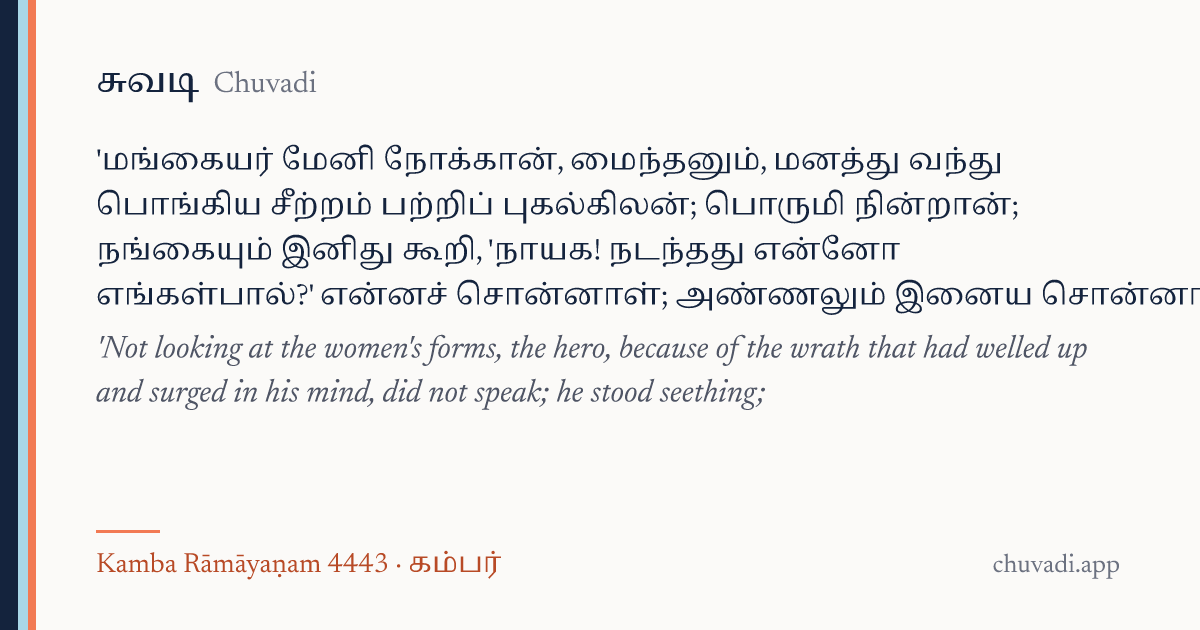
மைந்தனும் - வீரனான இலக்குவனும், மங்கையர் மேனி நோக்கான்- (இவ்வாறு வழியில் நின்ற தாரை முதலிய) பெண்களின் உருவத்தை நிமிர்ந்தும் பாராதவனாய்; மனத்து வந்து பொங்கிய - தன் மனத்திலே எழுந்து பொங்கி நின்ற; சீற்றம் பற்றிப் புகல்கிலன் - சினத்தால் ஒன்றும் சொல்ல மாட்டாதவனாய், பொருமி நின்றான் - விம்மி நின்றான்; நங்கையும்- பெண்களில் சிறந்தவளான (எனது தாயாகிய) தாரையும்; இனிது கூறி - (இலக்குவனது கோபம் தணியுமாறு) இனிய சொற்களைச் சொல்லி (அவனைப்பார்த்து); நாயக- 'தலைவனே! எங்கள்பால் நடந்தது என்னோ- (நீ இராமனை விட்டுப் பிரிந்து) எங்களிடம் வந்தது எதற்காக?' என்னச் சொன்னாள் - என்று கேட்டாள்; அண்ணலும் - இளைவனான இலக்குவனும்; இனைய சொன்னான் - வந்த காரணத்தைக் கூறினான்.
மங்கையர் மேனி நோக்கான் - அயல் மாதரைக் கண்ணெடுத்துப் பாராத நோன்புடையவன் இலக்குவன் என்பது அறியப்படும்.
ஆங்கிலம் · English translationAI
Translation
- 'Not looking at the women's forms, the hero, because of the wrath
- that had welled up and surged in his mind, did not speak; he stood seething;
- and the lady, speaking sweetly, said, "Lord, why have you walked
- to us?" And the noble one said these things.'
What the poem says
Aṅkataṉ's account goes on. Ilakkuvaṉ would not raise his eyes to look at the women standing in his path, and his anger was so great that at first he could not speak. Tārai addressed him gently, asking why he had come to them, and he then told her the cause of his visit.
His refusal to look at other men's wives marks Ilakkuvaṉ's strict self-discipline, a trait the poet stresses whenever he meets women.