



கம்பராமாயணம் 4452 · கிட்கிந்தா 10.94
பாடல் · The poem
Tap a word to see its gloss in the commentary and where else it occurs.
பொருள் · Meaning in Tamil
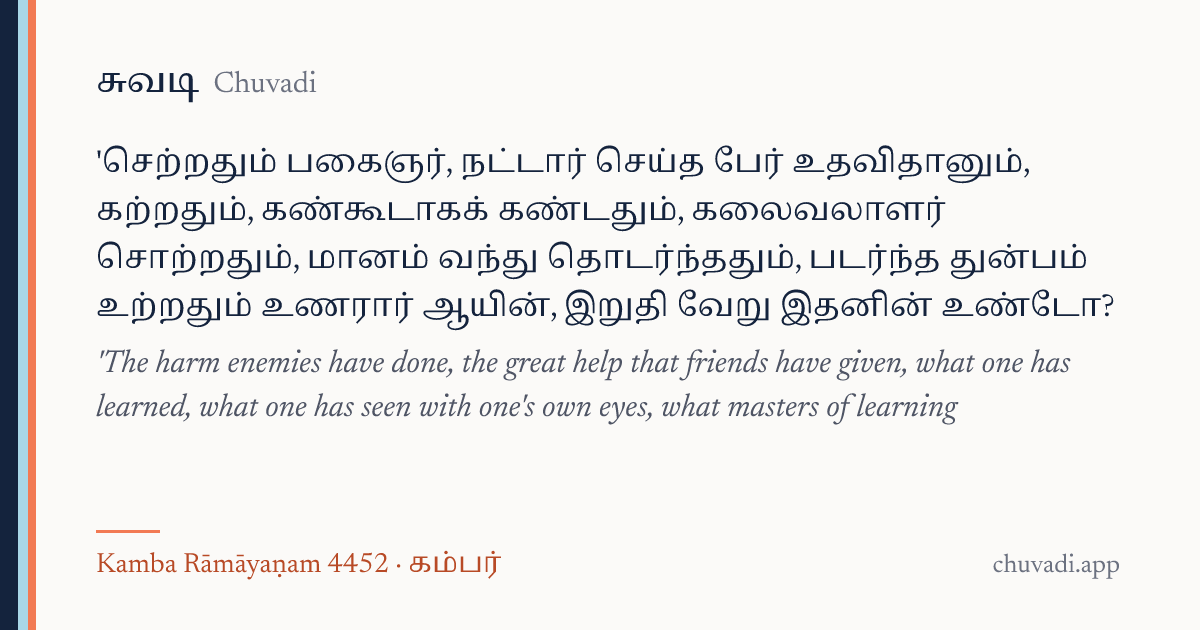
பகைஞர் செற்றதும் - பகைவர் தமக்குப் புரிந்த தீங்கையும்; நட்டார் செய்த - நண்பர்கள் செய்த; பேர் உதவி தானும் - பெரிய நன்றியையும்; கற்றதும் - (தாம்) கற்ற கல்வியையும்; கண் கூடாகக் கண்டதும் - (தாம்) நேரில் பார்த்ததையும்; கலைவலாளர் சொற்றதும் - சாத்திரங்களில் வல்லவர் கூறியதையும்; மானம் வந்து தொடர்ந்ததும் - (தமக்குப்) பெருமை வந்து சேர்ந்த வழியையும்; படர்ந்த துன்பம் - (மனத்தில்) பற்றிய துன்பங்கள்; உற்றதும் - மிகச் சேர்ந்ததையும்; உணரார் ஆயின் - (கள் மயக்கத்தால் ஒருவற் தெரிந்து கொள்ளாராயின்; இதனின் வேறு உறுதி உண்டோ - (அவர்களுக்கு) இவ்வாறு உணர்வதைக் காட்டிலும் நன்மை தருவது வேறொன்று உளதோ?
தன் நண்பராகிய இராமலக்குவர் செய்த பேருதவியை மறவாதிருப்பதே தனக்கு நன்மையெனக் கூறுகிறான் சுக்கிரீவன். பகைஞர் செற்றது முதலியவற்றை மறத்தலால் தீமையும், மறவாது மனத்துக் கொண்டிருத்தலால் நன்மையும் உண்டாம் என்றான். உறுதி பயக்கும் நன்மைகள் யாவற்றையும் மது சிதைத்து விடும் - ஒப்புமைக் கூட்ட அணி.
ஆங்கிலம் · English translationAI
Translation
- 'The harm enemies have done, the great help that friends have given,
- what one has learned, what one has seen with one's own eyes, what masters of learning
- have said, how honour came and followed, the spreading sorrow
- one has suffered — if one does not perceive these, is there any end other than this?'
What the poem says
Cukkirīvaṉ lists what a person must keep in mind: the injuries of enemies, the kindness of friends, what one has learned and seen, the teaching of the wise, how one won honour, and the griefs one has endured. Drink wipes out all of this. The commentary reads the last line as "what greater good is there than remembering these?", so that Cukkirīvaṉ's real point is that he must never forget what Irāmaṉ and Ilakkuvaṉ did for him.