



கம்பராமாயணம் 4468 · கிட்கிந்தா 10.110
பாடல் · The poem
Tap a word to see its gloss in the commentary and where else it occurs.
பொருள் · Meaning in Tamil
(அப்போது அங்குள்ள வானரக் கூட்டத்தில்)
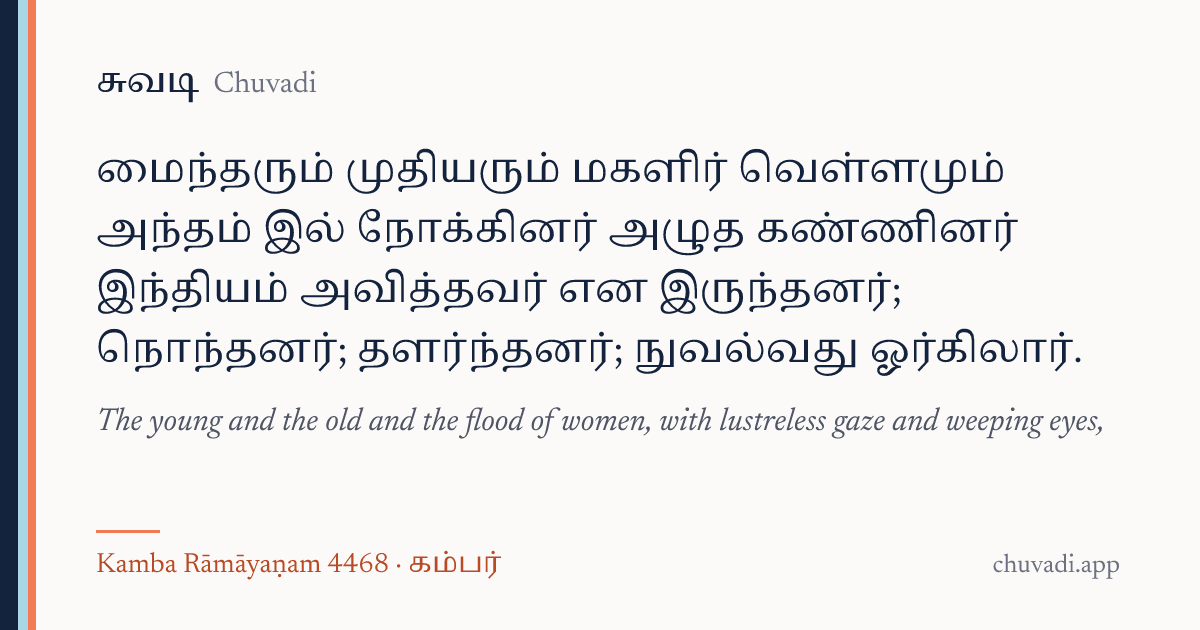
மைந்தரும் - இளையரும்; முதியரும் - வயது வந்தோரும்; மகளிர் வெள்ளமும் - மாதர்களின் கூட்டமும்; அந்தம் இல் நோக்கினர் - பொலிவிழந்த பார்வையினராய்; அழுத கண்ணினர் - அழுகின்ற கண்களையுடைவர்களாய்; நுவல்வது ஓர்கிலார் - (ஒன்றும்) சொல்லத் தோன்றாதவர்களுமாகி; நொந்தனர் தளர்ந்தனர் - மனம் வருந்திச் சோர்வுற்று; இந்தியம் அவித்தவர் என இருந்தனர் - ஐந்து புலன்களையும் அடக்கிய முனிவர்போல இருந்தார்கள்.
முனிவர்கள் பரமான்மாவை இடைவிடாது நினைந்து ஐம்பொறிகளையும் தம்தம் வழியிற் செல்ல வொட்டாது அடக்கியிருப்பதை, தமக்கேற்பட்ட மிகுந்த துன்பத்தால் வானரங்கள் ஐம்பொறிகளின் தொழில் அடங்கிச் செயலற்றிருத்தலுக்கு உவமை கூறினார்.
இலக்குவன் இராமனது நிலையைக் கூறியதைக் கேட்டதாலும், அவன் தரையில் அமர்ந்திருந்ததைக் கண்டதாலும் வானரங்களுக்கு மாற்றொணாத துயரம் ஏற்பட்டது என்பது. நொந்தனர் - முற்றெச்சம் இந்தியம் - இந்திரியம் என்ற வடசொல்லின் மரூஉ. இச்சொல்லாட்சி முன்னும் (2515) வந்தது.
ஆங்கிலம் · English translationAI
Translation
- The young and the old and the flood of women,
- with lustreless gaze and weeping eyes,
- sat like those who have stilled their senses;
- they grieved, they drooped, they could find nothing to say.
What the poem says
The monkeys gathered in the palace, young and old, and the crowd of women, are overcome with grief at hearing of Irāmaṉ's hardship and seeing his brother sit on the bare floor. They weep and fall silent, motionless.
The poet compares them to ascetics who have stilled their five senses: the sages do so by meditation, the monkeys because sorrow has numbed them.