



கம்பராமாயணம் 4470 · கிட்கிந்தா 10.112
பாடல் · The poem
Tap a word to see its gloss in the commentary and where else it occurs.
பாட வேறுபாடு · Project Madurai reads
பொருள் · Meaning in Tamil
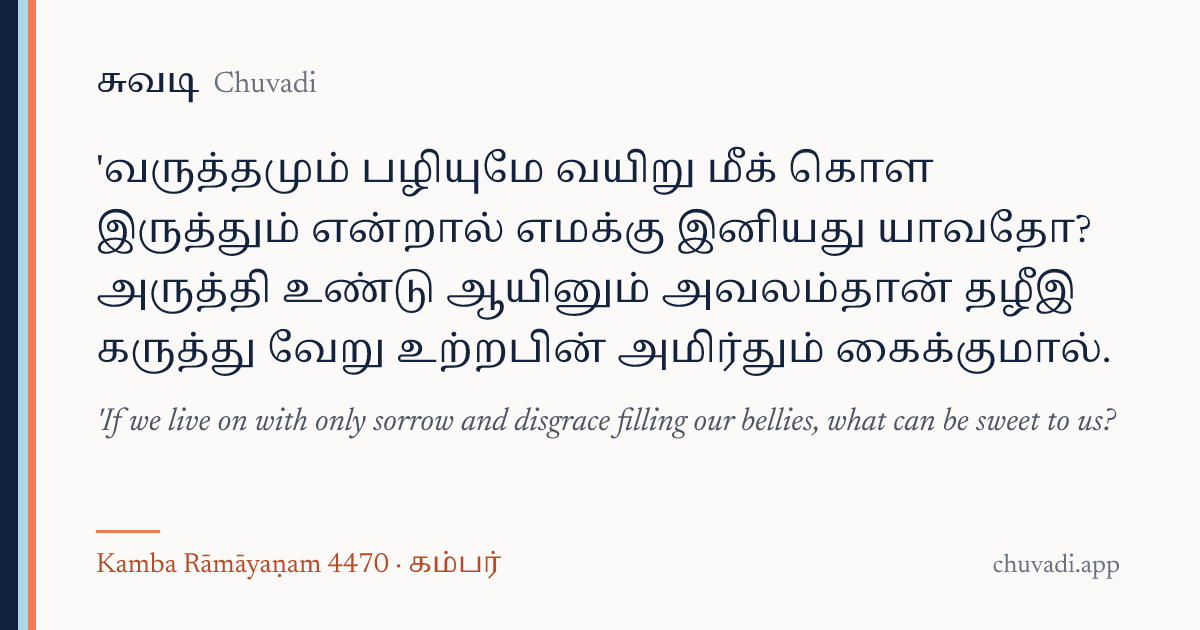
வருத்தமும் பழியுமே - துன்பமும் பழிச் சொல்லுமே; வயிறு மீக் கொள - வயிற்றில் நிரம்பியிருக்கவும்; இருத்தும் என்றால் - (நாங்கள்) உயிர் பிழைத்திருக்கிறோம் என்றால்; எமக்கு இனியது - எங்களுக்கு இனிமை தரக்கூடியது; யாவது? - எதுதான்? அருத்தி உண்டு ஆயினும் - உண்பதற்கு மிகுந்த ஆசை இருப்பினும்; அவலம் தழீஇ - துன்பமடைந்து; கருத்து வேறு உற்றபின் - மனம் மாறுபட்ட காலத்தில்; அமிழ்தும் கைக்கும் - தேவாமுதமும் கசக்குமல்லவா?
உலகின் சுவையான பொருளையுண்ண ஒருவனுக்கு விருப்பமிருப்பினும் துன்பத்தால் மனம் சோர்ந்திருக்குங் காலத்துத் தேவாமுதமும் இனிமையாகத் தோன்றாது. அவ்வாறே உயிரைப் போக்கக் கூடிய வருத்தத்தையும் பழியையும் சுமந்து அரிதாக உயிர் பிழைத்திருக்கையில் எதுவும் இப்போது எங்களுக்கு இனிமையாகத் தோன்றாது. ஆதலால் நீ எனக்கு இடும் இனிய உணவு வேண்டா என்று இலக்குவன் கூறினான் என்பது. இங்கே வருத்தமும் பழியும் முறையே சீதையைப் பிரிந்ததாலும், அவளைப் பிறர் கொண்டு சென்றும் மீட்கவில்லையே என்றதனாலும் ஏற்பட்டவை. தான், ஆல் - அசைகள். ஓகாரம் எதிர்மறை.
ஆங்கிலம் · English translationAI
Translation
- 'If we live on with only sorrow and disgrace filling our bellies,
- what can be sweet to us?
- Even when there is hunger, once grief has gripped one
- and the mind has turned elsewhere, even nectar tastes bitter.'
What the poem says
Ilakkuvaṉ declines Cukkirīvaṉ's offer of a bath and a feast. He and Irāmaṉ are living on with nothing inside them but grief and shame: grief at being parted from Cītai, and shame that she was carried off and has not yet been rescued. When the heart is in such pain, even the nectar of the gods would taste bitter.