



கம்பராமாயணம் 4474 · கிட்கிந்தா 10.116
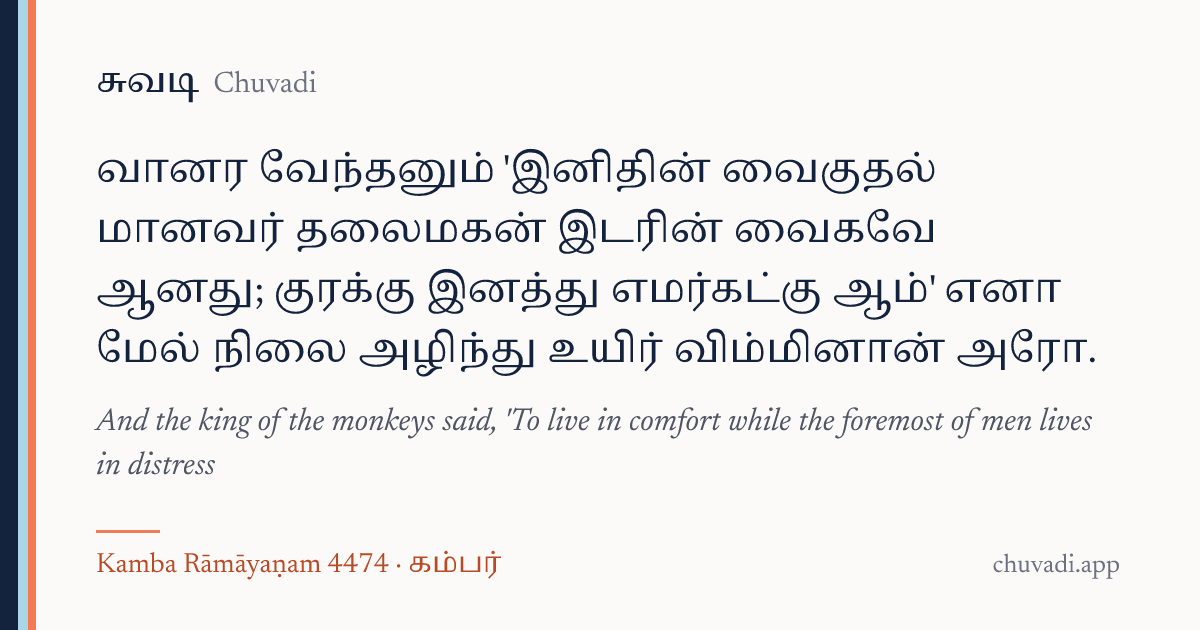
பாடல் · The poem
Tap a word to see its gloss in the commentary and where else it occurs.
பொருள் · Meaning in Tamil
வானர வேந்தனும் - (இவ்வாறு இலக்குவன் கூறக் கேட்டு) குரக்கரசனான சுக்கிரீவனும் (இலக்குவனைப் பார்த்து); மானவர் தலை மகன் - 'மனு வம்சத்தில் சிறந்தவனான இராமன்; இடரின் வைக - துன்பத்தில் ஆழ்ந்திருக்கும்போது, இனிதின் வைகுதல் ஆனது - இன்பமாகக் காலத்தைப் போக்குவதென்பது; குரக்கு இனத்து எமர்கட்கு ஆம் - வானர குலத்துப் பிறந்த எங்களைப் போன்றவர்க்கே பொருந்தும், எனா - என்று கூறி; மேல்நிலை அழிந்து - உடம்பு நிலை குலைந்து; உயிர் விம்மினான் - உயிர் வருந்தினான்.
இலக்குவன் சொற்களைக் கேட்ட சுக்கிரீவன் ஆற்றாது உடல்தளர்ந்து உயிர் வருந்தினான் என்பது. மானவர் தலைமகன் - சான்றோர் தலைவன் எனினுமாம். மேல் என்பது புறவுடலாம்; உடல் எழில் குலைதலும் மனம் நோதலும் ஆகும். மேல் என்னும் சொல் இன்னும் தென்தமிழகத்தில் உடல் என்ற பொருளில் வழங்குகிறது.
தென்தமிழகத்தில் மேலுக்குக் குளிச்சிட்டு வரேன் என்று பேசுதல் கண்கூடு.
ஆங்கிலம் · English translationAI
Translation
- And the king of the monkeys said, 'To live in comfort
- while the foremost of men lives in distress
- is fit only for our kind, the race of monkeys,'
- and, his body losing all its bearing, his very life sobbed, alas.
What the poem says
Cukkirīvaṉ is crushed by Ilakkuvaṉ's words. Bitterly he says that to live in ease while Irāmaṉ, foremost of the line of Maṉu, lives in hardship is something only monkeys like him could do. His whole frame sags and his spirit groans in shame.
The commentary notes that the word used for body here, mēl, is still used in southern Tamil Nadu in that sense.