



கம்பராமாயணம் 4481 · கிட்கிந்தா 10.123
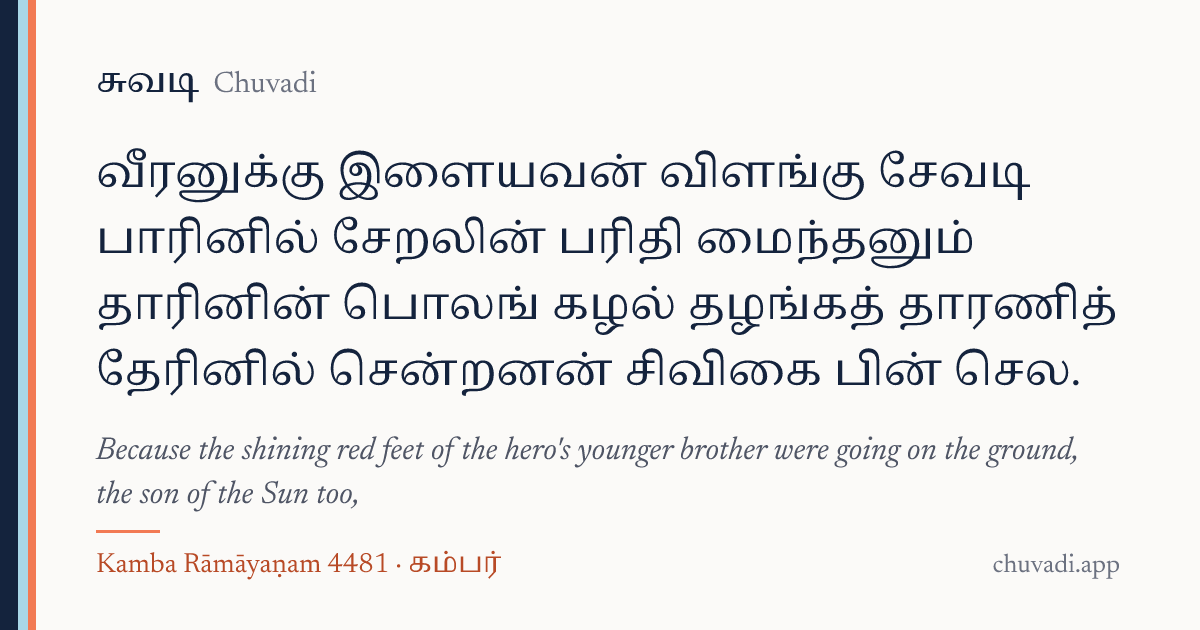
பாடல் · The poem
Tap a word to see its gloss in the commentary and where else it occurs.
பொருள் · Meaning in Tamil
வீரனுக்கு இளையவன் - இராமனுக்குத் தம்பியான இலக்குவனது; விளங்கு சேவடி - ஒளிவிடுகின்ற சிவந்த திருவடிகள்; பாரினில் சேறலின் - நிலத்தில் நடந்து செல்லுவதனால்; பரிதி மைந்தனும் - சூரிய குமாரனான சுக்கிரீவனும்; தாரினில் பொலன் கழல் தழங்க - கிண்கிணி மாலைகள் போலக் காலில் கட்டிய வீரக் கழல்கள் ஒலிக்க; (தானும் காலால் நடந்து), சிவிகை பின் செல- பல்லக்கு தனக்குப் பின்னே வர; தாரணித் தேரினில் - பூமியாகிய தேரின் மேல்; சென்றனன் - சென்றான் (தரையில் நடந்தான்.
இலக்குவன் பாதம் வருந்தப் பூமியில் நடந்து செல்லுதலால், சுக்கிரீவனும் சிவிகையேறிச் செல்லாமல் தரையில் நடந்து சென்றான் என்பது. தார் - கிண்கிணிமாலை. இலக்குவனும், சுக்கிரீவனும் ஒரு பொற் சிவிகையிலேறிச் சென்றதாக வான்மீகி கூறுவார்.
ஆங்கிலம் · English translationAI
Translation
- Because the shining red feet of the hero's younger brother
- were going on the ground, the son of the Sun too,
- his golden anklets ringing like strings of bells, went
- on the chariot that is the earth, with the palanquin following behind.
What the poem says
Since Ilakkuvaṉ is walking on foot, Cukkirīvaṉ will not ride in his palanquin. He walks too, his warrior's anklets jingling, while the empty palanquin is carried behind him. The poet playfully calls the ground he walks on "the chariot of the earth". The commentary notes that in Vālmīki's version the two ride together in a golden palanquin.