



கம்பராமாயணம் 4517 · கிட்கிந்தா 11.19
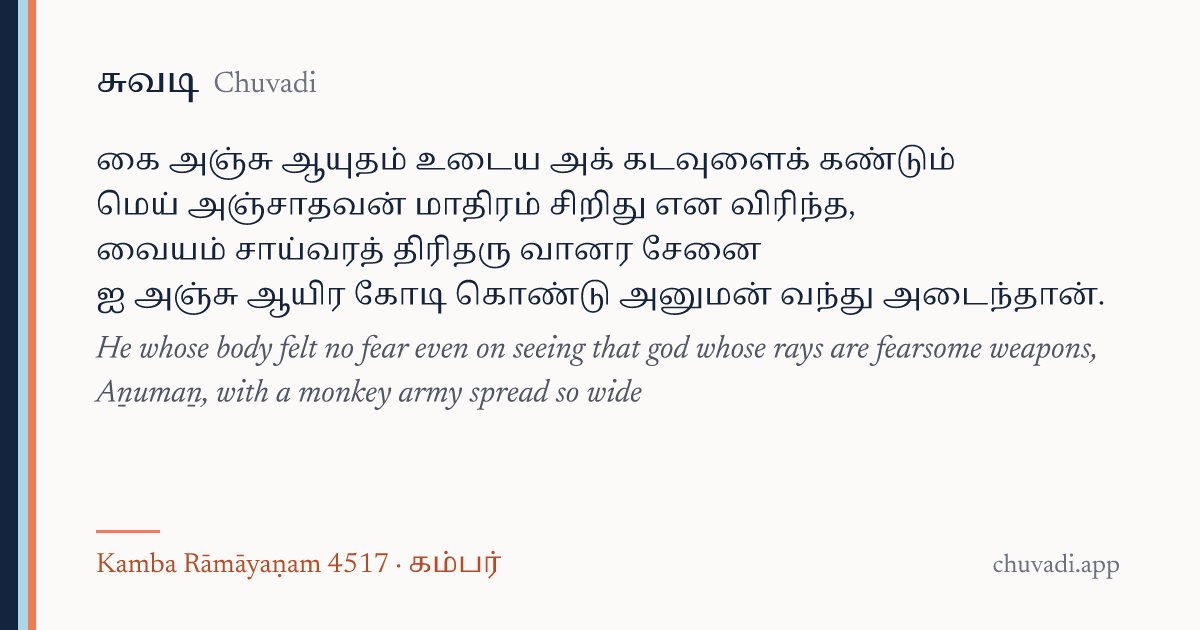
பாடல் · The poem
Tap a word to see its gloss in the commentary and where else it occurs.
பாட வேறுபாடு · Project Madurai reads
பொருள் · Meaning in Tamil
கை அஞ்சு ஆயுதம் உடைய - கிரணங்களாகிய அஞ்சத்தக்க ஆயுதங்களையுடைய; அக் கடவுளைக் கண்டும் - அந்தச் சூரியனைக் கண்டுங்கூட; மெய் அஞ்சாதவன் - சிறிதும் நடுக்கம் கொள்ளாதவனான; அனுமன் - அனுமன்; மாதிரம் சிறிது என விரிந்த - திக்கெல்லை முழுவதும் அளவில் சிறிய என்று எண்ணுமாறு பரவியுள்ளதும்; வையம் சாய்வரத் திரிதரு - நிலவுலகம் ஒரு புறமாகச் சாயும்படி உலவுவதுமான; ஐ அஞ்சு ஆயிர கோடி வானர சேனை கொண்டு - இருபத்தையாயிரங்கோடி எண்ணுள்ள வானரப் படையை உடன்கொண்டு; வந்து அடைந்தான் - வந்து சேர்ந்தான்.
அனுமன் பிறந்த பொழுதே இளஞ்சூரியனைக் கனிந்த பழமென்று கருதிச் சிறிதும் அஞ்சாது, அதைப் பிடிக்கப் பாய்ந்தவனாதலால் அவனை 'அக் கடவுளைக் கண்டு மெய் அஞ்சாதவன்' என்றார்.
பூமியின் எந்தப் பகுதியில் இவ் வானர சேனை செல்லுகின்றதோ அந்தப் பகுதி மிக்க பாரத்தால் சாய்வதாயிற்று என்பது.
சாய்வர; திரிதரு: வர தரு என்பன துணை வினைகள்.
ஆங்கிலம் · English translationAI
Translation
- He whose body felt no fear even on seeing that god
- whose rays are fearsome weapons, Aṉumaṉ, with a monkey army spread so wide
- that the directions seemed small, roaming so that the earth tilted,
- five times five thousand crores, came and arrived.
What the poem says
At last Aṉumaṉ arrives, leading twenty-five thousand crores of monkeys. The army spreads so wide that the horizons seem cramped, and wherever it moves the earth tilts under its weight.
Aṉumaṉ is called the one who did not fear the Sun even when he saw it, recalling the story that as a newborn he mistook the rising sun for a ripe fruit and leapt to seize it.