



கம்பராமாயணம் 4528 · கிட்கிந்தா 11.30
பாடல் · The poem
Tap a word to see its gloss in the commentary and where else it occurs.
பாட வேறுபாடு · Project Madurai reads
பொருள் · Meaning in Tamil
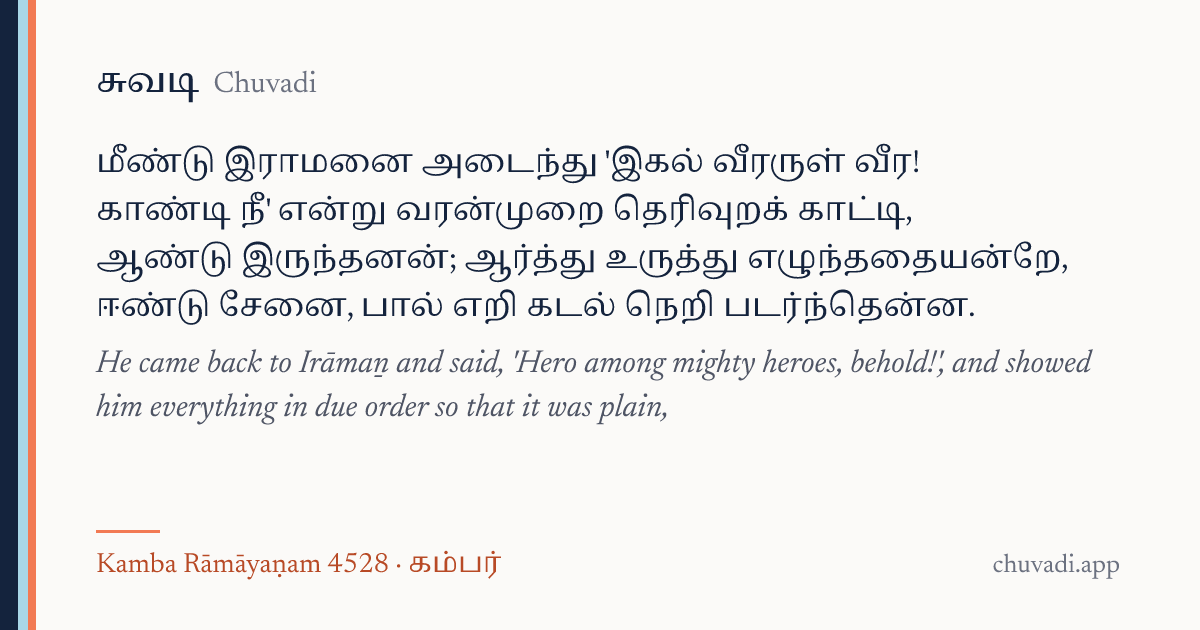
(சுக்கிரீவன்) மீண்டு இராமனை அடைந்து - திரும்பவும் இராமனிடம் வந்து (அவனை நோக்கி); 'இகல் வீரருள் வீர - வலிமை பொருந்திய வீரர்களுள்ளே சிறந்த வீரனே! நீ காண்டி என்று - நீ காண்பாய் என்று; வரன் முறை தெரிவுறக் காட்டி - சேனைகளை முறையாகத் தெரியும்படி (அவனுக்குக்) காண்பித்து; ஆண்டு இருந்தனன் - அந்த இடத்தில் இருந்தான் (அப்போது); ஈண்டு சேனை - திரண்ட அந்த வானர சேனையானது; எறி பாற் கடல் - அலை வீசுகின்ற பாற்கடல்; நெறி படர்ந்து என்ன - வழியில் சென்றது போல; ஆர்த்து உருத்து எழுந்தது - பேராரவாரம் செய்து (பிறர்க்கு) அச்சம் உண்டாகப் புறப்பட்டது.
சுக்கிரீவன் வானரப் படைகளின் வரலாறுகளை இராமனுக்குச் செம்மையாக விளங்கச் சொன்னான் என்பது.
வானரப் படைக்குப் பாற்கடல் உவமை: நிறத்தாலும் ஆரவாரத்தாலும் பாற்கடல் அலைகள் வானர சேனைக்கு உவமையாயின. ஐயரவர்கள் நூலகப் பதிப்பில் இப்பாடல் இடம் பெறவில்லை.
ஆங்கிலம் · English translationAI
Translation
- He came back to Irāmaṉ and said, 'Hero among mighty heroes,
- behold!', and showed him everything in due order so that it was plain,
- and stayed there; and the massed army rose with a roar, fearsome,
- as though the sea of milk, tossing its waves, had set out along a road.
What the poem says
Cukkirīvaṉ returns to Irāmaṉ and, calling him the hero of heroes, points out each division of the army in turn as it passes. The great host sets off with a roar, like the ocean of milk surging along a road, a comparison suggested by both its pale colour and its noise. The commentary notes that this verse is missing from one important earlier edition.