



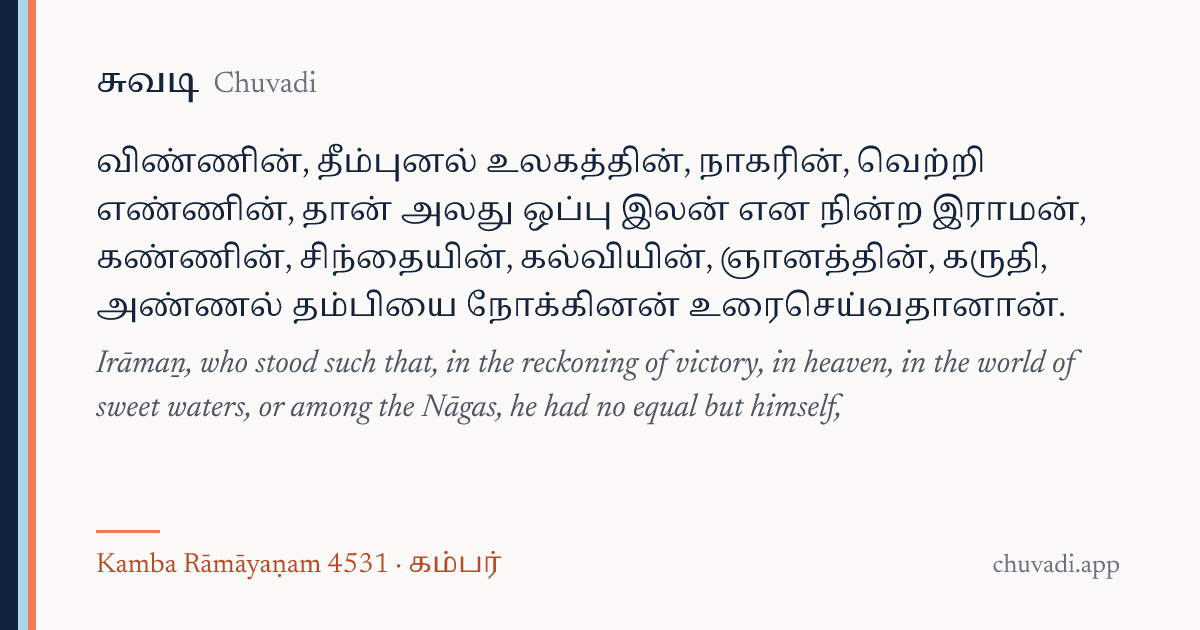
கம்பராமாயணம் 4531 · கிட்கிந்தா 11.33
பாடல் · The poem
Tap a word to see its gloss in the commentary and where else it occurs.
பொருள் · Meaning in Tamil
வெற்றி எண்ணின் - வெற்றி பெறுவதைப் பற்றி ஆராய்ந்தால்; தான் அலது - தானே தனக்கு உவமையாவது அல்லாமல்; விண்ணின் - மேலுலகத்திலும்; தீம்புனல் உலகத்தின் - இனிய கடல் சூழ்ந்த உலகத்திலும்; நாகரின் - நாகர்கள் வாழும் பாதாள உலகத்திலும்; ஒப்பு இலன் என - உவமையில்லாதவன் எனச் சொல்லுமாறு; நின்ற இராமன் - (சிறப்போடு) விளங்கும் இராமன்; கண்ணின் - தன் கண்களாலும்; சிந்தையின் - மனத்தினாலும்; கருதி - அந்தச் சேனைப் பரப்பை நன்றாக ஆராய்ந்து; அண்ணல் தம்பியை நோக்கினன் - பெருமை வாய்ந்த இளைய பெருமாளைப் பார்த்து; உரை செய்வதானான்- (அச் சேனைபற்றிக்) கூறத் தொடங்கினான்.
நாகர் - தானியாகுபெயர் (பாதாள உலகம்); படமும் வாலும் உடையராய் மனிதர் போன்ற உருவமும் தெய்வத் தன்மையுமுடைய பாம்புச் சாதியார். 'தீம் புனல்: உலகைச் சூழ்ந்து நிற்பது உவர்க் கடலே யெனினும் மக்களுக்கு மிக இன்றியமையாத உணவிற்குச் சுவையளிக்கும் உப்பை விளைவித்தலால் 'தீம்புனல்' என்றார். உப்பு என்ற சொல்லுக்கே சுவை என்னும் பொருள் உண்டு. தன்துணை ஒருவரும் தன்னில் வேறு இலான் (9965), கூட்டு ஒருவரையும் வேண்டாக் கொற்றவ (4029), துணை இலான் (6226) என்ற தொடர்கள் ஒப்பிட்டு உணரத்தக்கன.
ஆங்கிலம் · English translationAI
Translation
- Irāmaṉ, who stood such that, in the reckoning of victory, in heaven,
- in the world of sweet waters, or among the Nāgas, he had no equal but himself,
- considered it with his eyes, his mind, his learning and his wisdom,
- and, looking at his noble younger brother, began to speak.
What the poem says
Irāmaṉ, whose prowess has no equal in heaven, on earth or in the serpent world below, so that he can be compared only with himself, studies the army with his eyes and mind, his learning and his wisdom, and then turns to Ilakkuvaṉ to speak.
The earth is called the world "of sweet waters" even though the ocean is salt, because salt gives savour to food.