



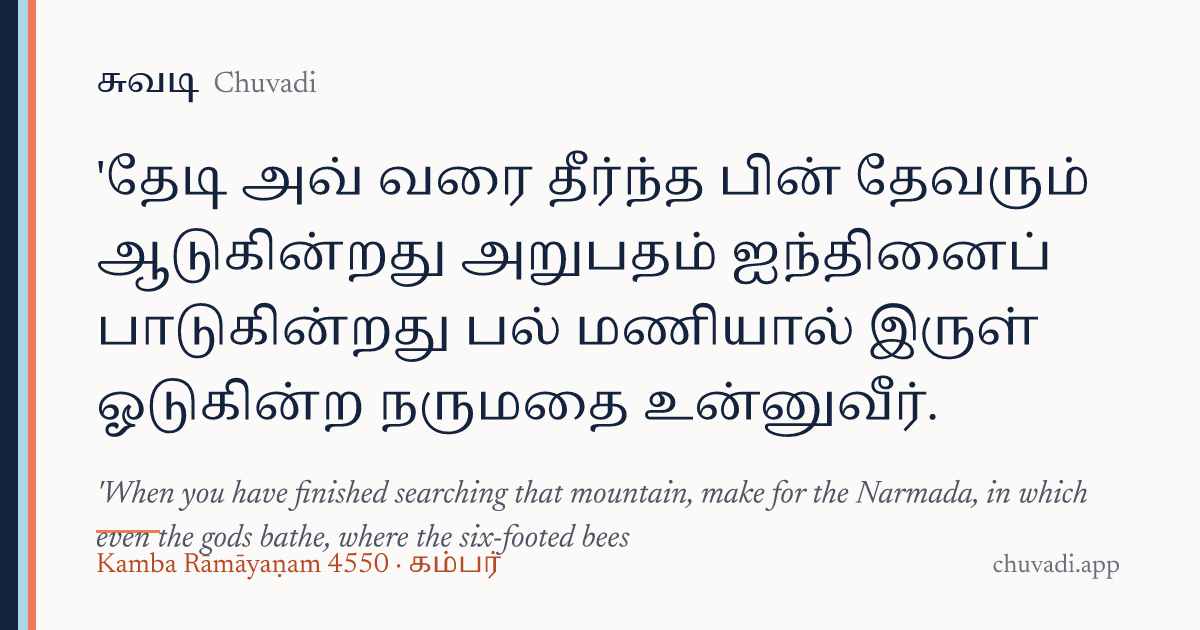
கம்பராமாயணம் 4550 · கிட்கிந்தா 12.13
பாடல் · The poem
Tap a word to see its gloss in the commentary and where else it occurs.
பொருள் · Meaning in Tamil
அவ்வரை தேடித் தீர்ந்தபின் - அந்த விந்திய மலையில் சீதையைத் தேடி முடித்த பின்பு; தேவரும் ஆடுகின்றது - தேவர்களும் வந்து நீராடப் பெறுவதும்; அறுபதம் ஐந்தினைப் பாடுகின்றது - (வெள்ளத்தால் அடித்து வரப் பெற்ற மலர்களிலுள்ள தேனைப் பருகி அந்தக் களிப்பினால்) வண்டுகள் பஞ்சமம் என்ற சுரத்தைப் பாடப் பெறுவதுமான; பல் மணியால் இருள் ஓடுகின்ற - (அங்குள்ள) பலவகையான இரத்தினங்களின் ஒளியால் இருள் விலகுவதற்குக் காரணமான; நருமதை உன்னுவீர் - நருமதையாற்றைச் சென்று அடைவீர்
நருமதை நதி: கிழக்கிலிருந்து மேற்கு நோக்கிப் பாயும் ஓர் ஆறு; தேவர்கள் நீராடும் தெய்வீகமும் வண்டுகள் இசைபாடும் சூழல் இனிமையும், மணியொளியால் இருள் நீங்கும் செல்வ வளமும் அந்த நருமதை நதிக்கு உள்ளதெனக் கற்பனை செய்தமை நயமானது. ஐந்து - பஞ்சமம்: ஏழு சுரங்களுள் இது ஐந்தாவது அறுபதம் ஐந்தினைப் பாடுகின்றது - சொல்நயம்.
ஆங்கிலம் · English translationAI
Translation
- 'When you have finished searching that mountain, make for the Narmada,
- in which even the gods bathe, where the six-footed bees
- sing the fifth note, and where darkness
- runs away from its many gems.'
What the poem says
After the Vindhyas the searchers are to go to the river Narmada, which flows westward. The gods themselves bathe in it; bees drunk on the honey of flowers carried along by its waters hum in the fifth note of the musical scale, pañcamam; and the light of the gems in its bed drives away the dark. The commentary admires the wordplay of the "six-footed" bees singing the "fifth".