



கம்பராமாயணம் 4558 · கிட்கிந்தா 12.21
பாடல் · The poem
Tap a word to see its gloss in the commentary and where else it occurs.
பொருள் · Meaning in Tamil
முது நீத்தம் - பழமையான வெள்ளமானது; முத்து ஈர்த்து - முத்துக்களை இழுத்துக் கொண்டும்; பொன் திரட்டி - பொன் துகள்களைச் சேர எடுத்துக் கொண்டும்; மணி உருட்டி - இரத்தினக் கற்களையடித்துக் கொண்டும்; ஆயர் முன்றில் மத்து ஈர்த்து - இடையர்களின் முற்றங்களிலுள்ள மத்துக்களை இழுத்துக்கொண்டும்; மரன் ஈர்த்து - மரங்களையிழுத்துக் கொண்டும்; மலை ஈர்த்து - கற்பாறைகளைப் புரட்டி இழுத்துக் கொண்டும்; மான் ஈர்த்து - மிருகங்களை இழுத்துக் கொண்டும்; வருவது - பெருகிவரும் தன்மையுடையது; யார்க்கும் - (அதில் மூழ்கிய) எல்லோர்க்கும்; புத்து ஈர்த்திட்டு - 'புத்' என்னும் நரகம் வராமல் நீங்கி; அலையாமல் - எங்கும் அலைந்து திரியாமல், புலவர் நாடு உதவுவது - தேவருலகத்தைத் தர வல்லது; புனிதம் ஆன அத் தீர்த்தம் - தூய்மையான அந்தப் புண்ணிய நீரின் பெயர்; அகல் கோதாவரி என்பர் - அகலமான கோதாவரிநதியென்று சொல்லுவர்; அம்மலையின் அருகிற்று - (அந்த நதி) அப் பாண்டு மலையின் பக்கத்தேயுள்ளது.
அம்மா: வியப்பிடைச்சொல்.
ஏழு புண்ணிய நதிகளில் ஒன்றான கோதாவரியின் பல சிறப்புகளையும் கூறுவது இப்பாடல். முதுநீத்தம்: பழமையும் பெருமையும் வாய்ந்ததால் 'புத்' என்பது பிள்ளைகளைப் பெறாதவர்கள் சென்றடையும் ஒரு நரகம் என்பர். முன்றில்: இலக்கணப் போலி. 'ஈர்த்து' என்ற சொல் ஒரு வு பலமுறை வந்தது: சொற்பொருள் பின்வருநிலையணி.
ஆங்கிலம் · English translationAI
Translation
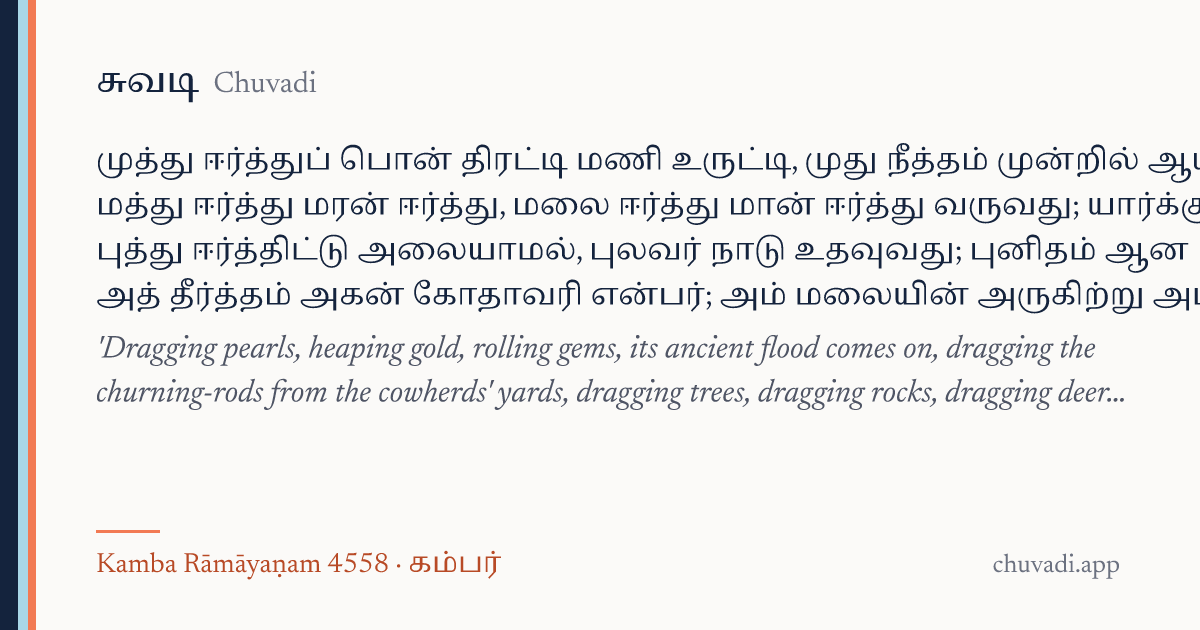
- 'Dragging pearls, heaping gold, rolling gems, its ancient flood comes on, dragging the churning-rods
- from the cowherds' yards, dragging trees, dragging rocks, dragging deer; for everyone
- it drags away the hell called Put, and, so that they need not wander, grants the land of the gods; that holy
- sacred water is called the broad Kōtāvari; it lies near that mountain, ah!'
What the poem says
Near Mount Pāṇṭu flows the broad Kōtāvari (Godavari), one of the seven sacred rivers. Its ancient flood rolls along pearls, gold and gems and sweeps away churning-rods from herders' yards, trees, rocks and deer. For those who bathe in it, it removes the threat of Put, the hell said to await those without sons, and grants heaven, so they need not wander from birth to birth. The poet repeats the word "drag" throughout, one verb used again and again in the same sense.