



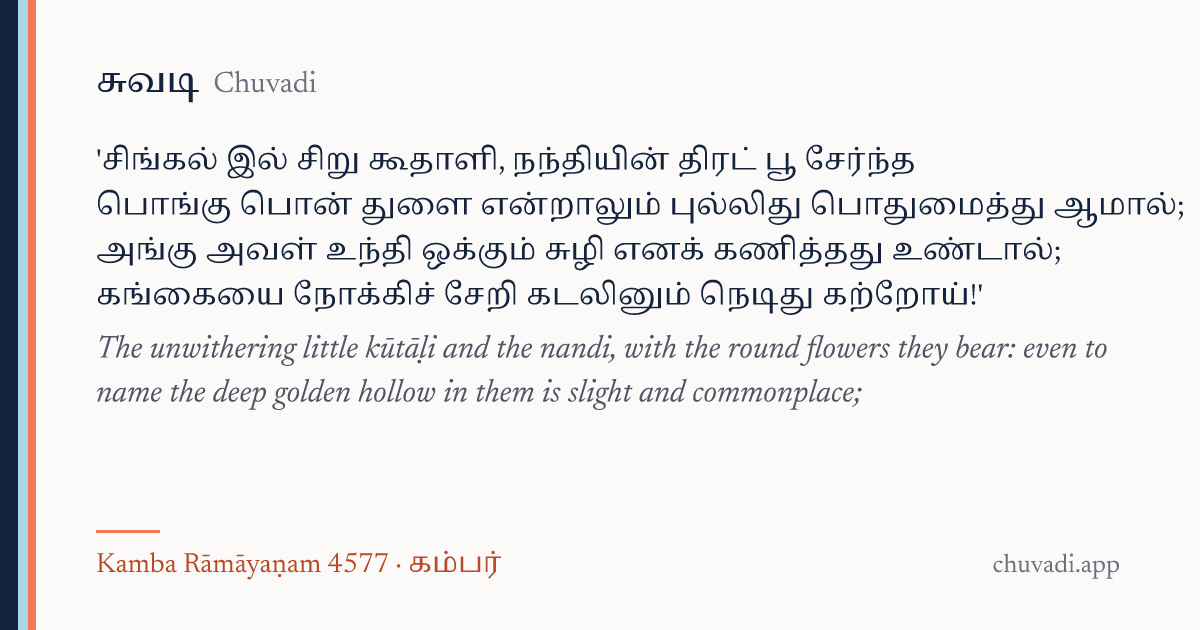
கம்பராமாயணம் 4577 · கிட்கிந்தா 12.40
பாடல் · The poem
Tap a word to see its gloss in the commentary and where else it occurs.
பொருள் · Meaning in Tamil
கடலினும் நெடிது கற்றோய் - கடலைக் காட்டிலும் விரிவாகக் கற்றுணர்ந்தவனே! சிங்கல் இல் சிறு கூதாளி - (சீதையின் உந்திச் சுழிக்கு) சுருங்காத சிறு கூதாளிச் செடியும்; நந்தியின் - நந்தியாவட்டையும் (என்ற இவற்றின்); திரள் பூ - வட்ட வடிவமான மலர்களிலே; சேர்ந்த பொங்கு பொன்துளை - பொருந்திய பெரிய அழகிய துளைகள்; என்றாலும் - (உவமையாகும்) என்று கூறினாலும்; புல்லிது - (அவை) மிக அற்பமானவை; பொதுமைத்து ஆம் - தவிர பொதுவகையால் கூறியதும் ஆகும்; சுழி - (கங்கையின் நீர்ச் சுழியானது; அவள் உந்தி ஒக்கும் - அச் சீதையின் உந்தியை ஒத்திருக்கும்; என அங்கு - என்று அவ்விடத்து; கணித்தது உண்டு - (கங்கையைக் கண்ட போது) நான் கருதியது உண்டு; கங்கையை நோக்கி சேறி - (ஆகையால்) கங்கையை மனத்தில் பதித்துக் கொண்டு (அச் சீதையின் உந்தியை இன்னபடி உள்ளதென்று) எண்ணிச் செல்வாய்,
ஆல்: இரண்டும் ஈற்றசைகள்.
கங்கையின் நீர்ச் சுழியே சீதையின் உந்திக்கு ஏற்ற உவமையாகும் என்பது கருத்து. சிங்கல் - கெடுதல். அனுமனின் பரந்த கல்வியறிவையும், நுண்மான் நுழை புலத்தையும் பாராட்டிக் 'கடலினும் நெடிது கற்றோய்' என்றான். 'இல்லாத உலகத்து எங்கும், இங்கு இவன் இசைகள் கூரக் கல்லாத கலையும் வேதக் கடலுமே (3768) என அனுமனின் கல்வித்திறத்தை இராமபிரான் கூறியதை நினைவு கூர்க. சீதையின் உந்திச் சுழிக்குக் கூதாளிமலரின் உள் துளையும் நந்தியாவட்ட மலரின் உள்துளையும் சிறிதும் உவமையாகா; நான் கங்கைவழியே வந்தபோது அந்தக் கங்கைநதியின் நீர்ச் சுழிக்குச் சீதையின் உந்திச் சுழியை உவமையாகக் கருதியதுண்டு. நீயும் அக் கங்கையின் நீர்ச் சுழியும் சீதையின் உந்திச் சுழியும் ஒக்குமெனக் கருதுவாய் என்பது. எதிர்நிலையணி.
கூதாளி - கார் காலத்து மலரும் ஒரு வகைச் செடி.
ஆங்கிலம் · English translationAI
Translation
- The unwithering little kūtāḷi and the nandi, with the round flowers they bear:
- even to name the deep golden hollow in them is slight and commonplace;
- there, at the river, I reckoned that a whirlpool was like her navel;
- go with the Gaṅgā in your mind, you whose learning is wider than the sea.
What the poem says
For Cītai's navel, the conventional likeness is the hollow centre of a flower such as the kūtāḷi, which blooms in the rainy season, or the nandi (nantiyāvaṭṭai). Irāmaṉ dismisses these as petty.
When he travelled along the Gaṅgā, he says, he thought its whirlpools were like her navel, so Aṉumaṉ should keep the Gaṅgā in mind. He praises Aṉumaṉ as one whose learning is vaster than the ocean, echoing his earlier praise of Aṉumaṉ as master of every art and of the sea of the Vedas.