



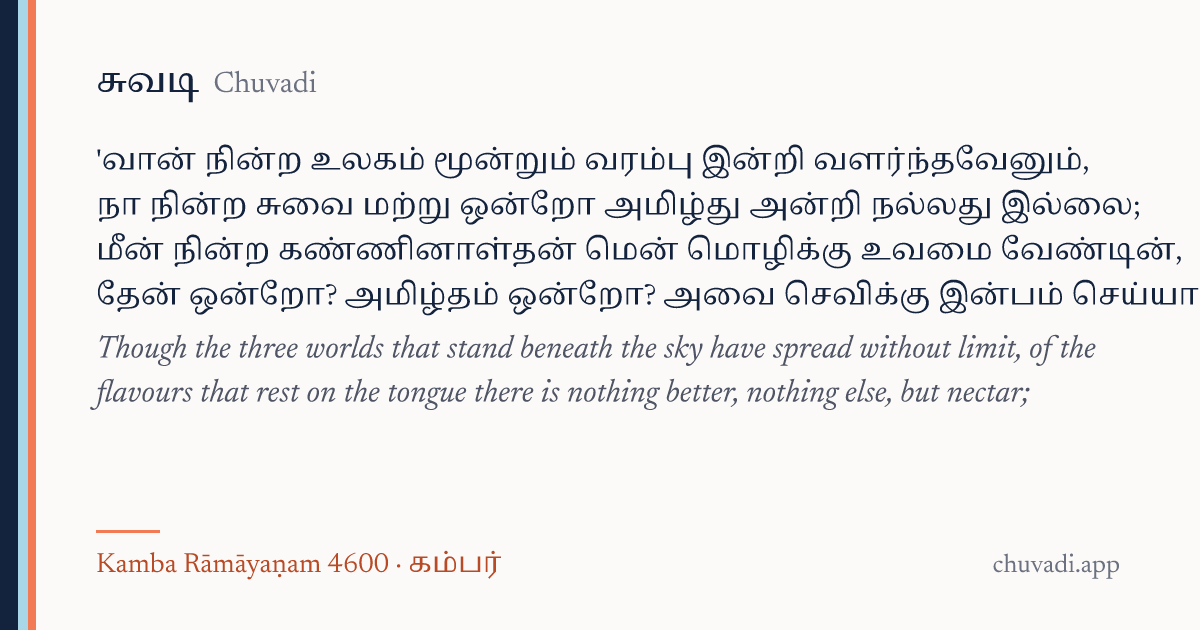
கம்பராமாயணம் 4600 · கிட்கிந்தா 12.63
பாடல் · The poem
Tap a word to see its gloss in the commentary and where else it occurs.
பொருள் · Meaning in Tamil
வான் நின்ற உலகம் மூன்றும் - சுவர்க்கம் முதலாகப் பொருந்திய மூன்று உலகங்களும், வரம்பு இன்றி வளர்ந்தவேனும் - எல்லையின்றிப் பரவியுள்ளனவென்றாலும்; நா நின்ற சுவை - (அவற்றுள்) நாவில் தங்கி, சுவை தருகின்ற பொருள்களில்; அமிழ்து அன்றி - மிகச் சிறந்து நிற்கும் அமிழ்தத்தையல்லாமல்; மற்று ஒன்று - இதுவும் ஒன்று என்று சொல்லக் கூடிய; நல்லது இல்லை - நல்ல பொருள் இல்லை; மீன் நின்ற கண்ணினாள் தன் - மீன் போன்ற கண்களையுடையவளான சீதையின்; மென் மொழிக்கு - மெல்லிய சொற்களுக்கு; உவமை வேண்டின் - உவமைப் பொருளையெடுத்துச் சொல்ல விரும்பினால்; தேன் ஒன்றோ - தேன் என்று சொல்வதா; அமிழ்தம் ஒன்றோ - மேலே கூறப்பட்ட அமிழ்தம் என்று சொல்வதா; அவை செவிக்கு இன்பம் செய்யா - அவை இரண்டும் நாவிற்கு இன்பம் செய்யுமே தவிர செவிக்கு இன்பம் நல்கா.
மிகவும் பரந்து மூவுலகங்களிலும் தேடித் தேடிப் பார்த்துச் சீதையின் சொற்களுக்கு ஒருபடியாக உவமை காட்டுவோமென்றால் செவிக்கு இனிமை தரும் சீதையின் சொற்களுக்கு, நாவிற்கு மட்டுமே இனிமைதரக் கூடிய தேன், அமிழ்தம் என்ற பொருள்களை உவமை கூறல் எவ்வாறு பொருந்தும் என்பது. எதிர்நிலையணி.
ஆங்கிலம் · English translationAI
Translation
- Though the three worlds that stand beneath the sky have spread without limit,
- of the flavours that rest on the tongue there is nothing better, nothing else, but nectar;
- if one wants a likeness for the soft speech of her whose eyes are like fish,
- is it honey? is it nectar? Those give no delight to the ear.
What the poem says
Searching all three worlds, the sweetest thing that can be tasted is nectar, and honey is the next. These are the usual likenesses for a lovely woman's speech.
But Irāmaṉ points out a mismatch: honey and nectar please the tongue, while Cītai's words please the ear. A sweetness of taste cannot stand for a sweetness of sound.