



கம்பராமாயணம் 4605 · கிட்கிந்தா 12.68
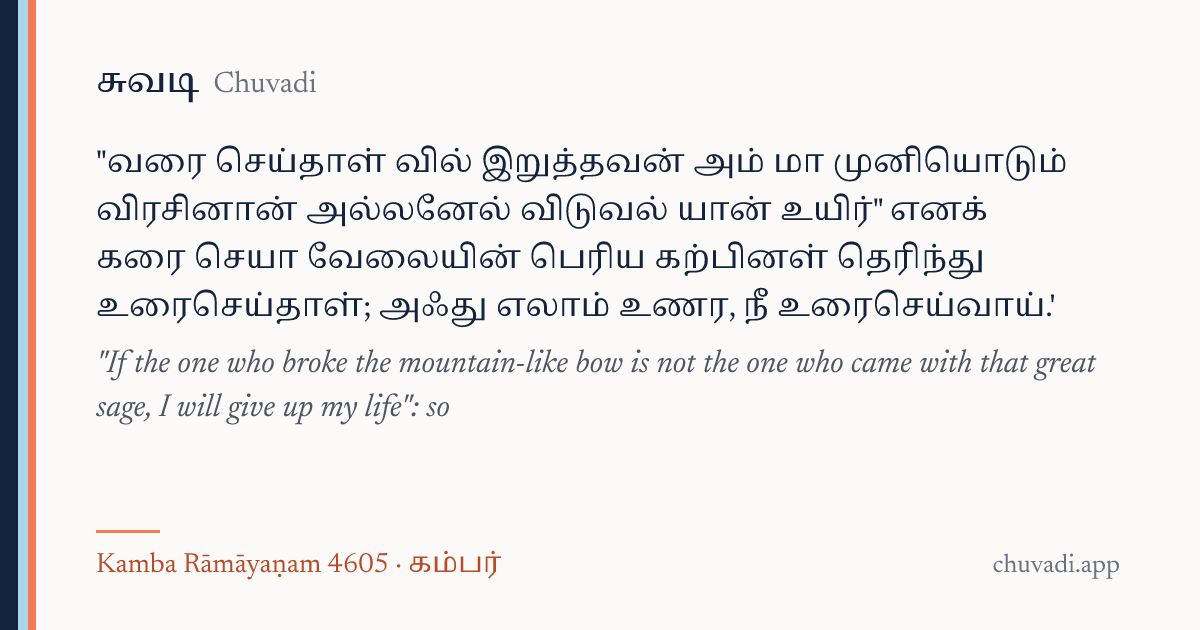
பாடல் · The poem
Tap a word to see its gloss in the commentary and where else it occurs.
பொருள் · Meaning in Tamil
கரை செயா வேலையின் - கரை அமைக்க முடியாத கடல் போன்ற; பெரிய கற்பினள் - சிறந்த கற்பினையுடைய சீதை, வரை செய் வில்தாள் இறுத்தவன் - மலையைப் போன்ற (சிவனுடைய) வில்லை ஒடித்தவன்; அம் மாமுனியொடும் - அத் தெய்வத் தன்மை பொருந்திய விசுவாமித்திர முனிவனுடனே; விரசினான் அல்லனேல் - வந்தவனாக இல்லாமற் போனால்; யான் உயிரை விடுதல் என - நான் எனது உயிரை விட்டுவிடுவேன் என்று; தெரிந்து உரை செய்தாள் - ஆராய்ந்து கூறினாள்; அஃது எலாம் - அந்தச் செய்திகள் அனைத்தும்; உணர நீ உரை செய்வாய் - (அவள்) தெளிவாக அறியுமாறு நீ சொல்வாய்.
இராமன் வில்லை முறித்த செய்தியைத் தோழி யொருத்தி சொல்லக் கேட்ட சீதை 'விசுவாமித்திர முனிவனுடன் வந்தவன் இந்த வில்லை இறுத்தவனாக இல்லாவிட்டால் நான் உயிரை மாய்த்துக் கொள்வேன் எனக் கருதியிருந்ததைப் பின்பு இராமனிடம் சொல்லியிருக்கக் கூடுமாதலால் இங்கு அடையாளமாக அது குறிக்கப் பெற்றது.
ஆங்கிலம் · English translationAI
Translation
- "If the one who broke the mountain-like bow is not the one who came with that great sage,
- I will give up my life": so
- she, whose chastity is greater than the shoreless sea, said with clear resolve;
- all of that, so that she may recognise it, you must tell her.
What the poem says
The second token: when a maid told Cītai that someone had broken Civaṉ's mighty bow, she resolved that if the bow-breaker were not the young man she had seen walking with Vicuvāmittiraṉ, she would kill herself.
She must later have told Irāmaṉ of this private vow, which is why he can use it as a sign only she would recognise.