



கம்பராமாயணம் 4607 · கிட்கிந்தா 12.70
பாடல் · The poem
Tap a word to see its gloss in the commentary and where else it occurs.
பாட வேறுபாடு · Project Madurai reads
பொருள் · Meaning in Tamil
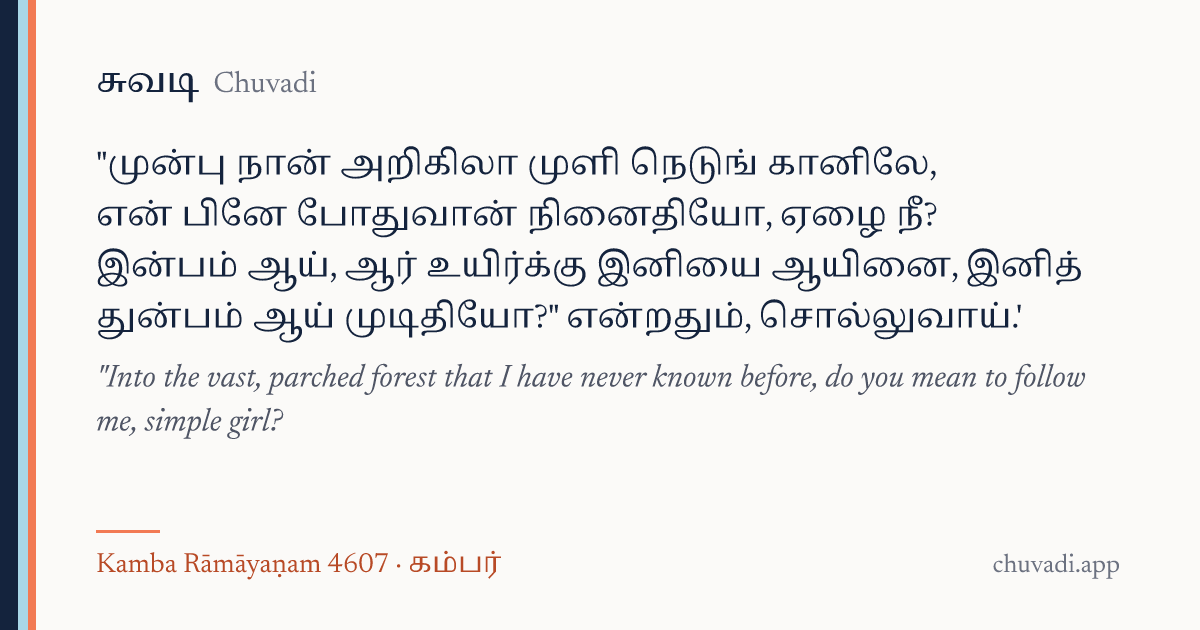
ஏழை - மடமைப் பண்பு மிக்கவளே! நீ - நீ; முன்பு நான் அறிகிலா - இதுவரை நான் கண்டறியாத; முளிநெடுங் கானிலே - தீய்ந்து போன பெரிய காட்டிலே; என் பினே போதுவான் - என்னைப் பின் தொடர்ந்து வருமாறு; நினைதியோ - கருதுகின்றாயோ? இன்பம் ஆய் - (இதுவரை நீ எனக்கு) மகிழ்ச்சியைத் தந்தவளாயிருந்து, ஆர் உயிர்க்கு - (எனது) பெறுதற்கு அருமையான உயிருக்கும்; இனியை ஆயினை - இனியவளாக இருந்தாய்; இனி - இனிமேல், துன்பம் ஆய் முடிதியோ - துன்பத்தைத் தருபவளாக ஆகிவிடுவாயோ? என்றதும் - என்று நான் சீதையிடம் கூறியதையும், சொல்லுவாய் - (நீ அவளிடம்) சொல்வாய்.
கைகேயி விருப்பத்தின்படி இராமன் பதினான்கு ஆண்டுகள் காட்டில் வாழ உடன்பட்டுச் சீதையிடம் சென்று 'நான் பதினான்கு வருடம் வனவாசம் செய்து மீண்டு வருவேன்; நீ இங்கே வருந்தாமல் இரு' என்றான்; அதுகேட்ட சீதை கணவன் காட்டிற்கு செல்லுகின்றான் என்பது குறித்துச் சிறிதும் வருந்தாமல் 'நீ இங்கே வருந்தாமல் இரு' என்று கூறிய சொல்லுக்கு மிக வருந்தி உடன்வருவேனென்று வற்புறுத்திக் கூற, அதற்கு இராமன் 'எல்லையற்ற இடர்தருவாய்' என்றான் என்பது (1832) இங்கு நினைவு கூரத்தக்கது.
ஆங்கிலம் · English translationAI
Translation
- "Into the vast, parched forest that I have never known before,
- do you mean to follow me, simple girl?
- You have been my joy, sweet to my precious life; will you now
- end by becoming my sorrow?": that I said this, tell her.
What the poem says
The fourth token is from the day of exile. When Irāmaṉ agreed to Kaikēyi's demand that he live fourteen years in the forest, he told Cītai to stay behind without grieving. She was hurt not by his going but by his telling her to stay, and insisted on coming.
Irāmaṉ then said these words: she who had always been his joy would become a cause of endless trouble if she followed him into the wilderness.