



கம்பராமாயணம் 4609 · கிட்கிந்தா 12.72
பாடல் · The poem
Tap a word to see its gloss in the commentary and where else it occurs.
பொருள் · Meaning in Tamil
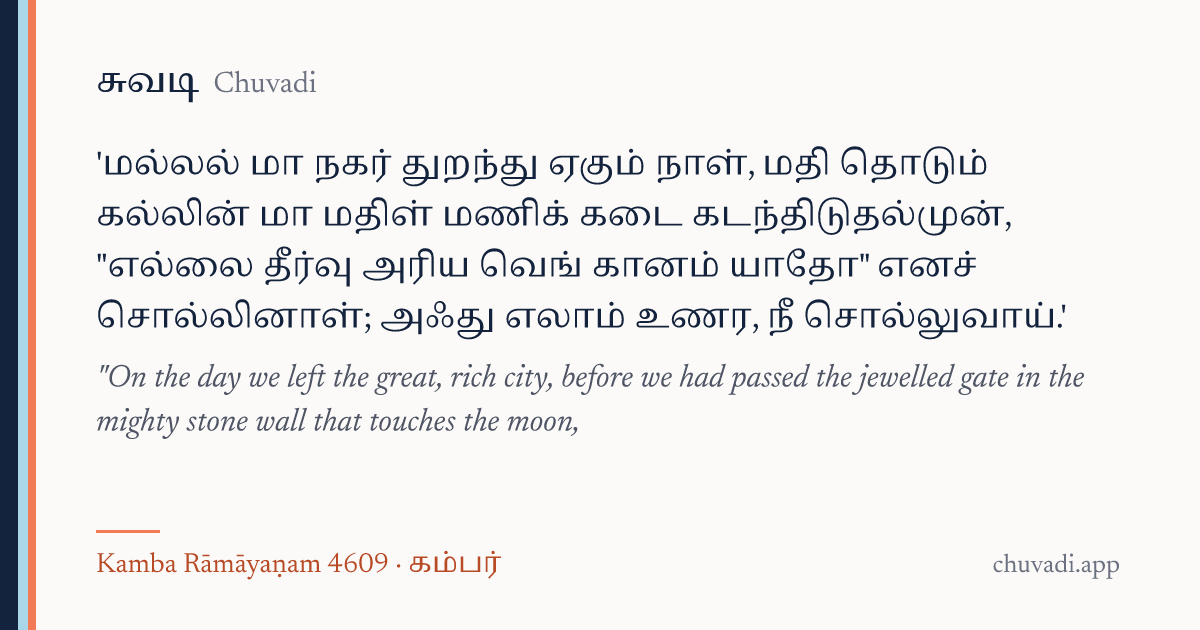
மல்லல் மாநகர் - வளம் மிகுந்த அயோத்தி நகரத்தை; துறந்து ஏகும்நாள் - நீங்கி (காட்டுக்குச் சென்ற காலத்தில்; மதி தொடும் - சந்திரனைத் தீண்டுகின்ற; கல்லின் மாமதிள் - கற்களாலாகிய பெரிய மதிலின்; மணிக்கடை கடந்திடுதல் முன் - அழகிய வாயிலைக் கடப்பதற்கு முன்பே; எல்லை தீர்வு அரிய வெங்கானம் - எல்லையில்லாத கொடிய கானம்; யாதோ என - எதுவோ என்று; சொல்லினாள் - கேட்டாள்; அஃது எலாம் நீ உணரச் சொல்லுவாய் - அவையனைத்தையும் அவள் மனம் கொள்ளுமாறு உரைப்பாய்.
'ஆண்ட நகராரையொடு வாயிலகலாமுன் யாண்டையது கானென இசைத்ததும் இசைப்பாய் (5258) என்ற பின்வரும் வரிகளை நினைக. புகார் நகரத்து எல்லையிலேயே 'மதுரை மூதூர் யாது' (சிலப். நாடுகாண். 41) என்று கேட்ட கண்ணகி வினாவின் எதிரொலியே 'யாண்டையது கான்' என்ற சீதையின் வினா. சீதையின் கேள்வி, கணவன் மனையையன்றி வேறொன்றையும் அறியாத அச்சீதையின் தன்மையையும், மெல்லியல்பையும், பேதைமையையும் வெளிப்படுத்தும்.
ஆங்கிலம் · English translationAI
Translation
- "On the day we left the great, rich city, before we had passed
- the jewelled gate in the mighty stone wall that touches the moon,
- 'Which is the cruel forest whose end is so hard to reach?'" she
- asked; all of that, so that she may know it, you must tell her.
What the poem says
The last token is touching in its innocence. As they left Ayōtti, before they had even passed through the city gate, Cītai asked which of the places ahead was the forest.
The commentary notes the echo of the Cilappatikāram, where Kaṇṇaki, barely outside her home city of Pukār, asks how far it is to Madurai. Both questions show a sheltered wife who has known nothing beyond her husband's house. The same token comes back later, when Aṉumaṉ meets Cītai in Ilaṅkai.