



கம்பராமாயணம் 4610 · கிட்கிந்தா 12.73
பாடல் · The poem
Tap a word to see its gloss in the commentary and where else it occurs.
பொருள் · Meaning in Tamil
இனைய ஆறு உரைசெயா - (இராமன்) அனுமனிடம் இவ்விதமாக அடையாளங்களைச் சொல்லி; இனிதின் ஏகுதி எனா - இனிதாகச் செல்வாய் என்று கூறி; மா மணி வனையும் - சிறந்த இரத்தினங்கள் பதித்துச் செய்யப்பட்ட; நல் மோதிரம் அளித்து - சிறந்த மோதிரத்தைக் கொடுத்து, அறிஞ - அறிவு மிக்கவனே! நின் வினை எலாம் - நீ மேற்கொண்ட செயல் முழுவதும்; முடிக எனா - (இடையூறில்லாமல்) இனிது முடிவதாகுக என்று; விடை கொடுத்து உதவலும் - விடை தந்து அனுப்பிய அளவில், புனையும் வார் கழலினான் - கட்டப்பட்ட நீண்ட வீரக் கழலைப் பூண்டவனான அனுமன்; அருளொடும் போயினான் - இராமனின் கருணையை முன்னிட்டுக் கொண்டு சென்றான்.
அடியார்கள் கடவுளின் அருளை முன்னிட்டுக் கொண்டு செய்தொழில் தொடங்குதல் இயல்பாதலின் 'வார்கழலினான் அருளொடும் போயினான் என்று கருத்தில் கழலினான் என்பது இராமனைக் குறித்ததாகவும் பொருள் கொள்ளலாம். அசோக வனத்துச் சோகத்தாளாகிய நங்கைக்கு நன்னம்பிக்கை தருவதற்கு உரியதாகலின் 'நல்மோதிரம்' என்று கூறப்பெற்றது.
ஆங்கிலம் · English translationAI
Translation
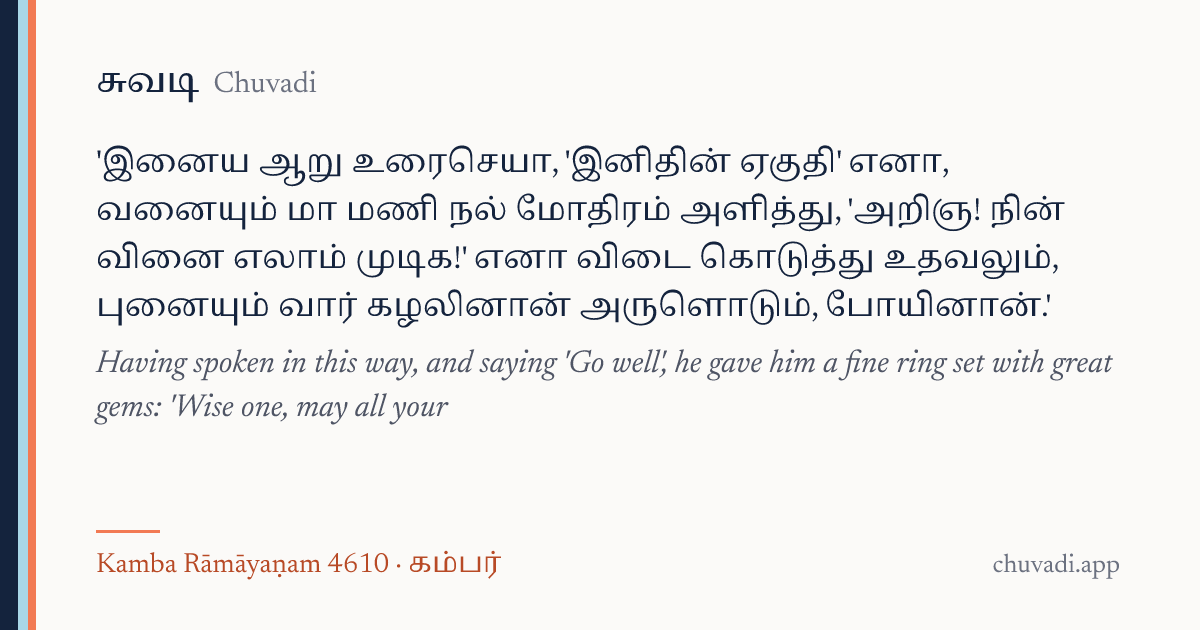
- Having spoken in this way, and saying 'Go well',
- he gave him a fine ring set with great gems: 'Wise one, may all your
- work be accomplished!' and as he bade him farewell,
- he who wore the long hero's anklet went, carrying that grace.
What the poem says
Irāmaṉ finishes his instructions, gives Aṉumaṉ his jewelled signet ring as a token for Cītai, and blesses his mission. Aṉumaṉ departs carrying Irāmaṉ's grace with him, as devotees begin any task by placing the Lord's grace first.
The phrase "he who wore the hero's anklet" can also be read as referring to Irāmaṉ, whose grace Aṉumaṉ carries. The ring is called "good" because it will bring hope to the grieving Cītai in the aśōka grove.