



கம்பராமாயணம் 4611 · கிட்கிந்தா 12.74
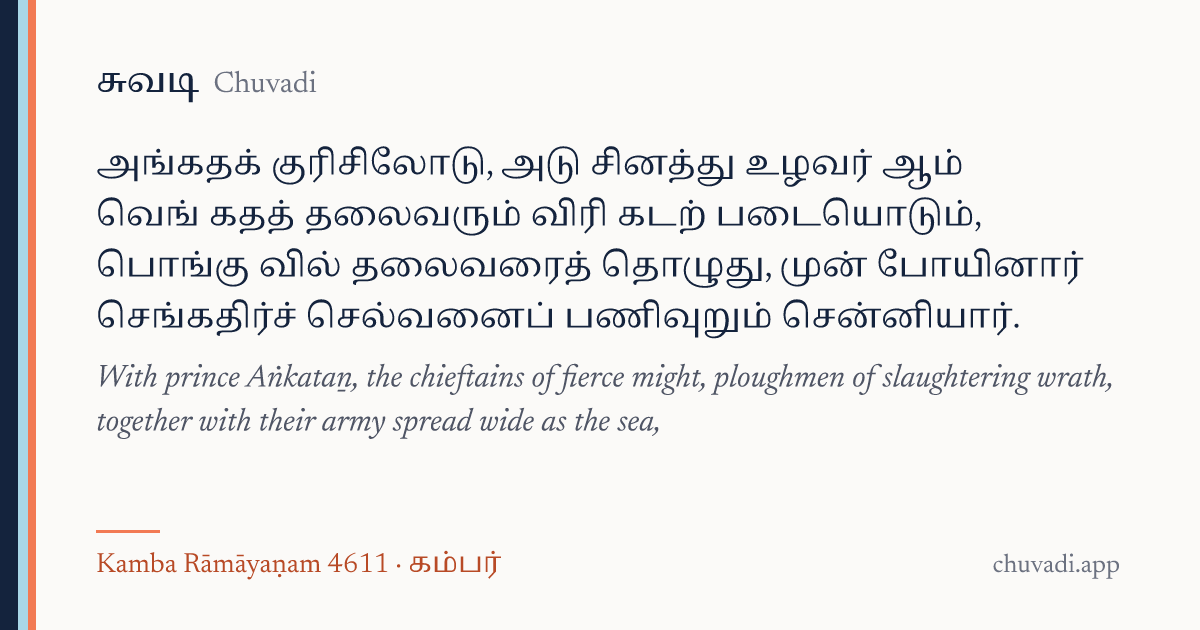
பாடல் · The poem
Tap a word to see its gloss in the commentary and where else it occurs.
பொருள் · Meaning in Tamil
அங்கதக் குரிசிலோடு - அங்கதனாகிய நம்பியினுடனே; அடு சினத்து உழவர் ஆம் - (பகைவரைக்) கொல்லுகின்ற கோபத்தையுடைய வீரரான; வெங் கதத் தலைவரும் - மிக்க வலிமையுள்ள (ஜாம்பவான் முதலான) தளபதிகளும், செங்கதிர்ச் செல்வனை - சிவந்த கதிர்களையுடைய சூரியன் மகனான சுக்கிரீவனை; பணிவுறும் சென்னியார் - வணங்கும் தலையினராய்; பொங்கு வில் தலைவரைத் தொழுது - சிறந்த வில்வீரர்களான இராமஇலக்குவரையும் வணங்கி; விரிகடற் படையொடும் - பரந்த கடல்போன்ற வானர சேனையுடனே; முன் போயினார் - (தென்திசை நோக்கி) முற்பட்டுச் சென்றார்கள்.
அங்கதன் முதலியோர் சுக்கிரீவனையும், இராம இலக்குவரையும் வணங்கித் தமக்கு நியமித்துள்ள தென்திசை நோக்கிப் புறப்பட்டார்களென்பது. உழவர்: வீரர்: பகைவரின் உடம்பாகிய வயல்களில் தம் படைகளாகிய கலப்பைகளைக் கொண்டு உழுது வெற்றியாகிய பயிரை விளைப்பவராதலால் இது வீரரைக் குறிக்கும். - வில்லேருழவர் வாளேருழவர் சொல்லேருழவர் என்றாற்போல.
ஆங்கிலம் · English translationAI
Translation
- With prince Aṅkataṉ, the chieftains of fierce might, ploughmen of slaughtering wrath,
- together with their army spread wide as the sea,
- bowed to the lords of the mighty bow and went on ahead,
- their heads bent low before the son of the red-rayed Sun.
What the poem says
The southern search party sets out under the young prince Aṅkataṉ, Vālī's son, with chiefs such as Cāmpavāṉ and a host of monkeys vast as the sea. They bow to Cukkirīvaṉ, son of the Sun, and to Irāmaṉ and Ilakkuvaṉ, the great archers, and march south.
Warriors are called "ploughmen": they plough the field of the enemy's bodies with their weapons and harvest victory, just as Tamil speaks of ploughmen of the bow, of the sword and of the word. This verse closes the canto.