



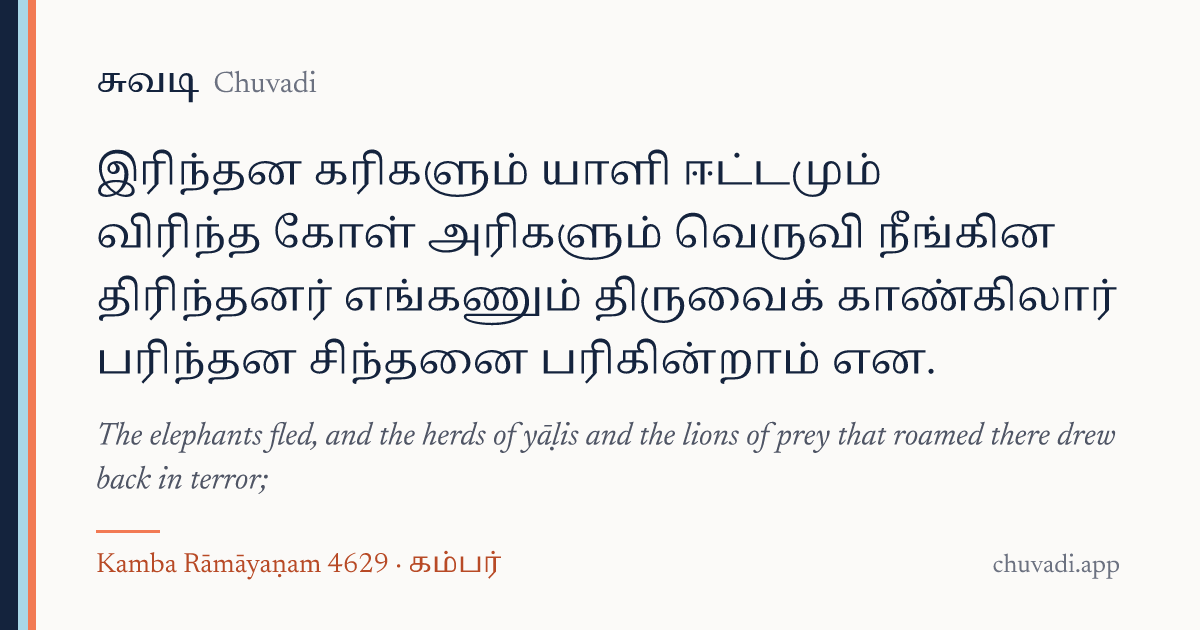
கம்பராமாயணம் 4629 · கிட்கிந்தா 13.18
பாடல் · The poem
Tap a word to see its gloss in the commentary and where else it occurs.
பொருள் · Meaning in Tamil
(அவ்வாறு மலைமேல் ஏறிய வானரர்களைக் கண்டு) கரிகளும் - யானைகளும்; யாளி ஈட்டமும் - யாளிகளின் கூட்டமும்; இரிந்தன - (பயந்து) விலகியோடின; விரிந்த கோள் அரிகளும் - (அம்மலை மேல்) பரந்திருந்த கொல்லுமியல்புள்ள சிங்கங்களும்; வெருவி நீங்கின - அஞ்சி நிலைகெட்டு அகன்றன; (அவ்வானரர்கள்) எங்கணும் திரிந்தனர் - மலை முழுவதும் தேடிப் பார்த்தவர்களாகி; திருவைக் காண்கிலார் - சீதையைக் காணாதவராகி (அதனால்); பரிந்தன சிந்தனை - மனம் நொந்தவர்களாய்; பரிகின்றாம் என - (இப்பொழுது) மிக வருந்துகின்றோம் என்று (நைந்து).
அடுத்த பாடலில் 'தேடினார்' என முடியும். கோள் அரி : சிங்கம்; பிறவற்றின் உயிரைக் கொள்வது.
ஆங்கிலம் · English translationAI
Translation
- The elephants fled, and the herds of yāḷis
- and the lions of prey that roamed there drew back in terror;
- the monkeys ranged everywhere but did not find her who is Fortune herself,
- and their minds ached as they said, 'We are in anguish.'
What the poem says
As the monkey army swarms over the mountain, elephants, yāḷis (mythical lion-like beasts) and lions flee in fear. The monkeys search every corner, but Cītai, the goddess of fortune incarnate, is not there, and their joy turns to dismay.
The sentence runs on into the next verse.