



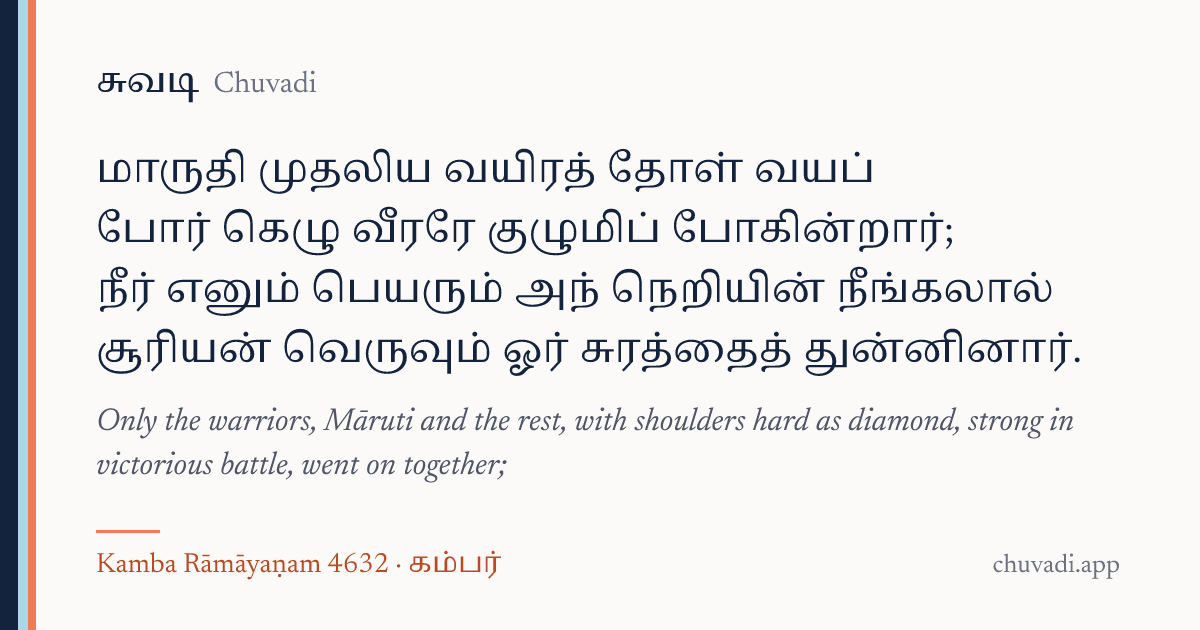
கம்பராமாயணம் 4632 · கிட்கிந்தா 13.21
பாடல் · The poem
Tap a word to see its gloss in the commentary and where else it occurs.
பொருள் · Meaning in Tamil
மாருதி முதலிய - வாயுவின் மகனாகிய அனுமன் முதலான; வயிரத்தோள் - உறுதியான தோள்களையுடைய; வயப்போர் கெழு வீரரே - வெற்றிதரும் போரில் வன்மையுடன் விளங்கும் வீரர்கள் மட்டும்; குழுமிப் போகின்றார் - திரண்டு செல்பவராய்; அந்நெறியில் - அந்த வழியிலே; நீர் எனும் பெயரும் நீங்கலால் - நீர் என்ற பெயர் கூட இல்லையாதலால்; சூரியன் வெருவும் - வெம்மையான கதிர்களையுடைய சூரியனும் கண்டு அஞ்சத் தகுந்த; ஓர் சுரத்தை - ஒரு பாலைவனத்தை, துன்னினார் - சென்று அடைந்தார்கள்.
பூமியிலுள்ள நீரை வற்றச் செய்து உலகையே வெம்மை செய்யும் கதிர்களையுடையனவாய்ப் பாலைக்குரிய தெய்வமாகிய கதிரவனும் கண்டு அஞ்சக்கூடியதாக இருந்தது அந்தப் பாலைவனம் என்றார். நீர் ஒரு சிறிதும் இல்லையென்றதை 'நீர் எனும் பெயரும் நீங்கிட' என்றார் உலகவழக்கு நவிற்சியணி. கண்டு என்ற ஒரு முனிவன் தன் பதினாறு வயது மகன் இறந்தது குறித்துக் கோபித்து இந்த வனத்தை மனிதர் வசிப்பதற்கு ஏற்றதல்லாததும், விலங்குகள், பறவைகள், செடி கொடிகள் முதலியன அற்றதும் ஆகுமாறு சபித்தனாதலால் இவ் வளமான இடம் பாலைவனமாயிற்று என்பர்.
ஒப்பு : 'வான்நீங்கு வைப்பின் வழங்காத தேர் நீர்க்கவாம்' - (கலித். பாலை. 0) வீரரே - ஏகாரம் பிரிநிலை.
ஆங்கிலம் · English translationAI
Translation
- Only the warriors, Māruti and the rest, with shoulders hard as diamond, strong
- in victorious battle, went on together;
- and because on that road even the name of water was unknown,
- they came to a wasteland that even the Sun would dread.
What the poem says
Aṉumaṉ, son of the Wind, and the strongest warriors press on together and reach a desert so dry that even the word "water" is unknown there, and even the Sun, who dries up the world, would fear it.
According to the story told about it, a sage named Kaṇṭu cursed this once-fertile land when his sixteen-year-old son died there, so that no people, animals, birds or plants could live in it.