



கம்பராமாயணம் 4651 · கிட்கிந்தா 13.40
பாடல் · The poem
Tap a word to see its gloss in the commentary and where else it occurs.
பாட வேறுபாடு · Project Madurai reads
பொருள் · Meaning in Tamil
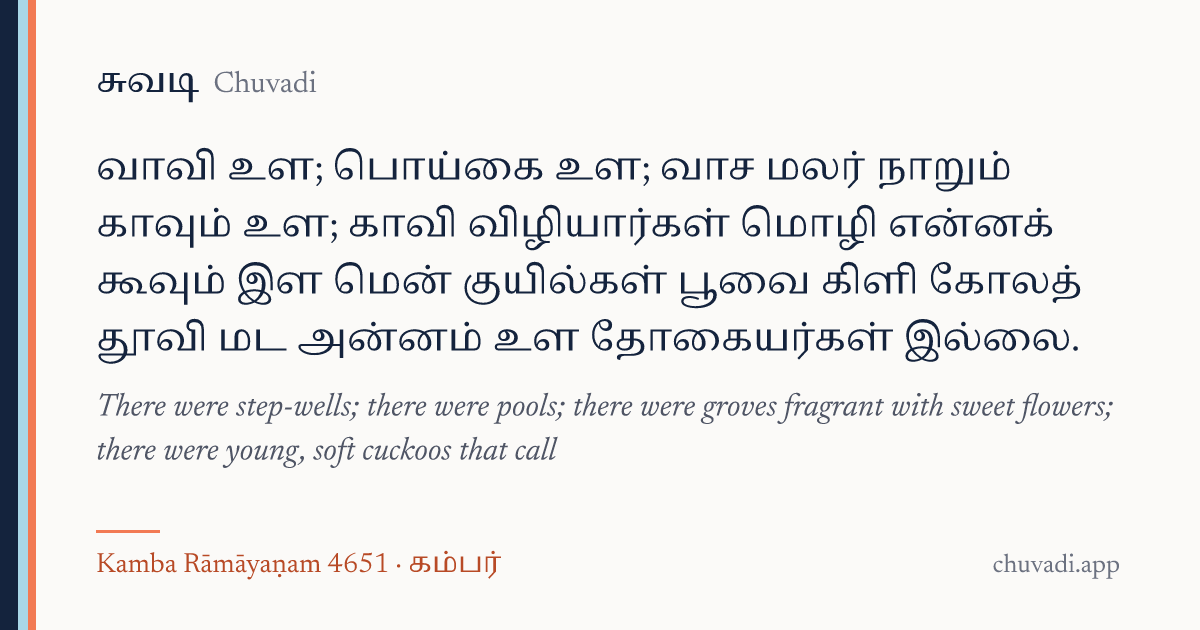
வாவி உள - (அந்த நகரத்தில்) நடை வாவிகள் உள்ளன; பொய்கை உள - தடாகங்கள் உள்ளன; வாச மலர் நாறும் காவும் உள - நறுமணம் கமழும் மலர்களையுடைய சோலைகளும் உள்ளன; காவி விழியார்கள் - கருங்குவளை மலர் போன்ற கண்களையுடைய மாதர்களின்; மொழி என்னக் கூவும் - இனிய மழலை போலக் கூவுகின்ற; இள மென்குயில்கள் - இளமையான மென்மை வாய்ந்த குயில்களும்; பூவை - நாகணவாய்ப்பறவைகளும்; கிளி - கிளிகளும்; கோலத்தூவி மட அன்னம் - அழகான சிறகுகளையுடைய இளமை வாய்ந்த அன்னப் பறவைகளும்; உள - உள்ளன; தோகையர்கள் இல்லை - (ஆனால்) மகளிர் மட்டும் (அங்கே) இல்லை.
மகளிர் புனல் விளையாட்டுக்கு வேண்டிய வாவியும் பொய்கையும் பூக்கொய்து விளையாடிப் பூஞ்சோலைகளும் பொழுதை இனிதே கழிக்க உதவும் குயில் முதலிய பறவைகளும் அங்கே நிரம்பியிருந்தாலும் அவற்றைக் கண்டு மகிழ்வதற்கும் அனுபவித்துத் திளைப்பதற்கும் உரிய மகளிர்மட்டும் காணப்பெறவில்லையே என்ற இரக்கக் குறிப்பு உடையது இப்பாடல். தோகையர்: உவமையாகு பெயர்.
ஆங்கிலம் · English translationAI
Translation
- There were step-wells; there were pools; there were groves
- fragrant with sweet flowers; there were young, soft cuckoos that call
- like the speech of women with lily-dark eyes, and mynahs, parrots, and lovely-
- plumed young swans; but there were no women, graceful as peacocks.
What the poem says
Everything meant for women's pleasure is there: bathing pools, flower gardens, and the songbirds and swans that women keep as pets and companions. Only the women themselves are missing.
The verse has a note of pity for the empty city. The women are called tōkaiyar, "peahens", for their grace.