



கம்பராமாயணம் 4654 · கிட்கிந்தா 13.43
பாடல் · The poem
Tap a word to see its gloss in the commentary and where else it occurs.
பொருள் · Meaning in Tamil
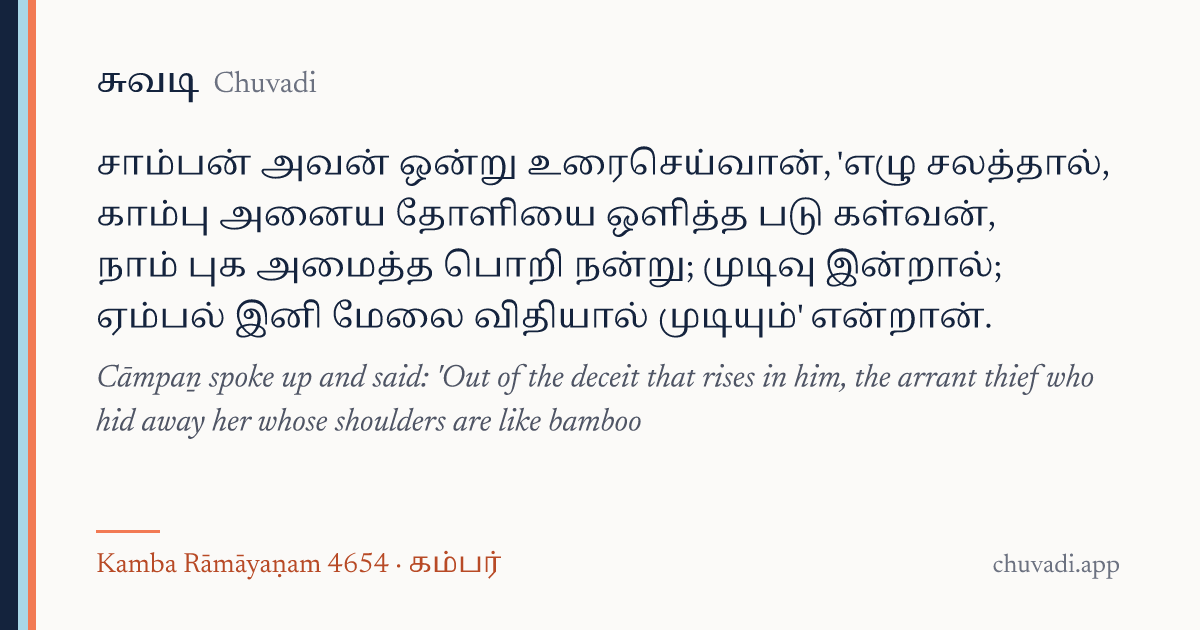
சாம்பன் அவன் - (அப்பொழுது வீரர்களைப் பார்த்து) சாம்பவான் என்ற கரடிகளுக்கு அரசன்; ஒன்று உரை செய்வான் - ஒன்று சொல்லத் தொடங்கினான்; எழு சலத்தால் - (தன்னிடம் இயல்பாகத்) தோன்றியுள்ள வஞ்சனையால்; காம்பு அனைய தோளியை - இள மூங்கிலைப் போன்ற தோள்களையுடைய சீதையை; ஒளித்த - எடுத்துச் சென்று மறைத்து வைத்த; படு கள்வன் - பெருந் திருடனான இராவணன்; நாம் புக அமைத்த - (சீதையைத் தேடி வரும்) நாம் எல்லோரும் அகப்பட்டுத் தவிக்குமாறு செய்துவைத்த; பொறி நன்று - சூழ்ச்சி நன்றாயிருக்கிறது; முடிவு இன்று - (இதற்கு) ஒரு முடிவுமில்லை; ஏம்பல் - (நமக்குள்ள) ஊக்கமும்; இனி மேலை விதியால் முடியும் - இனிமேல் முற்பிறப்பில் செய்த தீவினையால் நீங்கிவிடும்; என்றான் - என்று வருந்திக் கூறினான்.
'சீதையைக் கவர்ந்து சென்ற இராவணன் அச்சீதையைத் தேடிவருபவர் தன்னிடம் வராதபடி வஞ்சனையால் செய்த குழியாகும் இது; நாம் இதில் சிக்கிக் கொண்டமையால் இனி நமக்கு உய்வில்லை; இதில் அழிந்து ஒழிவதே விதி' என்றான் சாம்பான். சலம்: வஞ்சனை. படு கள்வன்: மிகுதியான திறனும் கொடுமையும் வாய்ந்த திருடன். அறிவு இங்கே சூழ்ச்சி என்ற கருத்தில் வந்தது.
ஆங்கிலம் · English translationAI
Translation
- Cāmpaṉ spoke up and said: 'Out of the deceit that rises in him,
- the arrant thief who hid away her whose shoulders are like bamboo
- has built a fine trap for us to walk into; there is no way out;
- our hopes will now end as the fate of our former deeds decrees.'
What the poem says
Cāmpaṉ (Jāmbavān), the wise old king of the bears, usually the one who steadies everyone else, loses heart. He decides that the empty city is a trap set by Irāvaṇaṉ, the cunning thief who carried off Cītai, to catch anyone who comes looking for her.
There is no escape, he says; it is their fate, from the deeds of former lives, to perish here.