



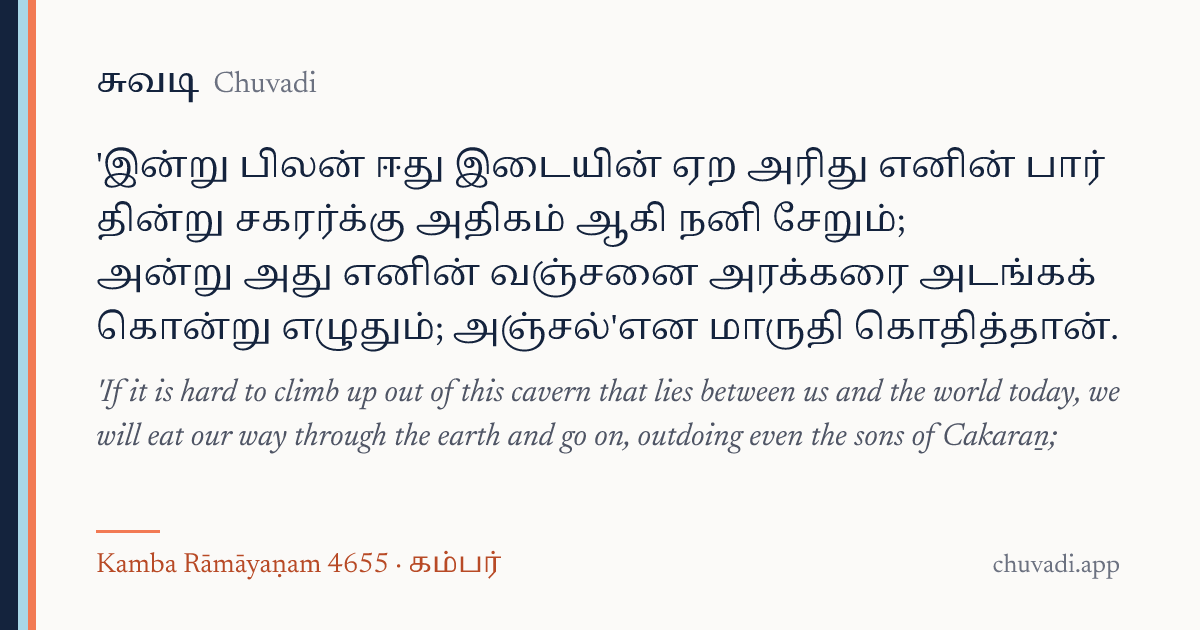
கம்பராமாயணம் 4655 · கிட்கிந்தா 13.44
பாடல் · The poem
Tap a word to see its gloss in the commentary and where else it occurs.
பொருள் · Meaning in Tamil
(அந்தச் சாம்பனை நோக்கி) மாருதி - அனுமன்; இன்று இடையின் - இப்பொழுது நடுவிலுள்ள; பிலன் ஈது - இந்தப் பிலத்திலிருந்து; ஏற அரிது எனின் - ஏறி அப்பாலே செல்வது முடியாதென்றால்; சகரர்க்கு நனி அதிகம் ஆகி - சகரபுத்திரர்களைக் காட்டிலும் மிக்க வல்லமையுடையவர்களாகி, பார் தின்று சேறும் - நிலத்தைக் குடைந்து கொண்டு (மேற்புறமாக ஏறி) அப்பாலே எளிதாகச் சென்று விடுவோம்; அது அன்று எனின் - அவ்வாறு இல்லையென்றால்; வஞ்சனை அரக்கரை அடங்க - (இப்படி) நம்மை வஞ்சித்த அரக்கர்களை யெல்லாம் முழுவதும்; கொன்று எழுதும் - கொன்றுவிட்டு மேலே எழுந்து செல்வோம்; அஞ்சல் - சற்றும் பயப்படவேண்டா; எனக் கொதித்தான் - என்று மனம் வெந்து கூறினான்.
சகரபுத்திரர்களைப் போல நிலத்தைத் தோண்டியாவது, அரக்கர்களையெல்லாம் அடியோடு அழித்து மேலெழுந்தாவது வெளியே செல்வோம் என்று அனுமன் மனங் கொதித்துச் சாம்பவானைத் தேற்றினான் என்பது. யாவரையும் தேற்றவல்ல சாம்பனே கலங்கி விட்டானே என்ற எண்ணத்தால் மாருதி மனம் கொதித்தது. தின்று - தோண்டி (நிலத்தை) சகரர் தோண்டலால் சாகரம் என்று கடலுக்குப் பெயர் வந்தது - தத்திதாந்தநாமம்.
ஆங்கிலம் · English translationAI
Translation
- 'If it is hard to climb up out of this cavern that lies between us and the world today, we will eat our way through the earth
- and go on, outdoing even the sons of Cakaraṉ;
- and if not that, we will kill these deceitful demons to the last one
- and rise out; do not be afraid,' said Māruti, burning with anger.
What the poem says
Aṉumaṉ is stung to see even Cāmpaṉ despair, and answers fiercely. If they cannot climb out, they will dig their way up through the earth, outdoing the sons of King Cakaraṉ (Sagara), who once dug out the bed of the ocean, which is why the sea is called cākaram.
And if demons are behind this, they will kill every one of them and fight their way out. There is nothing to fear.